
Lessons Learned in Creating a Mechanical Ventilator with Open Hardware and Open Source Software
Explore the development of an open-source mechanical ventilator, focusing on evolutionary architecture, incremental changes, and continuous integration in IoT projects.
Fusing Biophysics and Machine Learning for Computational Oncology
Innovative approach combining biophysics and machine learning to enhance understanding of cancer dynamics, utilizing clinical data to extract disease patterns and improve oncology research.
Unlocking the Power of AI for the Greater Good - Panel 1: UW AI Research and Its Importance
Experts discuss UW's AI research initiatives, exploring applications in protein design, ophthalmology, electrical engineering, and computer science to address societal challenges and advance scientific understanding.
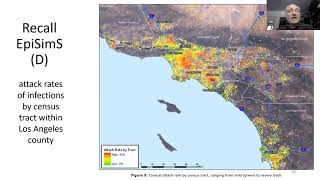
Learning About the Relationships Between Contact Network Topologies and Epidemic Curves
Explore the intricate connections between contact network structures and epidemic progression, gaining insights into disease spread patterns and public health implications.
AI in Cancer Detection and Treatment
Explore AI applications in cancer detection and treatment, covering advanced techniques for early diagnosis, personalized therapies, and improved patient outcomes.
Neural Networks - Lecture 1
Comprehensive introduction to neural networks, covering fundamental concepts, architectures, and applications in machine learning and artificial intelligence.
Promise and Perils of Artificial Intelligence in Healthcare
Explore AI's transformative impact on healthcare, from disease detection to personalized treatments, while examining ethical concerns and the irreplaceable human touch in patient care.

Where AI and Classical Music Overlap
Explore the intersection of AI and classical music with Walter Werzowa, a multi-awarded artist who shares insights on creativity, innovation, and overcoming obstacles in the modern artistic landscape.
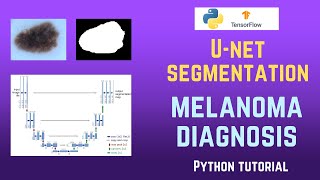
Medical Melanoma Detection - TensorFlow U-Net Tutorial
Step-by-step guide to implementing a U-Net model for melanoma detection using TensorFlow/Keras, covering data preparation, augmentation, model building, training, testing, and result visualization.
Turing Lecture - How Smartphones and Wearable Technology Can Help in the Care of Chronic Illnesses
Exploring innovative use of smartphones and wearables for chronic illness care, emphasizing patient empowerment through data sharing and AI-assisted symptom forecasting and health guidance.
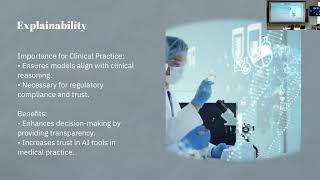
Forerunners of Cancer Hallmarks - Explainable Machine Learning in Early Cancer Diagnosis
Explore explainable machine learning techniques for early cancer detection, focusing on identifying precursor signs of cancer hallmarks to improve diagnostic accuracy and patient outcomes.

AI-Driven Solutions for Improving Childhood Mental Health Care
Explore AI-driven solutions for early detection of mental health concerns in young children, revolutionizing emotional well-being support and providing crucial insights for parents and healthcare providers.
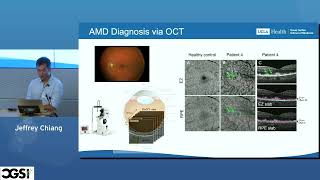
Strategies for Integrating Deep Learning with Current Biomedical Research
Explore strategies for integrating deep learning in biomedical research, focusing on automated identification of clinical features from medical imaging and prediction of disease progression.
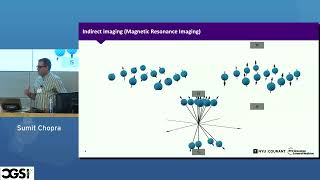
Less is More: Learning Signals to Learn Representations in Healthcare
Explore advancements in machine learning for MRI reconstruction and medical imaging. Discover how less data can yield more accurate representations in healthcare applications.
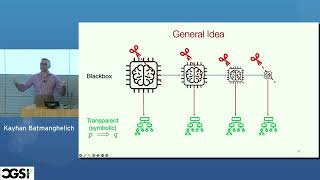
Divide and Conquer: Carving Out Symbolic Models from BlackBox for More Efficient Domain Adaptation
Explore techniques for extracting symbolic models from black-box systems, enhancing domain adaptation efficiency in computational genomics and medical imaging.
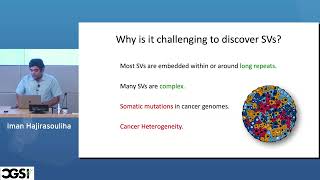
Applications of Deep Learning to Genomics and Digital Pathology
Explore deep learning applications in genomics and digital pathology, focusing on cutting-edge research and practical implementations in healthcare.
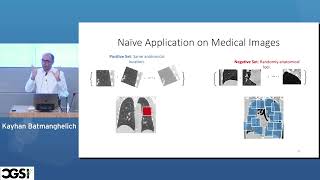
Bridging ML Models with Medical Insights for Learning, Inference, and Model Explanation in Radiology
Explore ML models bridging medical insights for radiology applications. Learn about self-supervised representation, progressive exaggeration, contrastive learning, causal analysis, and association tests in medical imaging.
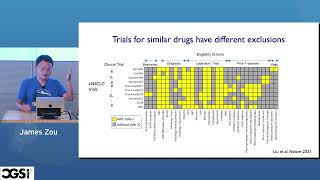
How to Perform In Silico Clinical Trials Using EHR
Learn to conduct in silico clinical trials using electronic health records, exploring innovative approaches to evaluate oncology trial eligibility criteria with real-world data and AI.
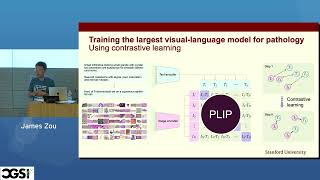
Leveraging Medical Twitter to Build a Visual Language AI Model for Pathology
Explore leveraging medical Twitter data to develop a visual language AI model for pathology, enhancing tumor microenvironment characterization and spatial gene expression analysis.
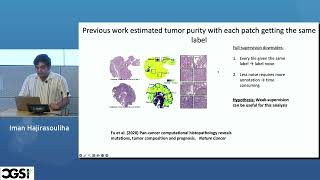
Applications of Deep Learning in Digital Pathology and Embryology - CGSI 2023
Explore deep learning applications in digital pathology and embryology, focusing on AI-driven blastocyst ploidy prediction and tumor purity assessment from H&E slides.

Understanding Spurious Feature Learning Through the Lens of Task Difficulty
Explore spurious feature learning in medical imaging and cancer detection, examining prediction depth, task difficulty, and reusable information for improved model understanding.