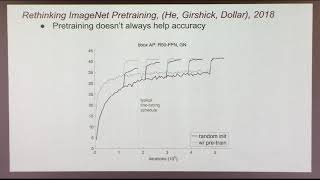
Towards Understanding Transfer Learning with Applications to Medical Imaging
Explore transfer learning in medical imaging, focusing on deep learning applications, performance evaluation, and feature similarity analysis using CCA. Insights on ImageNet models and chest X-rays included.
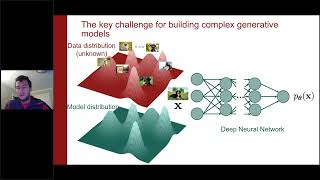
Denoising Diffusion-Based Generative Modeling
Explore diffusion-based generative modeling, its advantages over other approaches, and applications in image generation and inverse problems. Learn about score functions, training methods, and recent advancements.
Effective Transfer Learning for Identifying Similar Questions - Matching User Questions to COVID-19 FAQs
Learn effective transfer learning techniques for matching user questions to COVID-19 FAQs, exploring domain and task similarity, error analysis, and practical applications in automated FAQ systems.
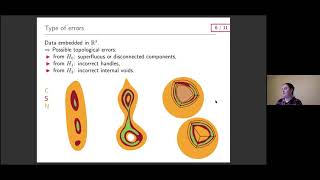
Topological Simplification of Voxelized Data
Explore topological simplification of voxelized data, focusing on homological methods to enhance graphical data analysis in scientific fields like medicine and biology.
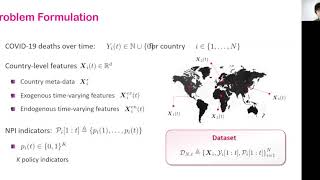
A Nationally-Implemented AI Solution for COVID-19
Explore a groundbreaking AI solution for COVID-19 implemented nationwide, presented by Mihaela van der Schaar at the 2020 IEEE International Conference on Multimedia and Expo.
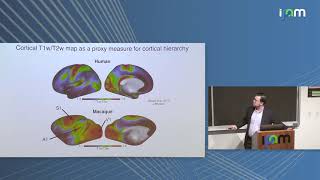
Neural Circuit Modeling of Large-Scale Brain Dynamics for Computational Psychiatry
Explore neural circuit modeling for large-scale brain dynamics in computational psychiatry, bridging microcircuit perturbations with neuroimaging biomarkers to advance personalized therapeutics.
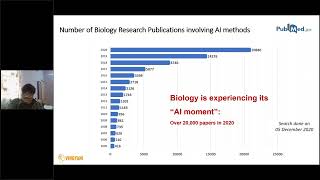
Coronavirus - Through The Lens Of AI
Explore AI applications in COVID-19 research: CT scan analysis, NLP for literature insights, and deep learning for drug candidate design. Learn how technology aids pandemic response.
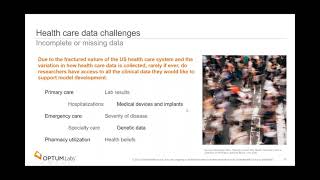
Responsible Use of AI in Health Care
Explore responsible AI use in healthcare, addressing challenges, identifying biases, and implementing ethical practices to enhance patient outcomes and promote health equity.

What Are CycleGANs? - A Novel Deep Learning Tool in Pathology
Explore CycleGANs for unpaired image conversion, including applications in pathology and microscopy. Learn model architecture, training, and inference through code demos and real-world examples.
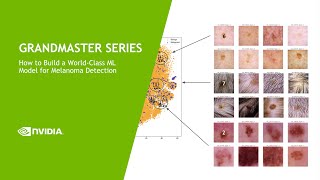
Grandmaster Series - Building a World-Class ML Model for Melanoma Detection
Learn how Kaggle Grandmasters built a world-class ML model for melanoma detection, outperforming average dermatologists. Discover key strategies in model architecture, augmentation, and training for accurate skin lesion classification.

How I Fell in Love with Zephyr - A System Architect's Tale
Discover how Zephyr revolutionizes system architecture for medical devices, improving collaboration and reducing risks through innovative technologies like Kconfig and Device tree.

Braiding Wires Into the Linux Network Stack - Recent Work on Embedded Networking
Explore recent advancements in Linux kernel's network infrastructure for embedded systems, focusing on power efficiency, cable reduction, and diagnostics in industrial, medical, and automotive applications.
RT Linux in Safety Critical Systems - The Potential and Challenges
Explore the potential and challenges of implementing Real-Time Linux in safety-critical systems, with insights from industry experts on cutting-edge applications and best practices.
Using Routinely Collected Electronic Healthcare Record Data to Study Respiratory Disease
Explore methods for analyzing electronic healthcare records to gain insights into respiratory diseases, leveraging big data for improved patient outcomes and research.

Latest AI News Roundup: From AGI Stages to Multimodal Models
Explore cutting-edge AI developments: AGI stages, medical applications, multimodal models, autonomous driving, and more. Stay informed about the latest advancements in artificial intelligence across various domains.

Explainable AI in Healthcare: Oxford-Style Debate - November 2023
Engaging Oxford-style debate on the necessity of explainable AI in healthcare, featuring expert speakers discussing its role in shaping the future of medical technology.

AI in Healthcare - The Next Frontier
Exploring AI's potential to revolutionize healthcare, from enhancing diagnostics to automating tasks. Discusses advancements, ethical challenges, and the future of AI in biomedicine.

OpenFL: A Federated Learning Framework for Secure Collaborative Model Training
Explore OpenFL, a Python framework for federated learning that enables collaborative model training without sharing sensitive data. Learn its features, applications, and security benefits.
Integrating AI and Machine Learning in Life Sciences - Allen School Colloquia
Exploring AI integration in life sciences, covering explainable AI, COVID-19 detection, cancer precision medicine, and biological discovery through advanced machine learning techniques.
Computer Vision to Phenotype Human Diseases Across Physical and Molecular Scales
Innovative computer vision algorithms for disease phenotyping across scales, from video-based heart function assessment to spatial transcriptomics and immune cell dynamics, with focus on robust and human-compatible AI.
Learning for Never-before-seen Biomedicine
Exploring machine learning methods for predicting never-before-seen biomedical scenarios, focusing on novel class and cohort situations using ontologies and multiscale knowledge graphs.