
Haskell Taketh Away - Limiting Side Effects for Parallel Programming
Exploring how limiting side effects in programming languages enhances parallel programming, with insights from Haskell and C++ on determinism, purity, and embedded domain-specific languages.
Tacit DSL All the Things
Explore functional programming concepts in C++ through an extended ranges DSL, unifying various paradigms and libraries for more declarative and composable code.
Functional Programming in Python and Even Haskell Part 2
Explore advanced functional programming concepts and techniques in Python and Haskell, building on part 1 to deepen your understanding and practical skills.
Functional Programming in Python and Even Haskell - Part 1
Explore functional programming concepts in Python and Haskell, covering key principles and techniques to enhance your coding skills and problem-solving approach.
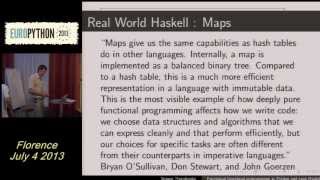
Functional Programming in Python and Even Haskell - Part 2
Explore advanced functional programming concepts and techniques in Python and Haskell, building on foundational knowledge to enhance coding skills and problem-solving abilities.
What Can Python Learn from Haskell
Explore functional programming techniques from Erlang and Haskell to enhance Python's performance, robustness, and conciseness in building reliable high-concurrency services.
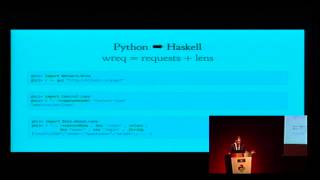
Through the Lens of Haskell - Exploring New Ideas for Library Design
Explore Haskell's unique approach to library design, gaining insights to inspire innovative problem-solving in Python. Discover alternative perspectives for tackling common programming challenges.
Easy Static Checking for Embedded DSLs in Scala with Contextual
Explore compile-time checking for embedded DSLs in Scala using Contextual, enabling custom error messages and enhanced safety without macros. Learn to create powerful string interpolators.

Functional Architecture - The Pits of Success
Explore how functional programming naturally leads to best practices in system design, contrasting with object-oriented approaches and highlighting benefits like testability and encapsulation.

One Kata, Three Languages
Explore FizzBuzz kata implementations in C#, Haskell, and Clojure. Learn functional programming concepts and apply them to improve object-oriented code.

Clean Coders Hate What Happens to Your Code When You Use These Enterprise Programming Tricks
Explores how common coding practices and design assumptions can lead to unnecessarily complex and bloated code, offering insights to improve code quality and maintainability.

Let's Get Lazy - The Real Power of Functional Programming
Explore lazy evaluations in functional programming, focusing on efficiency and avoiding unnecessary computations. Learn to implement lazy techniques in C# using lambdas and the Stream API.
Servant - Web APIs at the Type Level
Explore Servant, a Haskell library for type-level web API design, offering clean HTTP logic separation, automatic verification, and generation of documentation and client code.
Dependency Injection Revisited
Explore functional programming approaches to Dependency Injection, examining non-deterministic behavior control and its application in both functional and object-oriented paradigms.
Dependency Injection Revisited
Explore alternative approaches to Dependency Injection, examining functional programming concepts and their applicability to object-oriented programming. Gain insights into controlling non-deterministic behavior in software development.

Haskell - A Peek Inside the Ivory Tower
Explore Haskell's unique features as a pure functional language, its strengths and weaknesses, and how it compares to other languages for writing quality, maintainable software.
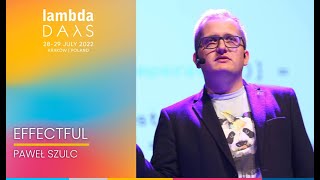
Effectful: A New Approach to Effects in Haskell
Explore Effectful, a new Haskell effects library combining Polysemy-like ergonomics with ReaderT pattern performance. Learn its potential to revolutionize effect handling in Haskell programming.
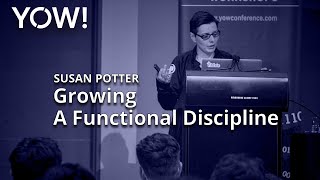
Growing a Functional Discipline
Strategies for adopting functional programming in organizations: reducing risks, fostering learning culture, and transitioning from ad-hoc solutions to domain-driven implementations in Scala and Haskell.
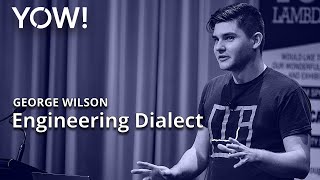
Cultivating an Engineering Dialect
Explore strategies for choosing Haskell abstractions, libraries, and extensions to create an effective engineering dialect that balances innovation and accessibility for diverse teams.
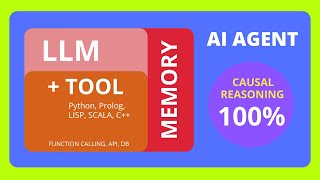
Perfect Reasoning for AI Agents Using ReasonAgain - Symbolic Code Implementation
Discover how to enhance AI agent reasoning through symbolic programming, exploring ReasonAgain's methodology for improving LLM mathematical and logical capabilities across multiple coding languages.
Building Web Apps with Haskell and IHP - Lightning Talk
Explore full-stack web app development using Haskell and IHP framework through a quick live demonstration.