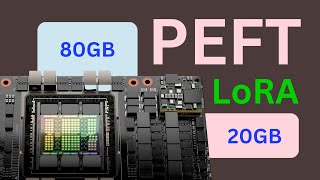
Parameter-Efficient Fine-Tuning with LoRA - Optimizing LLMs for Local GPU Training
Master PEFT LoRA techniques to efficiently fine-tune large language models on local GPUs through low-rank adaptation, reducing memory requirements while maintaining model performance.
Experimental KERAS Feature Space for Medical AI Heart Attack Prediction
Dive into advanced feature scaling with KERAS Feature Space, building a medical AI system to predict heart attack probabilities using structured data classification and optimized data pipelines.
Infrastructure and Tooling - Full Stack Deep Learning - March 2019
Explore infrastructure and tooling for deep learning projects, covering GPU machines, experiment tracking, and all-in-one solutions like AWS SageMaker.
Efficient AutoML with Ludwig, Ray, and Nodeless Kubernetes
Explore efficient AutoML using Ludwig and Ray, leveraging heuristics for model production. Learn how Nodeless Kubernetes optimizes GPU resource management, reducing costs in cloud environments.
Kueue: Kubernetes-Native Job Queueing for Batch Workloads
Explore Kueue, a Kubernetes-native job queueing solution for efficient resource management and fair sharing in batch workloads, addressing limitations in pod-centric scheduling.

TensorFlow Lite in Android with Google Play Services
Explore TensorFlow Lite integration in Android using Google Play services, enabling efficient ML model deployment, reduced app size, and improved performance without static library bundling.
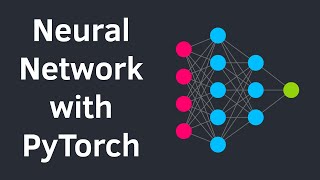
Build a Neural Network with Python Tutorial - Deep Learning with PyTorch
Learn to build, train, and evaluate a neural network for weather prediction using PyTorch. Covers data preprocessing, model architecture, GPU acceleration, and practical applications.
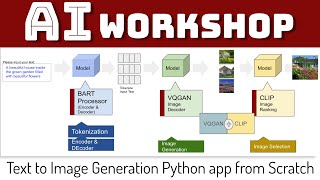
AI Workshop - Build Your Own Text-to-Image Application with DALL-E Mini in Python from Scratch
Learn to build a text-to-image application using DALL-E mini in Python. Covers model setup, code implementation, and result generation, providing hands-on experience with AI-driven image creation.
Stable Diffusion 2.0 Fine-Tuning with DreamBooth on Free Colab
Fine-tune Stable Diffusion 2.0 with DreamBooth on free Google Colab. Create custom AI avatars and profile pictures. Learn data collection, processing, model training, inference, and conversion for Automatic1111 compatibility.
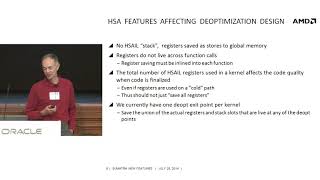
GPU/JVM Cooperation - Optimizing Java Performance with GPU Integration
Explore GPU/JVM cooperation, optimization techniques, and performance enhancements for Java applications leveraging GPU capabilities.
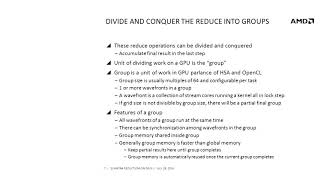
Reduction on GPUs
Explore GPU reduction techniques with Eric Caspole, enhancing your understanding of parallel computing and optimizing performance in GPU-based applications.
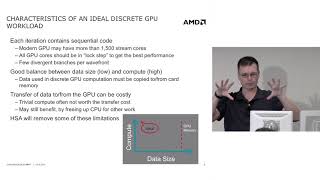
Project Sumatra - GPU Acceleration for Java
Explore GPU workloads, AMD's Accelerated Processing Unit, and the Sumatra prototype for Java optimization using Stream API and HSAIL technologies.
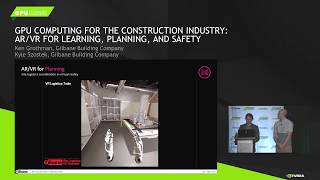
GTC 2017: GPU Computing for the Construction Industry - AR/VR for Learning Planning and Safety
Explore AR/VR applications in construction for enhanced learning, planning, and safety practices, presented by Gilbane Building Company experts at NVIDIA's 2017 conference.
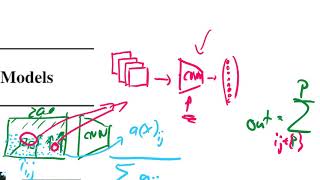
Processing Megapixel Images with Deep Attention-Sampling Models
Explore a novel deep learning approach for efficiently processing high-resolution images by selectively focusing on informative regions, reducing computational costs while maintaining accuracy.
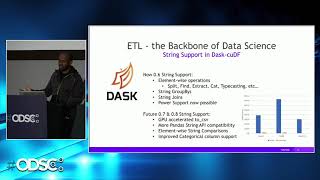
RAPIDS - The Platform Inside and Outside - Joshua Patterson - ODSC East 2019
Accelerating data science with GPUs using RAPIDS: open-source libraries for GPU-powered data manipulation, machine learning, and graph analytics, scaling across multiple GPUs and integrating with existing Python ecosystems.
Taking Deep Learning to Production with MLflow and RedisAI
Explore MLflow and RedisAI integration for efficient deep learning model deployment, featuring multi-framework support, auto-batching, and DAGing capabilities in a reliable runtime environment.
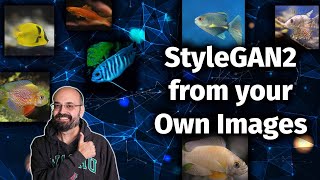
Training a GAN from Your Own Images - StyleGAN2 ADA
Learn to create custom GANs using your own images, from setup to training. Covers image collection, Docker setup, TFRecord conversion, and understanding GAN outputs for various projects like FishGAN and MinecraftGAN.
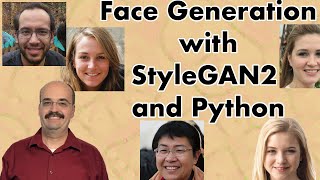
Face Generation with NVIDIA StyleGAN2 and Python 3
Generate realistic faces using nVidia StyleGAN2 and Python. Learn to utilize pretrained weights, TensorFlow wrapper, and Google CoLab GPU for efficient face generation without extensive training.
TensorFlow 2.0 GPU, Keras, and Python 3.7 Installation Guide for Windows 10 - 2020 Update
Comprehensive guide for setting up TensorFlow 2.0 with GPU support on Windows 10, covering installation of necessary drivers, CUDA, cuDNN, and Anaconda environment configuration.
Profiling Deep Learning Applications with NVIDIA Tools Extension (NVTX)
Enhance deep learning application performance using NVIDIA Tools Extension Library (NVTX) for code profiling and optimization techniques.
Supercharge Your Vision AI Business with NVIDIA Metropolis
Discover how NVIDIA Metropolis can enhance your Vision AI business through improved performance, streamlined deployments, enterprise readiness, and access to GPU infrastructure and business support.