Bridging Domain Science and HPC with Julia
Explore Julia's potential in HPC, combining scientific ecosystem with high performance. Gain insights on its strengths, limitations, and notable international projects from an experienced user.
Very Few Parameter Fine-Tuning with ReFT and LoRA
Explore advanced fine-tuning techniques ReFT and LoRA for efficient parameter optimization in transformer models. Learn implementation, comparison, and practical tips for improved model performance.
Hugging Face and Ray AIR Integration for Scalable Machine Learning
Explore Hugging Face and Ray AIR integration for scalable model training and data loading. Learn to create end-to-end workflows from data ingest to inference and serving.
Enabling End-to-End LLMOps on Michelangelo with Ray
Explore Uber's extension of Michelangelo for end-to-end LLMOps, leveraging Ray for scalable development with hundreds of A100 GPUs and integrating open-source techniques for efficient custom LLM creation.
FastIce.jl: A Massively Parallel Ice Flow Model Running on GPUs
Explore FastIce.jl, a Julia-based ice flow model for GPUs. Learn about its modular architecture, performance on supercomputers, and applications in efficient large-scale ice sheet modeling.
Scalable and Flexible Distributed Reinforcement Learning Systems
Explore scalable distributed reinforcement learning systems, focusing on flexible training loops, statement management, and GPU allocation. Gain insights into building efficient RLHF systems for large-scale applications.
Productive Performance Engineering for Weather and Climate Modeling with Python
Optimize weather and climate models using Python-embedded DSL and data-centric techniques. Improve productivity and performance through abstraction, semi-automated workflows, and transfer tuning for efficient scaling on supercomputers.
AI-Driven Performance Metaprogramming - Embedding Spaces for Program Analysis and Optimization
Explore AI-driven performance metaprogramming using embedding spaces for programs. Learn to assess, analyze, and improve program performance through advanced AI methods.
No More Runtime Setup - Bundling, Distributing, Deploying, and Scaling LLMs Seamlessly with Ollama Operator
Discover Ollama Operator: simplify LLM deployment, bundling, and scaling across environments. Eliminate runtime complexities and dependency issues for seamless large language model management in Kubernetes.
Write Once Run Anywhere for GPUs - Portable AI Workloads with Rust and WebAssembly
探讨LlamaEdge如何利用Rust和WebAssembly实现跨平台LLM应用开发,从基础推理到复杂RAG系统,展示其在云端和边缘设备上的灵活部署能力。
Leveraging Wasm for Portable AI Inference Across GPUs, CPUs, OS and Cloud-Native Environments
Explore WebAssembly's advantages for AI inference in cloud-native ecosystems, enabling uniform performance across hardware, operating systems, and cloud environments while enhancing deployment and scalability.

Self-Hosted AI Image Generation with InvokeAI
Explore self-hosted AI image generation with InvokeAI. Learn to create and edit stunning visuals, generate set pieces, and integrate them into your projects. Includes hardware recommendations and practical demonstrations.
How to Build a Detectron2 Model with Roboflow and Paperspace Gradient
Learn to build a Detectron2 model using Roboflow for image preprocessing and Paperspace Gradient for GPU-backed training. Covers dataset access, image augmentation, and model development.
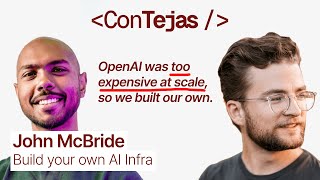
Building Your Own ChatGPT-style LLM AI Infrastructure with Kubernetes
Explore building AI infrastructure with Kubernetes, covering open-source LLMs, data engineering, and cost optimization. Gain insights on deployment, scalability, and choosing the right tools for AI-enabled applications.
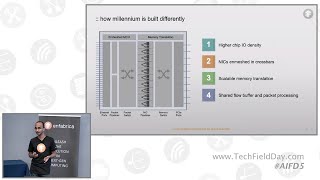
Solving I/O Scaling Challenges in Accelerated Compute with Networking Silicon
Discover how Enfabrica's Accelerated Compute Fabric revolutionizes I/O scaling in compute clusters through innovative networking silicon integration, optimizing data movement and enhancing GPU communication efficiency.
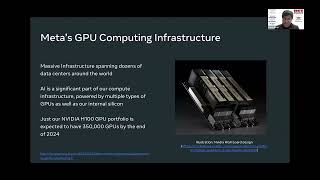
Powering Llama 3 - A Peek into Meta's Massive Infrastructure for Generative AI
Dive into Meta's advanced infrastructure powering Llama 3, exploring the technological backbone and innovative systems behind their next-generation generative AI development.
Tensor Query Processing - Accelerating Database Analytics with AI Hardware
Discover how Microsoft's framework compiles SQL to tensor abstractions, enabling efficient database analytics on GPUs and exploring the fusion of SQL with machine learning capabilities.
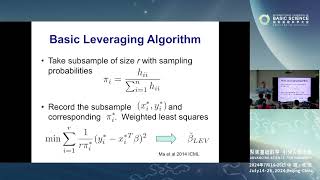
Small but Mighty: Subset Selection and Knowledge Distillation
Explore cost-efficient AI training methods, focusing on subset selection and knowledge distillation techniques to address challenges in large language model development.
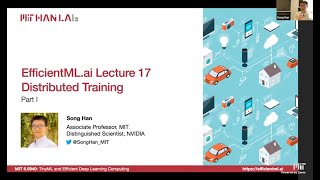
Distributed Training - Part I - Lecture 17
Explore distributed training techniques for efficient machine learning, covering key concepts and strategies for scaling ML models across multiple devices.
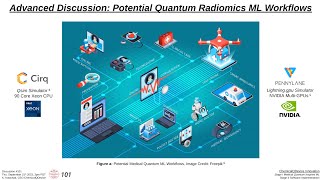
Advanced Discussion: Potential Quantum Radiomics ML Workflows
Explore quantum machine learning workflows for medical imaging, focusing on efficient state vector circuits, pure state representations, and exact expectation values. Discover recent advancements in large-scale quantum simulations.
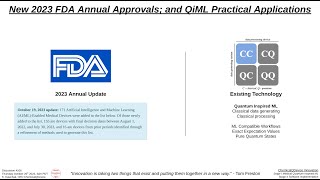
New 2023 FDA Annual Approvals and QiML Practical Applications
Explore FDA's 2023 AI/ML medical device approvals and quantum-inspired machine learning applications in healthcare, focusing on practical R&D potential for medical submissions.