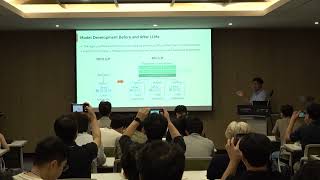
Infrastructure Software for Hyperscale AI and GPU Clusters
Explore cutting-edge infrastructure software solutions powering large-scale AI operations and GPU cluster management for hyperscale computing environments.
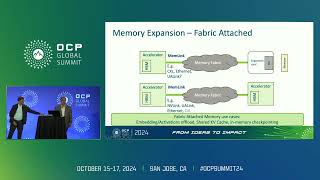
Memory Expansion Requirements for AI Systems in Hyperscale Data Centers
Explore evolving memory architecture requirements for AI systems in hyperscale data centers, focusing on GPU acceleration and infrastructure optimization for next-generation applications.
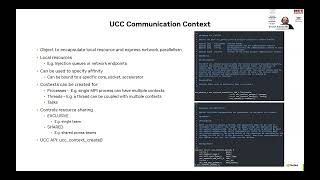
Unified Collective Communication - A Library for CPU, GPU, and DPU Integration
Explore the innovative Unified Collective Communication library that seamlessly integrates CPU, GPU, and DPU communication, enhancing performance across diverse computing architectures.
Sharing is Caring - Fractional GPU Allocations with MetaGPU Device Plugin
Discover how to optimize GPU resource allocation in Kubernetes using MetaGPU Device Plugin, enabling fractional GPU sharing and efficient scheduling for enhanced cluster performance.
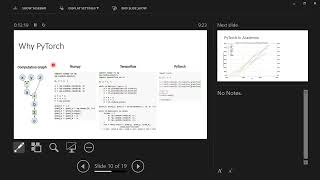
PyTorch Tutorial: Deep Learning Framework Fundamentals - Fall 2022
Master PyTorch fundamentals and deep learning concepts, from tensor operations to GPU acceleration, autograd, and data loading - all through hands-on coding examples and practical implementations.
Что я хотел бы знать об MLOps год назад - Практический опыт внедрения Machine Learning
Discover essential MLOps insights through real-world experiences at Kolesa Group, covering ML model deployment, Docker, Kubernetes integration, and practical monitoring strategies for machine learning systems.
Fast Deep Learning with Categories
Explore GPU-accelerated deep learning using Haskell, ConCat, and Accelerate for high-performance industrial applications.
Comparing Elixir and Python for Simple Neural Networks
Compare Elixir's Nx library with Python's machine learning ecosystem for training neural networks. Explore development experiences and performance differences using MNIST and CIFAR-10 datasets.
C++ Standard Parallelism - Portable Parallel Programming Across Platforms
Explore C++ Standard Parallelism: write portable parallel code for diverse hardware platforms. Learn about common algorithms, custom algorithm creation, and task graph composition.
CUDA and the Wolfram Language: Latest Developments and Future Directions
Explore CUDA integration in Wolfram Language, covering latest developments and future directions for massively parallel GPU computation.
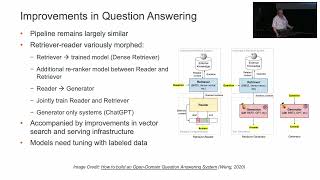
A Cheap Trick for Semantic Question Answering for GPU-Challenged Systems
Explore a cost-effective approach to semantic question answering using LLMs during indexing, combining text and vector matching for efficient search without GPU requirements.
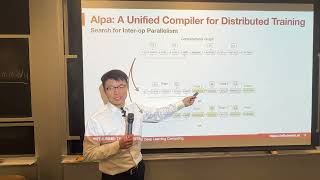
Distributed Training: Techniques and Strategies - Part II - Lecture 18
Explore advanced distributed training techniques for machine learning, focusing on efficiency and scalability in large-scale AI systems.
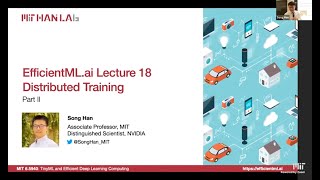
Distributed Training for Efficient Machine Learning - Part II - Lecture 18
Explore advanced distributed training techniques for machine learning, focusing on efficiency and scalability in large-scale systems.

Molly.jl - Molecular Dynamics in Julia
Explore Molly.jl for molecular dynamics simulations in Julia. Learn about its features, advantages, and applications in research, including differentiable molecular simulation and force field improvement.

Kokkos: Getting Lucky By Design - Performance Portability and API Design Principles
Explore Kokkos programming model's design principles for performance portability across diverse HPC platforms. Learn how API design and community development contribute to widespread adoption.
Two Sigma: Push Computing Research Boundaries with Google Cloud
Explore TwoSigma's AI/ML platform integrating Ray, Spark, and Dask on Google Kubernetes Engine. Learn about architecture, capabilities, and on-demand GPU access for investment strategy testing.
Rapids Machine Learning Training and Feature Engineering in GPU with CuML and CuDF
Accelerate ML training and feature engineering using GPU-powered CuML and CuDF libraries for enhanced performance and efficiency.
Lessons Learned Developing Performance-Portable QMCPACK
Explore strategies for developing performance-portable scientific applications, focusing on QMCPACK's redesign for GPU and CPU compatibility in materials property prediction.
Programming Novel AI Accelerators for Scientific Computing - Part 2 - Tutorial 5
Explore advanced techniques for programming AI accelerators in scientific computing, focusing on optimization and performance enhancement.
LLVM in HPC: Enabling Performance Portability, Interoperability, and Novel Features - Part 2
Explore recent LLVM efforts for HPC: portable CUDA, debugging at scale, GPU execution of legacy codes, automatic differentiation, ML in compilers, and static information impact.
Processing Very Large Image Volumes with the Adaptive Particle Representation
Explore advanced techniques for processing massive image datasets using adaptive particle representation, enabling efficient visualization and analysis of terabyte-scale biomedical data.