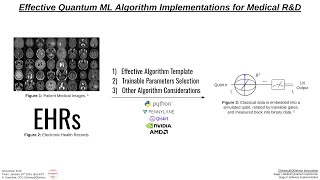
Effective Quantum ML Algorithm Implementations for Medical R&D
Explore quantum AI algorithms for medical R&D, focusing on embeddings, variational layers, and GPU implementations to enhance traditional approaches.
The Myth of AI Breakthroughs - Cutting Through Hype in Neural Network Research
Explore AI realities, efficient model training, and cutting-edge research with Jonathan Frankle. Gain insights on facial recognition, the lottery ticket hypothesis, and navigating AI hype.
Exascale Computing: From Shared Memory to GPU Architecture
Explore exascale computing, HPC architectures, and GPU programming with Dr. Meifeng Lin from Brookhaven National Laboratory.
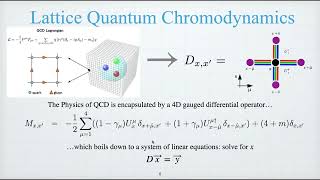
GPU Computing and Krylov Solvers
Explore GPU computing and Krylov solvers for advanced numerical computations, enhancing problem-solving skills in high-performance computing environments.

Our Road to Exascale: Particle Accelerator and Laser-Plasma Modeling
Explore the journey to exascale computing in particle accelerator and laser-plasma modeling, featuring WarpX's development and the 2022 ACM Gordon Bell Prize.
Facilitating Electronic Structure Computations on GPU-based Exascale Platforms
Explore GPU-based electronic structure computations for exascale platforms using PROGRESS and BML libraries. Learn implementation strategies, performance optimization, and scaling techniques.
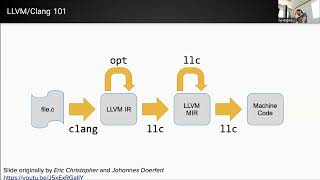
LLVM in HPC - Enabling Performance Portability, Interoperability, and Novel Features - Part 1
Explore LLVM's impact on HPC, covering portable CUDA, debugging at scale, GPU execution of legacy code, and ML in compilers. Learn about efforts to enhance performance, tooling, and development in HPC.
GPU Accelerated Computing and Optimizations on Cross-Vendor Graphics Cards with Vulkan and Kompute
Explore GPU acceleration and optimizations for cross-vendor graphics cards using Vulkan & Kompute. Learn to implement GPU-accelerated machine learning algorithms and leverage hardware capabilities for performance improvements.
Bare Metal Kubernetes with KOps - Gathering Community Wisdom
Explore architectural trade-offs and challenges of deploying Kubernetes on bare metal infrastructure, focusing on node discovery, hardware management, and community-driven solutions using KOps.
Navigating Failures in Pods with Devices: Challenges and Solutions
Explore common challenges and solutions for managing device-enabled pods in Kubernetes, focusing on GPU allocation, network cards, and memory placement for AI/ML workloads.
Solving the Kubernetes Networking API Rubik's Cube - Understanding DRA and KNI
Uncover how AI/ML drives Kubernetes networking evolution, exploring DRA and KNI implementations, hardware allocation for networking, and standardized API developments in this comprehensive technical overview.
All Your GPUs Are Belong to Us: An Inside Look at NVIDIA's Self-Healing GeForce NOW Infrastructure
Discover how NVIDIA manages GeForce NOW's massive GPU infrastructure using Kubernetes, exploring automated maintenance systems and self-healing operators that keep the game streaming platform running for millions of users.
Distributed Cache Empowers AI/ML Workloads on Kubernetes Cluster
Discover how to optimize AI/ML workloads on Kubernetes using distributed cache systems, achieving high-performance data access with 50+ GB/s throughput and sub-2ms latency for large-scale GPU clusters.
Bloomberg's Journey to Manage Multi-Cluster Training Applications with Karmada
Discover how Bloomberg leverages Karmada to manage multi-cluster GPU workloads, optimize resource utilization, and streamline AI model training across data centers with intelligent scheduling and high availability.
Best Practices for Deploying LLM Inference, RAG and Fine-Tuning Pipelines on Kubernetes
Master best practices for deploying and managing LLM inference pipelines on Kubernetes, covering optimization techniques, security measures, and efficient pipeline management using tools like KServe.
Bloomberg's Journey to Improve Resource Utilization in a Multi-Cluster Platform
Discover how Bloomberg optimizes GPU resource management across multiple clusters using Karmada, focusing on intelligent scheduling, high availability, and streamlined job submission for AI training.

Faster Containerized LLM Serving via Knowledge Sharing
Discover how to optimize LLM performance through knowledge sharing systems, reducing processing delays and improving efficiency by enabling multiple LLMs to share cached information on Kubernetes.

Unlocking the Future of GPU Scheduling in Kubernetes with Reinforcement Learning
Explore advanced GPU scheduling in Kubernetes through reinforcement learning, focusing on optimizing multi-GPU setups, reducing resource fragmentation, and improving utilization for large-scale ML projects.
Which GPU Sharing Strategy Is Right for You? A Comprehensive Benchmark Study Using Dynamic Resource Allocation
Explore GPU sharing strategies in Kubernetes using Dynamic Resource Allocation (DRA), comparing Multi-Instance GPUs, MPS, and CUDA Time-Slicing for optimal workload performance.
Load-Aware GPU Fractioning for LLM Inference on Kubernetes
Discover how to optimize GPU utilization for LLM inference on Kubernetes through load-aware fractioning, using MIG slices to improve resource efficiency while maintaining performance standards.
Tackling GPU Shortages and High Costs by Harnessing Hybrid Kubernetes Clusters
Discover how to build hybrid Kubernetes clusters using K3s and P2P VPN to integrate diverse GPU resources, reducing costs while maintaining scalability and performance for AI workloads.