Introduction to Artificial Intelligence - Game Theory Part 1 - Lecture 8
Explore game theory fundamentals and its applications in AI, focusing on strategic decision-making and problem-solving techniques in competitive environments.
Intro to Artificial Intelligence - Minimax and AlphaBeta Search - Lecture 10
Explore Minimax and AlphaBeta Search algorithms for game AI, learning key techniques to optimize decision-making in adversarial environments.
Introduction to Artificial Intelligence: Game Theory and Matrix Games - Lecture 8
Explore game theory fundamentals and matrix games in AI, covering key concepts and strategies for problem-solving in competitive environments.
Introduction to Artificial Intelligence: MiniMax and AlphaBeta Search - Lecture 10
Explore MiniMax and Alpha-Beta search algorithms for two-player game AI, covering implementation, optimization, and practical applications in decision-making processes.
Minimax Search Enhancements in Artificial Intelligence - Lecture 11
Explore advanced Minimax search techniques, including move ordering, bit operations, and transposition tables, to enhance AI game-playing algorithms.
Intro to Artificial Intelligence - RL Monte Carlo Methods - Lecture 18
Explore Monte Carlo methods in reinforcement learning, applying algorithmic techniques to solve AI problems in gaming environments.
Introduction to Artificial Intelligence: Minimax, Alpha-Beta Pruning, and Assignment 3 - Lecture 10
Explore multiplayer game algorithms, including MiniMax, Alpha-Beta pruning, and iterative deepening. Learn implementation techniques and apply concepts to Assignment 3 in this AI lecture.
Building Adaptive Multi-Agent AI Systems: From Theory to Implementation
Explore adaptive multi-agent AI systems through reinforcement learning, examining how agents navigate dynamic physical and social environments while developing cooperative strategies and decision-making capabilities.

Adversarial Intelligence in Natural and Artificial Systems
Explore the dynamics of adversarial intelligence through genetic programming and coevolutionary algorithms, focusing on designing competitive AI agents and simulating strategic rivalries.

Social Influence and the Emergence of Collective Intelligence in Pigeon Flocks
Discover how pigeon flocks demonstrate collective intelligence through social influence, exploring decision-making mechanisms and information propagation patterns in navigational improvements.

Composing Games into Complex Institutions - Game Theory Applications in Institutional Design
Explore game theory's evolution into a powerful tool for modeling and designing complex social institutions, focusing on compositional approaches and practical applications across multiple disciplines.

Learning to Disagree: Rational Agents and Persistent Polarization
Explore how rational agents can maintain disagreements despite information exchange, examining Aumann's theorem and the role of perceived opposing preferences in driving persistent polarization.

Emerging Intelligence: From Neurons to Social Dynamics
Explore how internal psychological processes and social interactions shape collective behavior, from neural networks to group dynamics, through mathematical modeling and behavioral theory.
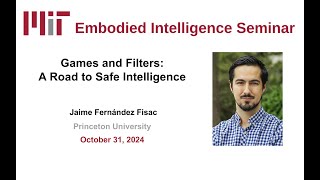
Games and Filters: A Road to Safe Intelligence
Explore game-theoretic approaches and safety principles in AI systems, from robotic control to human-AI interactions, focusing on developing reliable safety guarantees for autonomous systems.

The Map of Board Games: A Comprehensive Guide to Game Categories and Mechanics
Explore the vast landscape of board games, from abstract strategy to modern designs, understanding mechanics, themes, and gameplay styles that shape different gaming experiences.
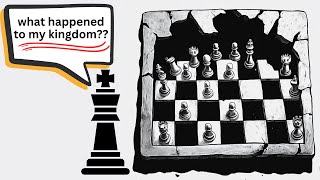
Mathematical Problem Solving: Analyzing Moves on a Broken Chessboard
Explore an engaging mathematical puzzle involving a damaged chessboard, solving unique patterns and combinations through analytical thinking and problem-solving techniques.
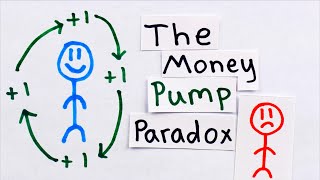
The Paradox of Intransitive Preferences in Rational Choice Theory
Explore the fascinating concept of intransitive preferences in rational choice theory, examining the money pump paradox and its implications for mathematical decision-making models.
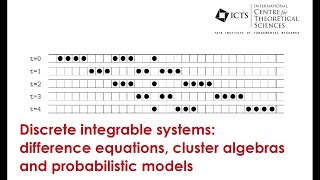
Bond Percolation Games and Their Connections with Probabilistic Cellular Automata
Explore the fascinating intersection of bond percolation games and probabilistic cellular automata, examining their mathematical relationships and theoretical applications in discrete systems.

Winning Strategy for Bachet's 1612 Combinatorial Game
Discover the winning strategy for a fascinating 1600s mathematical game, exploring combinatorial theory and historical recreational mathematics from Bachet de Meziriac's 1612 work.

Sequential Decision Making Under Uncertainty - Information Asymmetry in AI Systems
Delve into sequential decision-making under uncertainty, exploring persuasion and mechanism design in information asymmetry scenarios, with applications to AI and dynamic modeling frameworks.

From Smith's Invisible Hand to Distributed Optimization and Control
Explore how economic theory's "invisible hand" concept applies to distributed control systems, optimization algorithms, and machine learning through innovative mathematical frameworks.