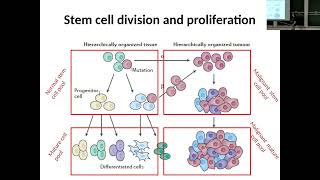
Mathematical Modeling of Blood Cancer and Premalignancy
Explore a 33-minute lecture on mathematical modeling of blood cancer and premalignancy presented by Morten Andersen and Jordan Snyder from Roskilde University. Delivered on October 3, 2024, as part of the Ecology and Evolution of Cancer series and the Th…
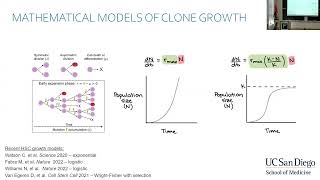
Estimating Clonal Dynamics Using Coalescent Theory and Branching Processes
Explore a 39-minute lecture on estimating clonal dynamics through coalescent theory and branching processes, delivered by Kit Curtius from the University of California, San Diego. Delve into the intersection of mathematics and oncology as part of the Fie…
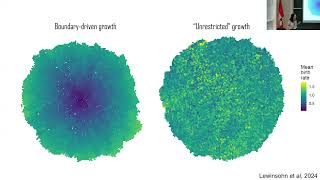
Decoding Evolutionary Information from Cancer Trees
Explore a 41-minute lecture on decoding evolutionary information from cancer trees, presented by Alison Feder from the University of Washington, Seattle. Delve into the intersection of oncology and evolutionary biology as part of the Thematic Program on…
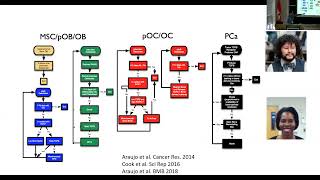
Defining Selection in Somatic Evolution by Modeling Tumor-Stromal Interactions
Explore the complex dynamics of tumor-stromal interactions and their role in somatic evolution through a 35-minute lecture by David Basanta from Moffitt Cancer Center. Delve into the fascinating field of mathematical oncology as part of the Thematic Prog…
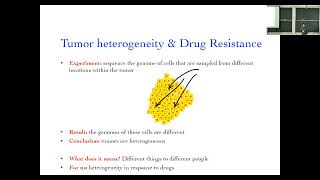
Fighting Drug Resistance with Math
Explore a compelling lecture on combating drug resistance through mathematical approaches. Delve into the innovative research presented by Doron Levy from the University of Maryland College Park as part of the Thematic Program on Mathematical Oncology. G…
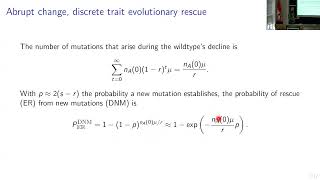
Evolutionary Rescue as a Framework for Understanding Drug Resistance in Cancer
Explore evolutionary rescue's role in cancer drug resistance, examining its impact on treatment strategies and tumor adaptation.
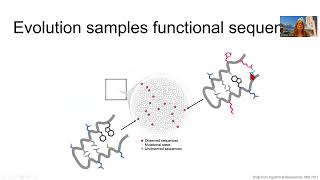
Protein Language Models - Lecture 13
Learn about protein language models and their applications in computational biology, exploring advanced techniques for analyzing and predicting protein structures and functions.
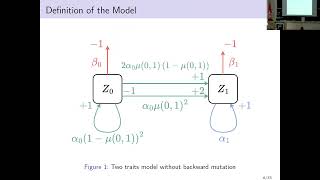
Genetic Composition of Supercritical Branching Populations Under Power Law Mutation Rate
Explore genetic composition in supercritical branching populations, focusing on power law mutation rates and their implications for evolutionary dynamics.
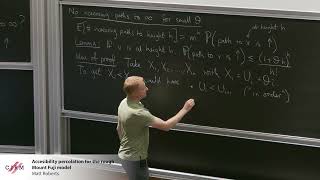
Accessibility Percolation for the Rough Mount Fuji Model
Explore accessibility percolation in the rough Mount Fuji model through a mathematical conference talk by Matt Roberts at CIRM.
MPG Primer: Introduction to Population Genetics (2024)
Explore fundamental concepts of population genetics, including genetic variation, inheritance patterns, and evolutionary forces shaping populations.

The Human Ape - Origins of the Genus Homo
Explore the origins of Genus Homo with Prof. Trenton Holliday. Delve into Australopithecus vs Homo, evolving ideas, and the complex web of human evolution. Gain insights into future anthropological research.

Do Microbes Have Immune Systems?
Explore the fascinating world of microbial immunity with Professor Robin May, uncovering how even the smallest organisms defend themselves against threats.
Learning to Read and Write Protein Evolution
Explore protein language models and their role in understanding evolutionary rules, predicting mutation effects, and guiding artificial evolution for antibody development and novel protein structures.
Ancient Genetic Clues into Modern Human Disease - Part 2
Explore ancient and historical DNA's role in understanding modern human diseases. Gain insights into ethical frameworks, research gaps, and future opportunities in this evolving field of genomic research.
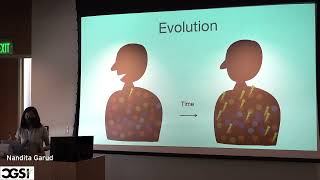
Inference of Selective Effects and Demographic Histories of Human Gut Commensals - CGSI 2024
Explore the evolutionary dynamics of human gut microbiomes through selective sweeps, rapid evolution, and strain turnover. Gain insights into bacterial adaptation within and across hosts.
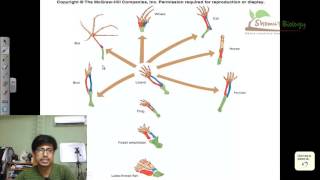
Evolutionary Biology Lecture
Comprehensive exploration of evolutionary biology theories, including natural selection, speciation mechanisms, and phylogenetic concepts, with a focus on key principles and comparative analysis.
Learn About SwissOrthology - Orthology Prediction Tool
Explore orthology prediction with SwissOrthology, covering molecular evolution, comparative genomics, and bioinformatics tools. Learn to use OMA, OrthoDB, and SPARQL for advanced genomic analyses.
Learn About Bgee - Gene Expression Tool
Explore Bgee, a database for comparing gene expression across animal species. Learn data integration, tools, and applications in cancer, agriculture, and evolutionary biology.
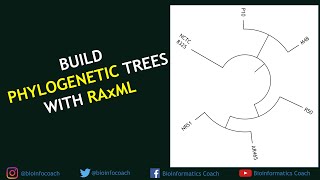
Phylogenetic Trees
Explore gene-based phylogenetic tree construction using RAxML and visualization with iTOL. Learn MUSCLE and PhyML for comprehensive evolutionary analysis techniques.
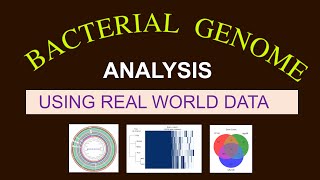
Genome Comparative Analysis
Explore bacterial genome analysis techniques, from phylogenetic tree creation to antimicrobial resistance gene identification, with hands-on tutorials suitable for beginners in bioinformatics.
Whole Genome Sequence Analysis
Comprehensive tutorial on bacterial genome analysis, covering assembly, comparative genomics, antimicrobial resistance gene identification, phylogenetic tree construction, and variant calling using bioinformatics tools.