Behavior Is a Motor and a Brake for Evolution
Explore how behavior influences evolutionary pace, focusing on anole lizards. Discover thermoregulation's role in shaping adaptations and its impact on species distribution and survival in changing environments.
Tradeoffs Between Fertility and Predation in the Evolution of Mammalian Social System
Explore mammalian social evolution, examining fertility-predation tradeoffs, cognitive demands of bonding, and the impact of group size on various species' social structures.

Clonal Reproduction Is Not an Evolutionary Dead End
Explore clonal reproduction's evolutionary potential, somatic genetic variation, and its impact on adaptation in modular species. Gain insights into detecting positive selection and comparing somatic and recombinant variation.
Choanoflagellates and the Origin of Animal Morphogenesis
Explore choanoflagellates' role in animal origins, focusing on morphogenesis, life history, and bacterial interactions. Gain insights into early animal development and evolution.
Evolution of Genomic Oddities
Explore genomic oddities in birds: transposons, satellites, and germline/soma differences. Uncover insights into sex chromosomes, centromeres, and the mysterious germline-restricted chromosome.
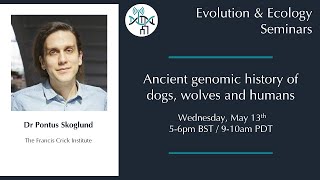
Ancient Genomic History of Dogs, Wolves and Humans
Explore the genomic history of dogs and wolves, uncovering ancient populations, gene flow patterns, and adaptive traits in modern breeds like Huskies.
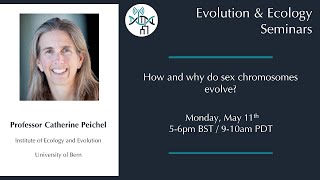
How and Why Do Sex Chromosomes Evolve?
Explore sex chromosome evolution, focusing on sticklebacks. Learn about conservation, diversity, and evolutionary models, with insights into gene expression and reproductive isolation.
Drift, Inbreeding, and Ne
Explore genetic drift, inbreeding, and effective population size through probability theory, distributions, and evolutionary concepts. Gain insights into population genetics and its applications in evolutionary biology.
Introduction to the Coalescent Theory - Lecture 3
Explores coalescent theory in population genetics, covering selection models, detecting selection, local adaptation, and challenges in interpreting genetic data for evolutionary insights.
Introduction to the Coalescent Theory - Lecture 2
Explore coalescent theory, population genetics, and evolutionary processes. Covers effective population size, migration, recombination, and linkage disequilibrium. Includes examples and simulations to illustrate key concepts.
Introduction to Coalescent Theory - Lecture 1
Explore coalescent theory in population genetics, covering Wright-Fisher models, mutation rates, and applications to human evolution. Gain insights into analyzing genetic data and detecting population changes.

Endless Forms Most Beautiful by Shannon Olsson
Explore the evolution of species through the story of a fly, from Darwin's time to modern virtual reality experiments, revealing how small brain changes lead to new species formation.
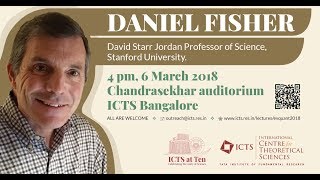
Can Evolution Be Understood Quantitatively? by Daniel Fisher
Explore quantitative approaches to understanding evolution, from basic laws to complex dynamics, using microbial experiments and theoretical models to unravel evolutionary processes and their implications.
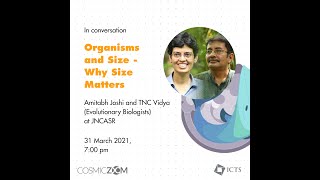
In Conversation - Organisms and Size - Why Size Matters by Amitabh Joshi and TNC Vidya
Explore how size impacts organisms' structures, behaviors, and evolution. Learn about gravity's effects, surface tension, and size-related adaptations across species with experts Joshi and Vidya.
Conservation Genomics by Nancy Chen
Explore genomic techniques for species conservation, including demographic modeling, heritability analysis, and genetic rescue strategies, to address biodiversity loss and extinction risks in the Anthropocene.
The Population-Genetic Environment - Lecture 1
Explore population genetics theory, covering genetic drift, mutation rates, and recombination. Gain insights into evolutionary processes and their impact on population dynamics across different organisms.
Introduction to Stochastic Modeling in Evolution - Lecture 1
Explore stochastic modeling in evolution, covering heritability, Mendel's experiments, neutral evolution, random genetic drift, and fixation probability through lectures and experiments.

This Is Your Body On Vegetables
Explore the anatomy of plant-based diets, evolutionary influences, and the debate between plant and animal protein consumption. Gain insights on common misconceptions and expert perspectives.
Population Genetics and Evolution - I- The Mechanisms of Evolution
Explore population genetics and evolution mechanisms through key concepts like exponential growth, Galton-Watson processes, selection, and fitness measurement in long-term experiments with E. coli and RNA viruses.
Elchanan Mossel: Combinatorial Statistics and the Sciences
Explore combinatorial statistics, broadcasting on trees, and their applications in biology and network analysis, with insights into phylogenetic inference and community detection.
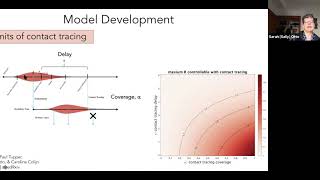
SARS-CoV-2 Evolution
Explore SARS-CoV-2 evolution, modeling approaches, and implications for public health policy. Learn about viral mutations, selection pressures, and future evolutionary trends in this insightful seminar.