Tracking Short-Term Evolution in a Pedigreed Wild Population
Explore short-term evolution in wild populations through pedigree analysis, examining genetic contributions, selection processes, and life-cycle stages to uncover evolutionary dynamics in nature.
Ecology and Evolution of Microbial Social Lives
Explore microbial social dynamics, cooperation, and adaptation in diverse environments. Discover evolutionary strategies and ecological impacts of microbial interactions.
Bridging Micro- and Macroevolution in an Old Insect Order
Explore micro- and macroevolution in Odonata, examining body size evolution, sexual selection, and female color polymorphisms across ecological and evolutionary timescales.
GWAS in Structured Populations by Magnus Nordborg
Explore genome-wide association studies in structured populations, covering linkage mapping, population structure confounding, and fine mapping challenges. Insights on heritability and adaptation across species.
Introduction to the Coalescent Theory - Lecture 3
Explores coalescent theory in population genetics, covering selection models, detecting selection, local adaptation, and challenges in interpreting genetic data for evolutionary insights.
Sexual Selection in Females by Kavita Isvaran
Explores sexual selection in females, challenging traditional male-focused views. Examines evidence from various species, discussing competition, signaling, and aggression in female mating strategies.
Endless Forms Most Beautiful by Shannon Olsson
Explore the evolution of species through the story of a fly, from Darwin's time to modern virtual reality experiments, revealing how small brain changes lead to new species formation.
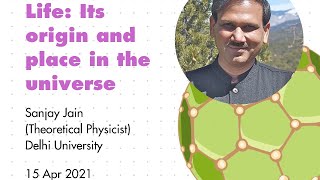
Life: Its Origin and Place in the Universe by Sanjay Jain
Explore the origin and evolution of life, from prebiotic Earth to complex organisms, and its place in the universe. Gain insights into emergence, self-organization, and cosmic significance.
The Population-Genetic Environment - Lecture 1
Explore population genetics theory, covering genetic drift, mutation rates, and recombination. Gain insights into evolutionary processes and their impact on population dynamics across different organisms.
Population Genetics and Evolution - I- The Mechanisms of Evolution
Explore population genetics and evolution mechanisms through key concepts like exponential growth, Galton-Watson processes, selection, and fitness measurement in long-term experiments with E. coli and RNA viruses.
More Perfect Than We Imagined: A Physicist's View of Life - Lecture 1
Explore how biological systems operate near physical limits, from atomic-scale hearing to bacterial decision-making, revealing life's surprising simplicity and perfection through a physicist's perspective.
What Is Life? Five Great Ideas in Biology
Nobel Laureate Sir Paul Nurse discusses five fundamental ideas in biology, exploring the essence of life and its complexities in a thought-provoking conversation with Brian Greene.
Responding to Evolution Doubt, Distortion, and Denial - Understanding Why People Reject Scientific Information
Strategies for addressing evolution skepticism, exploring cultural, religious, and scientific aspects to effectively communicate and defend evolutionary theory.
The Story of O: Evolution of Earth's Oxygen Cycle and Its Relevance to Extraterrestrial Life
Explore Earth's oxygen cycle evolution and its implications for extraterrestrial life in this captivating lecture by Paul Falkowski, delving into planetary sciences and astrobiology.
Charles Darwin's Contributions to Entomology
Explore Darwin's significant but often overlooked contributions to entomology, including his extensive use of insect examples in evolutionary theory and his impact on entomological research.
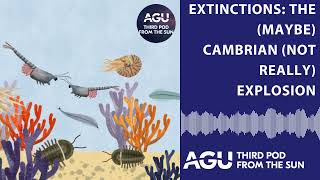
Extinctions: The Cambrian Explosion Revisited
Geoscientist Rachel Wood challenges the traditional view of the Cambrian explosion, offering new insights into the emergence of animals on Earth and redefining our understanding of this pivotal period in evolutionary history.
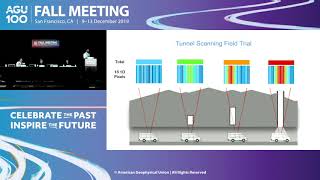
Geoscience Grab Bag - Lunar Dust, Freshwater Evolution, Maritime Activities, and Railway Tunnels
Diverse geoscience research: lunar dust interactions, extreme freshwater evolution, maritime surveillance, and railway tunnel safety. Cutting-edge findings across Earth and space sciences.

A Crack in Creation - Gene Editing and the Power to Control Evolution
Explore the revolutionary CRISPR gene-editing technology, its potential to cure diseases and address hunger, and the ethical dilemmas surrounding its use in human embryos and evolution control.
Are Viruses Alive? Exploring the Boundaries of Life
Explore the fascinating boundary between life and non-life as Carl Zimmer delves into the nature of viruses, challenging our understanding of what it means to be alive.
The Rules that Govern Life on Earth
Discover how a few simple rules govern all life on Earth, from cells to ecosystems. Explore groundbreaking biological discoveries and their potential to address major medical and ecological challenges.
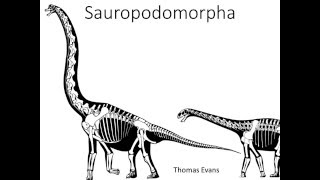
Sauropodomorpha - Evolution of the Largest Land Animals in History
Explore the evolution of Earth's largest land animals, examining how dinosaurs achieved their massive size and dominated terrestrial ecosystems.