
History of Science - CrashCourse
In 46 episodes, Hank Green teaches you the history of science! This course is based on the 2nd and 3rd edition of Science & Technology in World History by McClellan & Dorn.
Evolutionary Forces in Humans and Pathogens - Natural Selection and Genomic Studies
Explore genomic evolution in humans and pathogens, focusing on natural selection, adaptive traits, and disease-causing microbes. Learn about cutting-edge research methods and their public health implications.
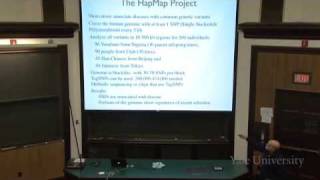
The Origin and Maintenance of Genetic Variation - Lecture 6
Explore genetic diversity's origins through mutations, selection, and recombination. Discover how population size impacts evolution and genetic variation maintenance in different scenarios.
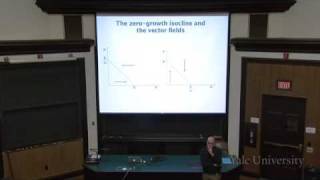
Interspecific Competition in Ecology and Evolution - Lecture 27
Explore interspecific competition's impact on evolution, including classical patterns, experimental evidence, conceptual frameworks, and real-world implications in ecology and biology.
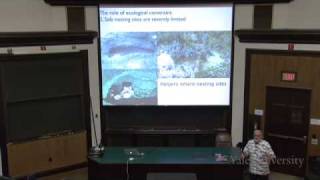
Selfishness and Altruism in Evolution, Ecology, and Behavior - Lecture 36
Explore evolutionary explanations for altruism, including kin selection and ecological constraints, challenging the idea that self-sacrifice contradicts natural selection.

Neutral Evolution - Genetic Drift and Molecular Clocks
Explore genetic drift and neutral evolution, understanding how random changes in genes can impact species over time without affecting reproductive success.

Sexual Selection in Evolution, Ecology, and Behavior - Lecture 13
Explore sexual selection's role in evolution, including intersexual and intrasexual selection, sexual dimorphism, and costly signaling in mate choice and competition.
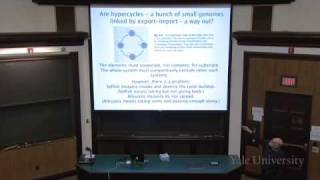
Key Events in Evolution - Lecture 17
Explore key evolutionary events from non-life to eukaryotic cells, including symbiosis and new levels of selection. Gain insights into the history of life and biological complexity.

The Nature of Evolution: Selection, Inheritance, and History - Lecture 1
Explore evolutionary biology's key concepts: natural selection, adaptation, genetic drift, and life's history, from its origins to major evolutionary milestones over 3.7 billion years.
Adaptive Evolution - Natural Selection in Evolutionary Biology
Explore natural selection's role in adaptive evolution, including selection types, evolutionary speeds, and outcomes like directional, stabilizing, and disruptive changes.
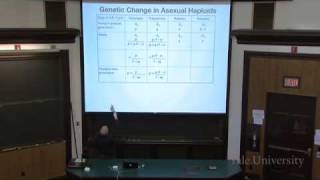
How Selection Changes the Genetic Composition of Population - Principles of Evolution, Ecology and Behavior
Explore genetic systems, their impact on evolution, and how selection alters population genetics. Learn about adaptive genetic change rates and the math behind genetic shifts in populations.
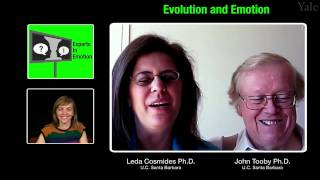
Evolution and Emotion - Experts in Emotion Series with Leda Cosmides and John Tooby
Explore evolution's role in shaping human emotions with experts Leda Cosmides and John Tooby. Discover key findings, future prospects, and advice for aspiring researchers in this insightful interview.
Evolution and Rationality: An Evolutionary Perspective on Psychology
Explore how natural selection shapes human psychology, examining evolutionary perspectives on mental phenomena, instincts, and decision-making processes in this insightful lecture on the origins of human behavior.
The Evolution of Sex - Principles of Evolution, Ecology and Behavior
Explore the evolutionary benefits and costs of sexual reproduction, including genetic diversity, pathogen resistance, and the prevalence of sex in nature's recent evolutionary branches.
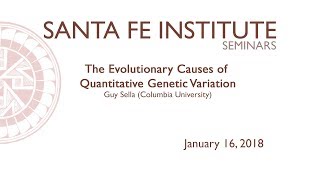
The Evolutionary Causes of Quantitative Genetic Variation
Explore the genetic architecture of quantitative traits, examining how mutation, selection, and drift shape heritable variation. Gain insights into missing heritability and interpret genome-wide association studies findings.
Demonology - Intelligence in Physics & Biology
Explore the historical role of intelligence in physics and biology, from Laplace's demon to modern information theory, and its implications for understanding natural phenomena.
The Rise and Fall of Evolutionary Sand Castles
Exploring evolutionary models of biological interdependence, from organism components to ecological systems, and how these structures can fail catastrophically due to their interconnected nature.
Evolutionary Theory and Human Decision-Making: Reconciling Rationality with Biological Constraints
Exploring how evolutionary theory can explain human decision-making, challenging traditional views of rationality and offering insights into behavioral economics anomalies.
Does Culture Evolve? - Challenging Evolutionary Theory in Historical Processes
Explore the concept of cultural evolution, its validity, and challenges in applying evolutionary theory to historical processes. Gain insights into anthropology and cultural change.

What is Evolutionary Theory? - Origins, Structure, and Modern Understanding
Explore the origins, structure, and modern understanding of evolutionary theory, including its deep problems and unique scientific challenges.
Modelling Genes
Explore genetic variation patterns through mathematical models, examining inheritance, natural selection, and population dynamics to interpret DNA data and understand evolutionary mechanisms.