The Collective Computation of Reality in Nature and Society
Explore how nature computes through collective processes, challenging traditional views on complexity and information processing in biological and social systems.

Environment X Everything Interactions - From Evolution to Epidemics and Beyond
Explore environment-actor interactions across various fields, from evolution to epidemics, using mathematical frameworks and simulations to understand complex systems and their impacts.
Demonology - Intelligence in Physics & Biology
Explore the historical role of intelligence in physics and biology, from Laplace's demon to modern information theory, and its implications for understanding natural phenomena.
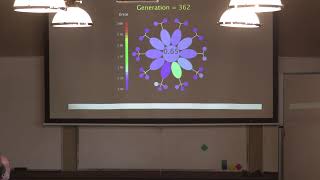
Modelling the Role of the Microbiome in Evolution
Explore how microorganisms influence multicellular evolution, adaptability, and biological functions. Learn about holobiont fitness, specialized diversity, and the emergence of complex organisms through coevolution.
Sara Walker on the Physics of Life and Planet-Scale Intelligence
Exploring the physics of life, planetary intelligence, and the nature of information. Delves into cutting-edge research on origins of life, assembly theory, and expanding our understanding of living systems across scales.
A Brief History of Balance - Carlos Gershenson SFI Seminar
Explore the concept of balance across various domains, from physics to philosophy, and its implications for evolution, sustainability, and complex systems.
The Jumping Genome - Changing Ideas about Heredity and Evolution
Explore the evolution of genetics, from Mendel's pea experiments to modern genomics, including McClintock's revolutionary "jumping gene" discovery and its impact on our understanding of heredity and evolution.
The Rise and Fall of Evolutionary Sand Castles
Exploring evolutionary models of biological interdependence, from organism components to ecological systems, and how these structures can fail catastrophically due to their interconnected nature.
The Singular Origin of Complex Life
Explore the unique evolutionary event that led to eukaryotes, examining mitochondrial impact on genome expansion and the role of energy in complex life development.
Evolutionary Theory and Human Decision-Making: Reconciling Rationality with Biological Constraints
Exploring how evolutionary theory can explain human decision-making, challenging traditional views of rationality and offering insights into behavioral economics anomalies.
Life on Earth and Beyond: Exploring Possibilities for Extraterrestrial Life
Explore the possibilities of extraterrestrial life with physical biologist Chris Kempes. Learn about potential habitats, detection methods, and how familiar life forms might adapt to different environments across the universe.
Does Culture Evolve? - Challenging Evolutionary Theory in Historical Processes
Explore the concept of cultural evolution, its validity, and challenges in applying evolutionary theory to historical processes. Gain insights into anthropology and cultural change.

What is Evolutionary Theory? - Origins, Structure, and Modern Understanding
Explore the origins, structure, and modern understanding of evolutionary theory, including its deep problems and unique scientific challenges.
Diverse Intelligence - From Human Minds to Complex Systems
Exploring diverse forms of intelligence: from human evolution to complex systems and future discoveries. Experts discuss biological, artificial, and collective intelligence across species and technologies.
The Physical Constraints on Life and Evolution
Explore how physics and scale shape biological evolution, from bacterial structures to complex organisms, revealing universal constraints and evolutionary strategies that apply to both life and human institutions.
Olivia Judson on Major Energy Transitions in Evolutionary History
Explore major energy transitions in evolutionary history with Olivia Judson, examining how life's processes shaped Earth's atmosphere, ecosystems, and geological features over billions of years.
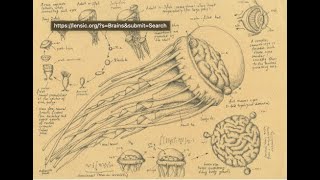
Evolving Brains: Solid, Liquid and Synthetic - Lecture 1: Liquid Brains and Solid Brains
Explore diverse intelligences across life forms, from cells to humans. Examine brain evolution, commonalities, and differences, and consider possibilities for new types of minds.
Liquid and Solid Brains: Cognition, Criticality, and Terraforming the Biosphere
Exploring liquid and solid brains, cognitive scaling, criticality, and terraforming the biosphere through synthetic biology. Insights on collective intelligence and the future of technology in ecology and evolution.
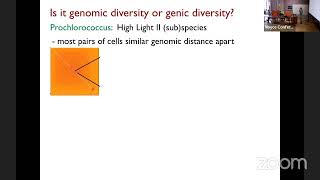
Why is There So Much Fine Scale Microbial Diversity - Ecology and Evolution in High Dimensions
Explore the ecological and evolutionary factors driving microbial diversity at fine scales, examining high-dimensional perspectives on this complex phenomenon.
What is Lyfe? Towards a Biology of Context and Complexity
Exploring a multidimensional view of biology beyond genomics, emphasizing history, context, environment, and narrative to reframe our understanding of life and its complexities.
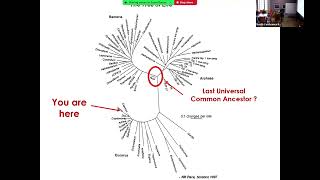
Topological Scaling Laws and the Mathematics of Evolution
Explore topological scaling laws in evolutionary biology, examining phylogenetic tree structures and their implications for understanding large-scale evolutionary patterns and processes.