
Automotive Grade Linux on Raspberry Pi - How Does It Work?
Explore Automotive Grade Linux on Raspberry Pi, covering core technologies, supported devices, build process, peripherals, and developer tools for automotive software development.
A Disciplined Approach to Debugging
Learn systematic debugging techniques, from binary search to hardware analysis, enhancing your ability to identify and resolve complex software issues efficiently.
Building Bare Metal Toolchains, Crosstool-ng and Yocto Project
Learn to build custom toolchains for embedded systems using Crosstool-ng and Yocto Project. Explore Xilinx's bare metal toolchains and gain insights on optimizing multilib configurations.

Zephyr RTOS Juicy Features Using Simple Evaluation Boards and Robots
Explore Zephyr RTOS features using evaluation boards and robots. Learn to write code, build applications, and implement device drivers for embedded systems and robotics projects.

PMIC - First One to Turn On and Last One to Turn Off
Explore PMIC driver development in Linux, covering regulator types, debugging techniques, and best practices for writing efficient drivers and avoiding common issues.

One Build to Rule Them All - Building FreeRTOS & Linux Using Yocto
Learn to build FreeRTOS and Linux applications using Yocto Project, enabling efficient development for heterogeneous embedded systems with a unified workflow and SDK.
We Need to Talk About Systemd - Boot Time Optimization for the New init daemon
Optimize boot time with systemd: learn to configure units, eliminate unnecessary tasks, and reorder processes for faster system startup in embedded Linux environments.
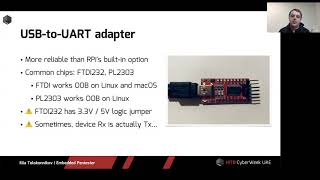
CI - CD With SAST And DAST For Embedded Devices
Explore automated security testing for embedded devices using FOSS, commercial tools, and creative solutions. Learn to implement CI/CD with SAST and DAST for multiple device families at scale.
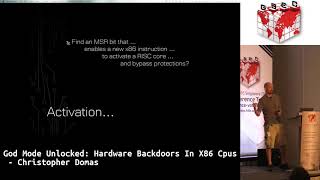
God Mode Unlocked - Hardware Backdoors in x86 CPUs
Unveiling a critical hardware backdoor in x86 CPUs allowing unprivileged users to bypass security checks and escalate to kernel-level access. Explores detection, prevention, and broader implications for processor security.
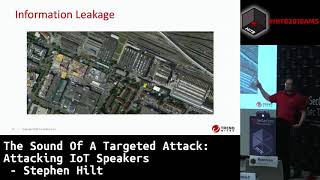
Attacking IoT Speakers
Exploring vulnerabilities in IoT speakers, focusing on Sonos and Bose systems. Covers configuration flaws, diagnostic tools, API issues, and device location. Discusses broader implications for IoT security.
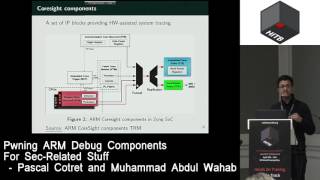
Pwning ARM Debug Components
Exploring ARM debug components for security primitives and information flow tracking. Demonstrates a portable approach to enhance runtime security monitoring in ARM-based systems.

How Hardware Boundaries Define Platform Security
Exploring how hardware component boundaries impact platform security, focusing on outsourced components, supply chain risks, and threat modeling gaps in modern hardware architectures.
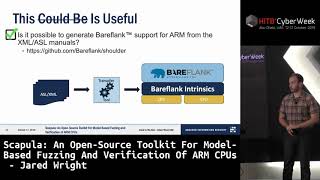
An Open-Source Toolkit for Model-Based Fuzzing of ARM CPUs
Explore model-based fuzzing for ARM CPUs using machine-parsable reference manuals. Learn about Scapula, an open-source tool for detecting specification violations in ARM-based platforms.
How to Dump, Parse, and Analyze i.MX Flash Memory Chips
Explore techniques for dumping, parsing, and analyzing i.MX flash memory chips, focusing on NXP i.MX architecture in embedded systems. Learn about custom flash memory management and tools for recovering filesystems.
Hunting for Backdoors in IoT Firmware at Unprecedented Scale
Explore advanced techniques for detecting hidden vulnerabilities in IoT firmware at scale, enhancing cybersecurity practices for the rapidly expanding Internet of Things ecosystem.
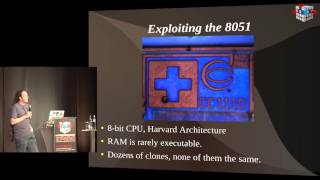
Nifty Tricks and Sage Advice for Shellcode on Embedded Systems
Clever tricks for writing exploits on embedded systems, including tiny shellcode for ARM, memory corruption on 8-bit micros, and developing without debuggers or firmware images.

Advanced SOHO Router Exploitation
Explore advanced techniques for exploiting SOHO routers, including firmware analysis, vulnerability discovery, and ARM/MIPS exploit development. Learn about 0-day vulnerabilities and post-exploitation concepts for household routers.
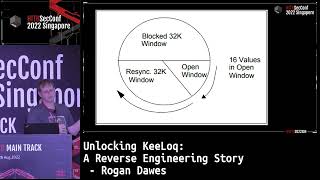
Unlocking KeeLoq - A Reverse Engineering Story
Reverse engineering KeeLoq systems: extracting firmware, decrypting transmissions, and integrating with home automation. Practical approach to exploiting known vulnerabilities in remote keyless entry systems.

Random Walk Through A Few Million Things
Explore IoT security challenges in enterprises, examining millions of devices to reveal vulnerabilities, default credentials, and outdated firmware. Gain insights into the current state of IoT security.
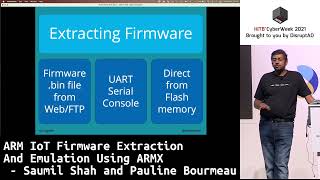
ARM IoT Firmware Extraction and Emulation Using ARMX
Hands-on workshop on extracting and emulating ARM IoT firmware using ARMX. Covers firmware extraction, unpacking, file system analysis, and device emulation. Practical experience with real IoT devices and tools.

PIPSEA - A Practical IPsec Gateway on Embedded APUs
Innovative IPsec gateway implementation on embedded APUs, enhancing network security performance through efficient hardware utilization and optimized cryptographic operations.