Elasticsearch from the Bottom Up
Explore Elasticsearch and Lucene architecture, focusing on inverted index structure, index terms, text analysis, segment-based indexing, caching, and distributed search processing across shards.
Log Everything with Logstash and Elasticsearch
Centralized logging for multi-server Python apps using Logstash and Elasticsearch. Learn structured logging patterns, GELF transport, and Kibana for analysis and visualization.
Python and Elasticsearch 101
Explore Python integration with Elasticsearch for versatile data storage and retrieval, from IoT device metrics to business events, with insights on schema, querying, and administration.
From Basic Distance Search to a Complex Multi Criteria Search
Explore advanced Elasticsearch techniques for complex multi-criteria searches, progressing from basic distance queries to production-ready implementations like Airbnb's, using decay functions and custom backends.
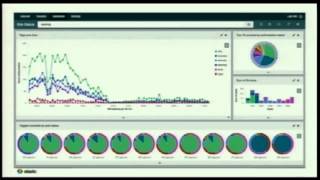
Beyond the Basics with Elasticsearch
Explore advanced Elasticsearch scenarios: trend detection using aggregation framework, percolator for reversed search, and geo-enabled search with relevancy for non-trivial data analysis.
What is the Best Full Text Search Engine for Python?
Explore and compare full text search engines for Python, including ElasticSearch, Postgres Full Text Search, Sphinx, and Whoosh. Gain insights on performance, features, and selection criteria.
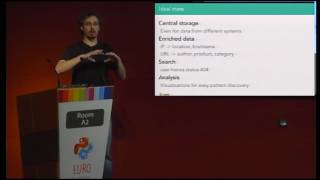
Log All the Things!
Discover how to collect, clean, store, and analyze log data from various systems using the ELK stack, enhancing DevOps practices and gaining valuable insights into your infrastructure.
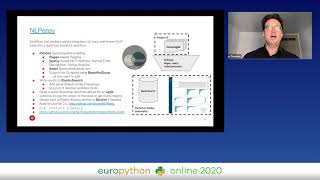
NLPeasy - A Workflow to Analyse, Enrich, and Explore Textual Data
Discover NLPeasy: a streamlined workflow for analyzing, enriching, and exploring textual data using pre-trained models, Docker, and Jupyter Notebooks. Simplify your NLP projects with this powerful Python package.
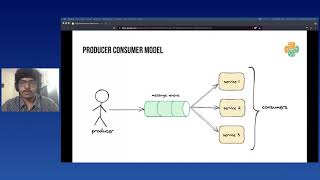
High Performance Data Processing with Python, Kafka and Elasticsearch
Explore high-performance data processing using Python, Kafka, and Elasticsearch. Learn to implement a Producer-Consumer model for real-time data updates in various applications.

Building a Scalable Analytical Solution Using IaaS and Elasticsearch
Learn to build a scalable analytical solution using Infrastructure as a Service and Elasticsearch, exploring key concepts and best practices for efficient data processing and analysis.
Observability at Scale - Running OpenTelemetry Across an Enterprise
Explore Intuit's journey in implementing large-scale observability using OpenTelemetry, Kubernetes, and Jaeger. Learn about scaling ElasticSearch, secure agent onboarding, and leveraging open-source libraries for enhanced trace data.
Cartography - Using Graphs to Improve and Scale Security Decision-Making
Explore Cartography, an open-source tool for visualizing and securing cloud-native assets. Learn how to improve decision-making, track changes, and understand security risks across platforms.
Migration 101 - From VMs to Kubernetes
Learn to migrate apps from VMs to Kubernetes: Dockerize, create YAML specs, configure routing, perform no-downtime migration, and monitor with logging and metrics tools. Hands-on tutorial for managing hybrid environments.
Postcapitalism
Exploring how open-source software disrupts capitalism, examining economic transitions, and discussing strategies for companies to remain relevant in a world of free software.

Centralised Logging - Without the Blood, Sweat and Tears
Discover how to build a scalable, cost-effective logging infrastructure using managed cloud services like ElasticSearch and AWS Kinesis, saving time and money for your company.
Diving into Elasticsearch with .NET
Explore Elasticsearch's capabilities for .NET developers, covering autocompletion, search relevancy, recommendations, geospatial search, and data aggregations to solve real-world problems.
Elasticsearch Do's, Don'ts and Pro-Tips
Discover Elasticsearch best practices, pitfalls, and expert tips for efficient deployment, scalability, and performance optimization in search and analytics applications.
Monitor Your Containers with the Elastic Stack
Explore container monitoring using the Elastic Stack, focusing on Beats for data collection, log fetching, metrics gathering, and network traffic analysis in containerized environments.
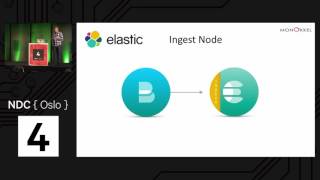
Data Magic with the Elastic Stack
Explore key features of Elastic 5.x suite for data analytics, including geo-capabilities, pipeline aggregations, and Timelion, with real-world cases and Kibana visualization demonstrations.

Elasticsearch - You Know, for More Than Search
Explore Elasticsearch's versatility beyond search, including recommendations, monitoring, forensic analysis, and machine learning for anomaly detection. Discover new ways to leverage your data.
Managing Your Black Friday Logs
Best practices for optimizing Elastic Stack for high-traffic monitoring, including architecture, bulk sizing, load distribution, and disk I/O tuning to handle Black Friday-level log volumes.