
Software Architecture as Systems Dissolve
Explore the evolution of software architecture from monoliths to cloud-based microservices, examining key drivers and implications for future intelligent, connected systems.

Log Aggregation
Explore real-time log aggregation with Humio for efficient system monitoring. Learn about its unique features, query language, and advantages over alternatives for critical distributed systems.

Advanced Spring Cloud
Explore advanced Spring Cloud concepts for distributed systems, including centralized configuration, service discovery, and inter-service communication patterns.

Distributed - of Systems and Teams
Explore strategies for building consistency, availability, and fault tolerance in distributed teams, emphasizing empathy, communication, and adaptability in tech environments.

Microservices in Go
Explore microservice architecture development using Go, covering best practices, common pitfalls, and lessons learned for building high-performance distributed systems.

Building Low Latency Microservices & Monoliths in Java Using High Performance Serialization & Messaging
Explore low-latency microservices and monoliths in Java, focusing on high-performance serialization and messaging techniques for improved system efficiency and responsiveness.

The Verification of a Distributed System
Explore techniques for verifying distributed systems, including formal methods, testing strategies, and fault injection, to build robust and reliable systems in the face of partial failure and asynchrony.

What is a CDN and Why Developers Should Care About Using One
Explore CDN benefits, challenges, and developer-focused solutions. Learn how Fastly's unique architecture enhances application security, acceleration, and developer experience.

Docker as the Building Block for Datacenter-Scale Applications
Explore Docker's role in building datacenter-scale applications, focusing on cluster management, fault tolerance, and resource allocation using Apache Mesos for large-scale distributed systems.

The Sparkling Solution that Scales to IoT
Exploring Spark and Scala for IoT big data analytics, with demonstrations of infrastructure setup on Apache Mesos and coding techniques for Spark streaming, AKKA, and SparkSQL.

Microservices at Netflix Scale - Principles, Tradeoffs & Lessons Learned
Explore Netflix's microservices architecture, principles, and lessons learned. Gain insights into scaling, loose coupling, reliability, and infrastructure in distributed systems.

Providing Flexible Database Consistency Levels with Manhattan at Twitter
Explore Twitter's Manhattan distributed key-value store, its architecture, consistency levels, and adaptations. Learn about eventual consistency benefits and alternative models for database management.

Building a Clustered Service in Go
Explore approaches to application clustering in Go, covering basic features, counter services, and various clustering techniques for scalability and availability.
A Peek Inside Erlang's OTP
Explore Erlang's OTP framework, its design principles, and behaviors. Learn about process models, pattern matching, and how OTP enhances Erlang for building scalable and fault-tolerant systems.

Taking The Hippie Bus To The Enterprise
Explore how Rebus, a lightweight messaging tool, can solve enterprise software challenges by enabling reliable asynchronous communication between smaller, vertically-sliced systems.
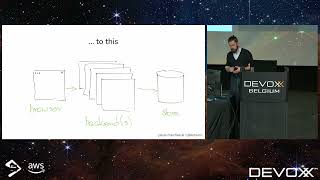
Caching Beyond Simple Put and Gets
Explore advanced caching strategies beyond basic operations, addressing challenges like invalidation and scaling. Learn effective design and implementation techniques for various use cases using Hazelcast managed service.
Optimizing Speed and Scale of Real Time Analytics Using Apache Pulsar and Apache Pinot
Explore Apache Pulsar for event streaming and Apache Pinot for real-time analytics. Learn how these powerful open-source tools combine to deliver scalable, low-latency data processing and analysis in cloud-native environments.
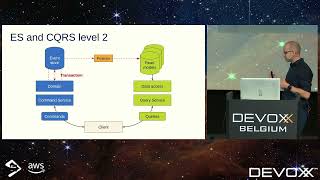
Event Sourcing - What Could Possibly Go Wrong?
Explore challenges and solutions in implementing Event Sourcing, including storage, schema evolution, scalability, and consistency, based on real-world commercial experience.
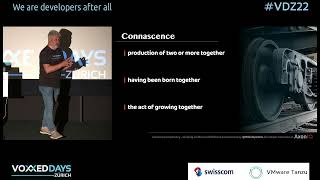
Location Transparency
Explore location transparency's role in building scalable, distributed systems. Learn how it impacts coherence, coupling, and connascence metrics, and its significance in DDD, CQRS, and Event Sourcing.

Event Sourcing With Event Store
Learn event sourcing with Event Store: implementation, challenges, and best practices for robust, scalable systems. Covers writing events, validation, migrations, and advanced topics.
Complex Event Flows in Distributed Systems
Explore event-driven architectures in distributed systems, focusing on event chains, orchestration, and workflow engines to improve system design and reduce coupling.