Apache Pulsar Current Limiting Principle and Application Practice
Explore Apache Pulsar's current limiting principles and application practices, focusing on ResourceGroup implementation and multi-cluster traffic management in cloud-native scenarios.
Querying Live Data Using Open Source SQL Engines - A Comparison of Apache Flink, ksqlDB, and Other Tools
Explore real-time data querying using SQL engines like Apache Flink, ksqlDB, Trino, and RisingWave for streaming data analysis on Kafka and other message buses.
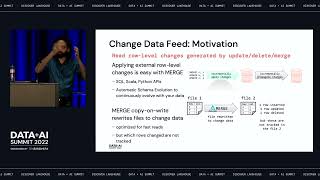
Delta Lake 2.0 Overview - New Features and Community Collaborations
Overview of Delta Lake 2.0 features, integrations, and community collaboration. Highlights include data skipping, Change Data Feed, column mapping, multi-cluster S3 writes, and support for various languages and platforms.
Building Modern Data Streaming Apps with Open Source
Discover best practices for building data streaming applications using open-source frameworks. Learn to orchestrate streams, perform ETL, enhance events, and make continuous queries with tools like Apache NiFi, Pulsar, Spark, and Flink SQL.
The Secret to Great Developer Experience Is Killer Content
Discover strategies for creating compelling developer-focused content that enhances user experience, drives engagement, and differentiates open-source projects from commercial products.
Guerilla Tactics for Building Scalable E-Commerce Services with Apache Cassandra, Apache Pulsar, and Vector Search
Learn to architect high-performing e-commerce services using Apache Cassandra, Pulsar, and Vector Search. Covers data modeling, product navigation, shopping carts, recommendations, and order processing.
Apache Pulsar Deployment Practice in Cross-Kubernetes Cluster Scenarios
Explore cross-Kubernetes cluster deployment strategies for Apache Pulsar, focusing on practical implementation techniques and cloud-native infrastructure optimization.
Apache Pulsar - A Cloud-Native Alternative to Kafka for Event-Driven Applications
Discover how Apache Pulsar serves as a scalable messaging platform, offering unified data streaming, multi-tenancy, and seamless integration with container environments - all while providing an alternative to traditional message brokers.
Building ML-Enhanced Event Streaming Apps with Java Microservices
Explore building ML-enhanced event streaming applications using Java microservices and Apache Pulsar. Learn about Pulsar's architecture, functions, and programming model through a practical coding demo.

Let's Go Build Cloud Native Pulsar Apps with Go
Develop cloud-native Pulsar applications using Go, exploring key concepts and best practices for building scalable, event-driven systems.
Event-Driven Change Data Capture Pattern
Explore event-driven Change Data Capture patterns and their implementation using Apache Pulsar for efficient, real-time data synchronization in cloud-native environments.

Choosing the Right Platform for Your Event-Driven App - Apache Pulsar Overview
Explore Apache Pulsar's features for event-driven apps: scalability, elasticity, durability, geo-replication, multi-tenancy, and ecosystem compatibility. Learn about its architecture and benefits for data streaming.

Apache Pulsar - Next Generation Messaging and Queuing System
Overview of Apache Pulsar's architecture, features, and benefits as a scalable messaging system with unified storage, processing, and serverless capabilities for building end-to-end streaming applications.

Deep Dive into Building Streaming Applications with Apache Pulsar
Explore real-time cloud-native streaming with Apache Pulsar. Learn architecture, messaging, monitoring, and integration with various tools and languages for building efficient streaming applications.
Optimizing Speed and Scale of Real-Time Analytics Using Apache Pulsar and Apache Pinot
Explore Apache Pulsar and Apache Pinot's synergy for high-speed, scalable real-time analytics in Cloud Native environments. Learn how these powerful tools enable efficient event streaming and ad-hoc data analysis.
Optimizing Speed and Scale of Real-Time Analytics Using Apache Pulsar and Apache Pinot
Explore real-time analytics optimization using Apache Pulsar for event streaming and Apache Pinot for low-latency OLAP, enabling scalable, high-performance data processing and ad-hoc querying.
Event Streaming for the Best of All Worlds - Apache Pulsar vs Apache Kafka
Explore event-driven messaging systems, focusing on Apache Pulsar's unique capabilities in supporting both streaming and queueing semantics for modern, cloud-native applications.

Building Real-time Pulsar Apps on Kubernetes
Develop real-time cloud native streaming apps using Java, Golang, Python, and Apache NiFi with Apache Pulsar on Kubernetes.
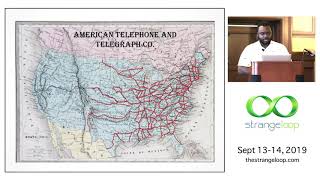
Apache Pulsar and the Legacy of Telegraphy
Explore the parallels between wireless telegraphy and Apache Pulsar, uncovering design principles for distributed, low-latency messaging systems. Gain insights into Pulsar's architecture, features, and future potential.
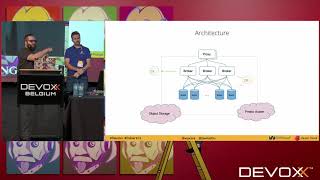
Apache Pulsar 101 - Architecture, Concepts & Benchmarks
Explore Apache Pulsar's architecture, concepts, and performance in event streaming. Compare with alternatives like Kafka and RabbitMQ. Includes Java code examples and insights from production use.
Apache Pulsar - The Next Gen Messaging & Queuing System
Explore Apache Pulsar's innovative architecture for scalable messaging and queuing, featuring unified flexibility, durability, and serverless processing capabilities for modern data-driven applications.