Building Blocks of Distributed Systems - Parts 1 & 2
Interactive class exploring orchestration, load balancing, databases, and storage in distributed systems. Covers key concepts and design principles for large data processing pipelines through collaborative exercises.
Implementing Distributed Consensus
Explore distributed consensus through "Skinny," a lock service. Learn Paxos protocol, design a simple consensus protocol, and tackle implementation challenges from theory to coding.
Let's Build a Distributed File System
Explore the architecture of typical and distributed file systems, including key components and operations. Learn through a simple Python implementation of a basic distributed file system.
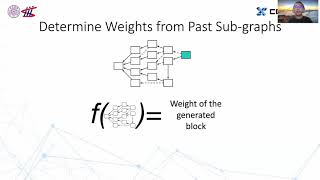
A Decentralized Blockchain with High Throughput and Fast Confirmation
Explore a novel blockchain system with high throughput and fast confirmation, featuring an optimistic consensus protocol and adaptive weight mechanism to enhance scalability and security.
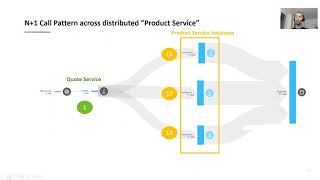
Automatically Detect the Top Performance & Scalability Issues in Distributed Architectures
Explore common performance patterns in distributed systems and learn automated detection techniques using CNCF's Keptn project for CI/CD pipelines, focusing on SLI/SLO-based quality gates.
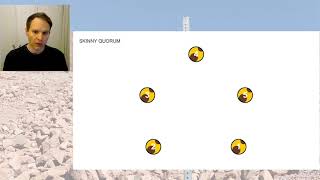
Implementing Distributed Consensus
Explore distributed consensus through "Skinny," a lock service. Learn Paxos protocol, design a simple consensus protocol, and tackle implementation challenges in distributed systems.
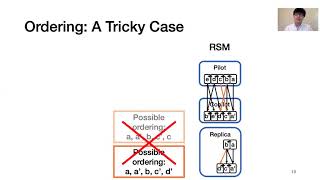
Tolerating Slowdowns in Replicated State Machines Using Copilots
Innovative consensus protocol for replicated state machines that maintains normal latency despite slowdown of any single replica, using pilot and copilot for redundancy and fast takeovers.
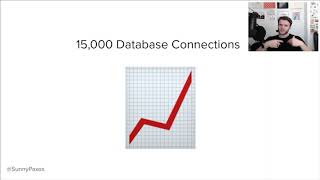
From 15,000 Database Connections to Under 100 - A Tech Debt Tale
Explore a multi-year tech debt resolution journey, focusing on reducing database connections from 15,000 to under 100. Learn strategies for handling scaling challenges in distributed systems.
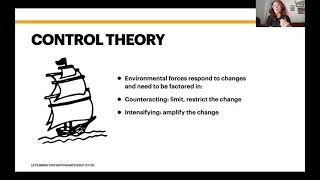
Let's Bring System Dynamics Back to CS
Explore System Dynamics for modeling feedback loops in distributed systems. Learn its history, tools, and applications to prevent outages and improve software architecture design.

The Impact of Blockchain and Cryptocurrencies
Explore blockchain's impact on currency, governance, and global power dynamics. Discover how this technology challenges traditional financial systems and reshapes national sovereignty.
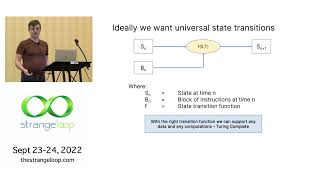
Beyond Blockchain - Convergent Consensus
Explore a novel consensus algorithm inspired by CRDTs and category theory, offering efficient and scalable decentralized computation. Learn about Convergent Proof of Stake and its implementation using Convex Lisp.
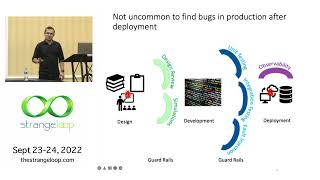
Formal Modeling and Analysis of Distributed Systems
Explore formal methods for distributed systems using P programming framework. Learn to model, specify, and verify complex systems across development phases, from design to production.
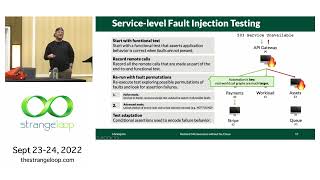
Resilient Microservices Without the Chaos
Explore resilient microservices design using Service-Level Fault Injection Testing. Learn about Filibuster, a tool that verifies application behavior under failure, combining static analysis and test synthesis for robust systems.
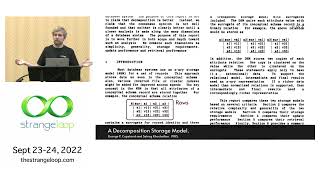
Light and Adaptive Indexing for Immutable Databases
Explore innovative indexing strategies for large-scale immutable databases, including learned and adaptive indexes, addressing engineering challenges in distributed environments.
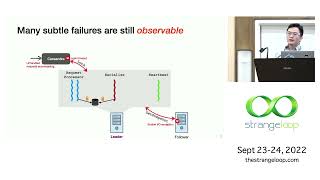
Automatic Generation of Runtime Checkers for Production Distributed Systems
Explore systematic techniques for automatically generating effective runtime checkers to detect and localize failures in complex distributed systems, enhancing reliability and performance.

Prevent Phishing & Impersonation
Explore innovative approaches to prevent phishing and impersonation attacks in digital systems. Learn about trust-based identity models and a prototype address book that enhances security without compromising usability.

Systems That Run Forever - Self-Heal and Scale
Explore architectural principles for building scalable, fault-tolerant systems using isolated parallel components, error detection, and live code upgrades, with insights from Erlang's design.
Data in Motion - Streaming Static Data Efficiently in Akka Persistence
Explore efficient streaming of static data using Akka Persistence, focusing on architecture, implementation, and performance tuning for distributed systems and enterprise applications.

Perfect Scalability
Explore architectural constraints for extreme scalability, focusing on design approaches, real-world examples, and leveraging Lightbend tools to create systems that scale without limits.

Intro - Jaeger
Explore Jaeger and distributed tracing for cloud-native app observability. Learn current features, future roadmap, and how Jaeger enhances monitoring in microservices architectures.
Tap Tap, Debugging an App with Your Service Mesh
Explore microservice debugging with Linkerd's traffic analysis, reducing MTTR and isolating issues without code changes or team coordination in distributed systems.