Deploying Python at Scale with Dask
Explore scaling Python with Dask on distributed systems, focusing on deployment challenges and solutions for cluster resource managers like Kubernetes, Yarn, and cloud platforms.
Large Scale Data Validation - with Spark and Dask
Explore data validation techniques for large-scale datasets using Spark and Dask. Learn to transition from single-machine to distributed computing, combining frameworks for efficient validation across partitions.
Patterns of ML Models in Production
Explore ML model deployment patterns for production, covering online serving, offline processing, and scalable frameworks like Ray Serve, with insights from 100+ user interviews.
Comparing the Different Ways to Scale Python and Pandas Code
Explore scaling Python and Pandas code with Fugue, a unified interface for distributed computing. Learn to execute functions across Pandas, Spark, and Dask for efficient data workflows.
Python MapReduce Programming with Pydoop
Learn to leverage Hadoop's power for big data processing using Pydoop, a Python interface. Explore MapReduce programming techniques and optimize your data analysis workflows.

Writing a Parallel and Distributed Tool for Backing Up a Multi Terabyte Data
Learn to create a parallel and distributed backup tool for handling multi-terabyte datasets, exploring efficient strategies for large-scale data management and protection.
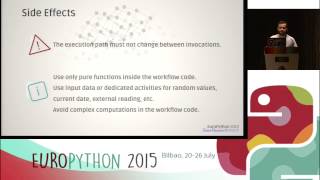
Distributed Workflows with Flowy
Explore distributed, asynchronous workflows with Flowy, a library for orchestrating complex processes across multiple machines. Learn execution models, topologies, and scaling techniques.

Teach Your -Microservices- Speak Protocol Buffers with gRPC
Explore Protocol Buffers and gRPC for efficient microservice communication, covering schema enforcement, serialization, and API evolution with practical examples and best practices.
Lessons Learned in X Years of Parallel Programming
Insights and practical examples on advanced parallel programming in Python, covering performance, debugging, and useful libraries for both enterprise and scientific applications.
Ray - A System for High-performance, Distributed Python Applications
Ray: open-source framework for scaling Python applications from laptop to cluster, solving performance challenges in ML/AI systems. Learn its features, use cases, and how it compares to alternatives.
Building Reproducible Distributed Applications at Scale
Explore challenges and solutions for packaging Python code in distributed computing environments, focusing on shipping methods, pickling, self-contained executables, and real-world examples with PySpark and S3 storage.
Hadoop Essentials for the SQL Server Professional
Learn Hadoop essentials, including HDFS, MapReduce, and Hive, with a focus on comparisons to SQL Server. Explore on-premises and cloud options for implementing Hadoop ecosystems.
Expanding Serverless to Scale-out Kubeflow Pipelines
Discover how Nuclio ML Functions extends serverless capabilities to machine learning tasks, integrating with Kubeflow for automated scaling, experiment tracking, and streamlined ML workflows.
Going Containerless with WebAssembly
Explore WebAssembly's potential in distributed computing, its functionality outside browsers, and its advantages in building secure, efficient functions and services.
Production Multi-node Jobs with Gang Scheduling, K8s, GPUs and RDMA
Explore distributed execution of DL/ML jobs in Kubernetes, covering gang scheduling, GPU acceleration, and high-speed networking for improved performance and scalability.
The Past, Present, and Future of Kubernetes on Raspberry Pi
Explore Kubernetes on Raspberry Pi: past developments, current state, and future possibilities. Learn about ARM architecture, cluster building, and practical applications through live demos and expert insights.
Distributed Computation with WASM and WASI
Explore WASI-data for distributed computation, enabling portable WASM modules for analytics. Learn about its design, implementation, and potential to revolutionize data processing systems.
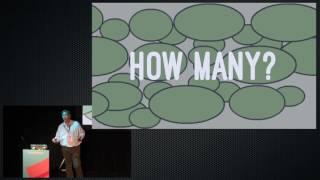
Implementing Microservices with Scala and Akka
Explore microservices implementation using Scala and Akka. Learn about granularity, boundaries, communication, and reactive principles in distributed systems. Gain insights into advanced Akka usage and domain modeling.
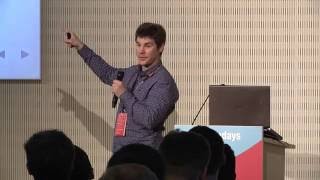
Reactors - Road to Composable Distributed Computing
Explore composable distributed computing with the reactor model, comparing it to actors and showcasing the Reactors.IO framework for building reusable, scalable systems in Scala.
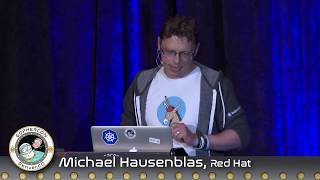
The Fallacies of Distributed Computing
Explore fallacies of distributed computing in Go, examining real-world systems like Kubernetes and CockroachDB to address common misconceptions and challenges.
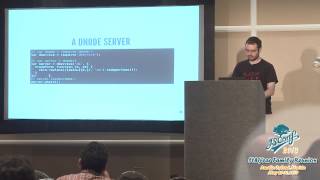
How to Prepare a Distributed NodeJS Application
Learn to slice open and distribute Node.js applications, integrating external services and microframeworks for enhanced scalability and service discovery.