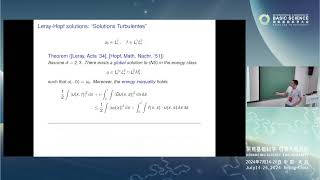
Instability and Non-Uniqueness in Fluid Dynamics
Explore instability and non-uniqueness in fluid dynamics, focusing on Leray solutions to Navier-Stokes equations and Vishik's findings on 2D Euler systems.
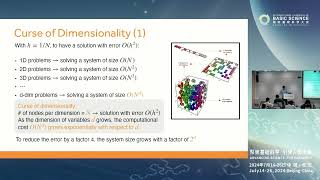
Solving High-Dimensional Partial Differential Equations Using Deep Learning
Explore deep learning algorithms for solving high-dimensional PDEs, overcoming dimensionality challenges in scientific computing applications.

Understanding the KPZ Problem - A New Perspective on Random Geometry and Universal Statistics
Delve into the universal properties of random geometries and geodesics in the KPZ framework, exploring statistical mechanics, probability theory, and mathematical physics applications.
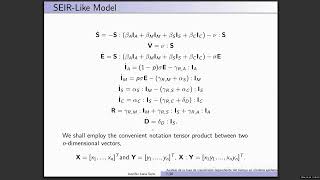
Análisis de la Tasa de Transmisión Dependiente del Tiempo en Modelos Epidemiológicos
Explore mathematical analysis of time-dependent transmission rates in SEIR-like epidemiological models, covering direct and inverse problems, Tikhonov regularization, and practical applications.
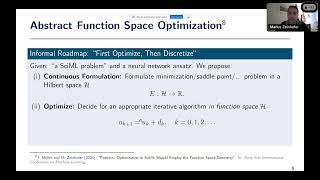
Infinite Dimensional Optimization for Scientific Machine Learning
Explore advanced optimization techniques in scientific machine learning, focusing on infinite-dimensional perspectives and the "first optimize, then discretize" paradigm for neural network applications.
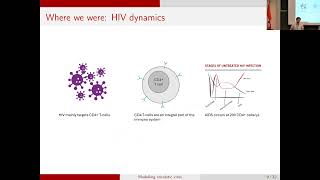
What Can Viral Dynamics Teach Us About Modeling Immunotherapies?
Explore mathematical modeling approaches from viral dynamics and their applications in understanding immunotherapy responses and tumor-immune system interactions.

ML for Solving PDEs: Neural Operators on Function Spaces
Explore AI advancements in scientific applications, including neural operators for weather and climate modeling, offering significant speedups and zero-shot generalization across function spaces.
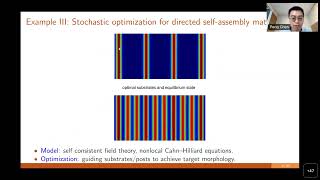
Derivative-Informed Neural Operators for Solving PDE-Governed Optimization Problems
Explore novel machine learning for solving optimization problems with PDEs, featuring derivative-informed neural operators for efficient, scalable solutions in high-dimensional parameter spaces.
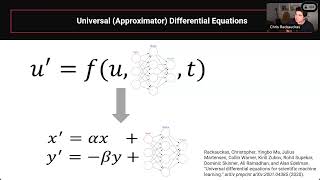
Generalizing Scientific Machine Learning and Differentiable Simulation Beyond Continuous Models
Explore generalizing scientific machine learning beyond continuous models, covering differentiable simulation for chaotic systems, stochastic processes, and inverse problems in advanced scientific computing.
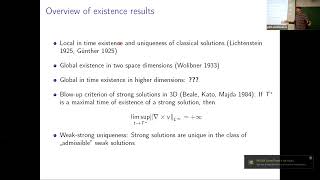
Conserved Quantities and Regularity in Fluid Mechanics
Explore conserved quantities and regularity in fluid mechanics, gaining insights into fundamental principles and advanced concepts in this field.
Physics-Informed Machine Learning for Complex Systems - A Focus on Power System Applications
Explorez l'application de l'apprentissage automatique aux systèmes électriques, en mettant l'accent sur les modèles réduits et la calibration à partir de données enregistrées pour améliorer la résilience du réseau.
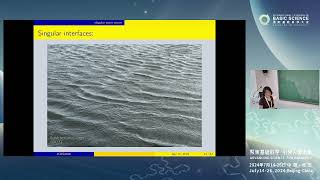
On the Motion of Water Waves with Angled Crests
Explore recent findings on 2D water wave dynamics with angled crests, delving into their unique motion and characteristics.
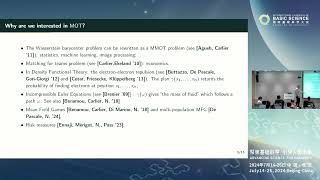
Entropic Optimal Transport: Convergence Rates and ODE Characterization
Explore recent advances in entropic optimal transport, focusing on convergence rates and a novel ODE-based numerical method for multi-marginal problems. Gain insights into theoretical bounds and practical applications.
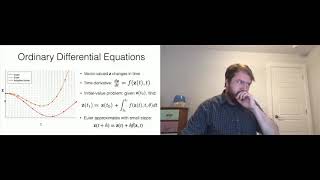
A Cookbook for Deep Continuous-Time Predictive Models
Explore deep continuous-time predictive models for irregularly-sampled time series, from feedforward approaches to latent-variable stochastic differential equations.

Probabilistic Simulation Methods for Machine Learning in Science and Technology
Explore probabilistic numerics in machine learning, bridging computation and inference. Gain insights into physics-informed ML and adaptive solver integration for enhanced efficiency in scientific computing.
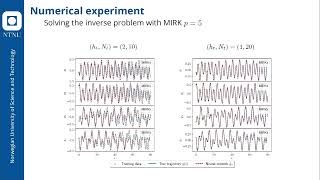
Learning Hamiltonian Systems with Mono-Implicit Runge-Kutta Methods
Explore advanced numerical methods for simulating Hamiltonian systems using Mono Implicit Runge-Kutta techniques, enhancing accuracy and efficiency in scientific computations.

Anomalous Dissipation and the Strong Onsager Conjecture - Part 2: L^3 Convex Integration
Explore anomalous dissipation and the Strong Onsager Conjecture in turbulent flows, focusing on L^3 convex integration techniques for mathematical analysis of energy transfer.
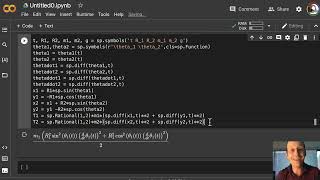
Modeling the Double Pendulum with Python and SymPy
Explore Python and sympy to model the double pendulum, from deriving equations to creating a 3D visualization.
Normal Modes for Coupled Oscillators Using the Eigenvalue Problem
Discover how to find normal modes for coupled oscillators using the eigenvalue problem, with a practical Python testing program included.
Hamiltonian Mechanics: Mass on a Cone with Gravity
Explore Hamiltonian mechanics through a mass-on-cone problem, using Python to model and analyze the motion in a gravitational field.
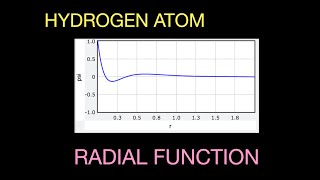
Solving the Radial Function of the Hydrogen Atom with Python and Shooting Method
Explore numerical solutions for the hydrogen atom's radial Schrödinger equation using Python and the shooting method. Gain insights into quantum mechanics and computational physics.