Calcium Imaging Data Cell Extraction
Learn advanced techniques for extracting neuronal signals from calcium imaging data using CNMF-E, a matrix factorization approach. Improve signal quality and detection in microendoscopic recordings of deep brain activity.

Nancy Kanwisher: History of Neuroimaging Research on Face Recognition
Explore the evolution of neuroimaging research on face recognition, from early studies to modern fMRI techniques, and discover key findings in this fascinating field of cognitive neuroscience.
Large Scale High Temporal Resolution Effective Connectivity Analysis
Explore effective connectivity analysis in MEG, addressing challenges in neural data interpretation and introducing advanced techniques for high-resolution brain network mapping.
Psychophysiological Interactions
Explore psychophysiological interactions in neuroimaging, covering terminal time series, beta weights, and processing techniques for advanced brain connectivity analysis.
Statistical Physics and Computation in High Dimension
Explore high-dimensional statistical physics and computation, covering sampling, minimization, and replica methods with applications in finance and algorithms.
Genomic Admixture - Introduction to Genomics Theory
Explore genomic admixture in crossbreeding populations, covering definitions, interpretation, and practical considerations like ancestry informative SNPs. Ideal for beginners in genomics and SNP data analysis.
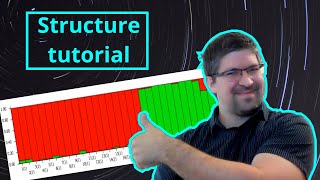
Structure Tutorial
Learn to use Structure software for population admixture analysis using SNP data. Covers data preparation, project setup, analysis execution, and result visualization with a goat genotype example.
Automated Reconstruction of Synaptic-Resolution Neural Wiring Diagrams
Explore automated reconstruction of neural wiring diagrams using advanced techniques like generative adversarial networks and crowdsourcing, with applications in connectomics and targeted brain data discovery.
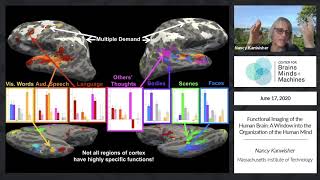
Functional Imaging of the Human Brain - A Window into the Organization of the Human Mind
Explore brain imaging techniques revealing mind organization, focusing on temporal lobe functions, face perception, and cognitive neuroscience methods for understanding human cognition and behavior.
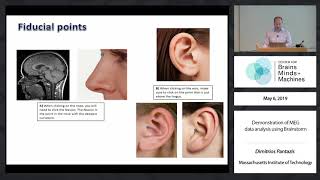
Demonstration of MEG Data Analysis Using Brainstorm
Learn to analyze MEG data with Brainstorm software, covering import, preprocessing, visualization, and advanced analysis techniques like dynamic statistical parametric mapping and source localization.
Allen Institute Large-Scale Datasets and Modeling Tools
Explore large-scale datasets and modeling tools for brain research, covering transcriptomics, connectome mapping, visual coding, and human neuron studies to advance our understanding of brain function.
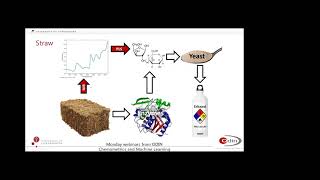
The Cage of Covariance
Explore strategies for handling correlated variables in data analysis, including orthogonalization techniques and predictive component methods.
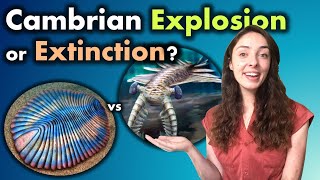
Cambrian Explosion - More Like Precambrian Explosion and Cambrian Skeletonization
Explores the Cambrian Explosion, challenging its name and timing. Discusses Ediacaran fauna, early animal evolution, mass extinctions, and factors contributing to increased diversity and complexity in Pre- and Early Cambrian life.
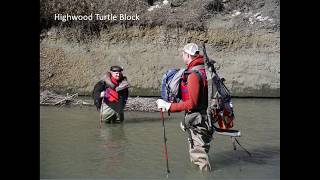
Wading Through History- Fossil Hunting Along Rivers Affected by the 2013 Southern Alberta Flood
Explore fossil discoveries along Alberta's flood-affected rivers, including turtle remains, dinosaur tracks, and hadrosaur bones. Learn about post-flood paleontological fieldwork and findings.
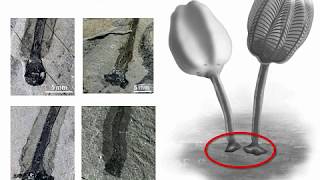
Community Structure in the Burgess Shale: Insights from a New Locality
Explore Burgess Shale's community structure through a new locality, examining preservation, ecology, and diversity of ancient marine life in this paleontological investigation.
Exploring Autogenic and Allogenic Processes in Lobyte3D
Explore autogenic and allogenic processes in deep-water fan systems using Lobyte3D, a stratigraphic forward model, to investigate signal recording and extraction in sedimentary strata.
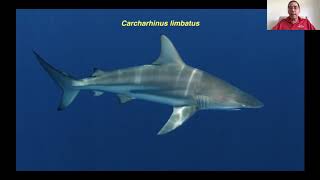
The Practice of Science
Explore shark research methods including underwater listening stations, satellite transmitters, and aerial drones with Dr. Kajiura's insights on blacktip and tiger sharks.
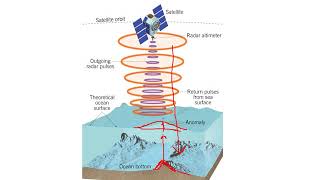
The Ocean Floor
Explore ocean floor mapping, sediments, and ecosystems. Learn about continental margins, abyssal plains, and ridge systems using advanced technologies and data from NOAA and NASA.

How Dark Is Space?
Explore the darkness of space beyond our solar system and discover evidence of an unknown universal light source with NASA's New Horizons probe and Dr. Tod Lauer.

On the Trail of the Missing Galaxies - The Oldest Stars in the Neighborhood
Explore the mystery of missing galaxies and ultra-faint dwarf galaxies orbiting the Milky Way. Discover how reionization may explain the discrepancy between theoretical predictions and observations.

Validation of RNA Genetic Testing for Use in a Clinical Diagnostic Setting - Ambry Genetics
Explore advancements in RNA genetic testing for clinical diagnostics, covering molecular biology, targeted approaches, and case studies demonstrating increased diagnostic yield in tumor suppressor genes.