Mitigating LangSec Problems With Capabilities
Explore how capability-based systems like Sandstorm mitigate language-based security vulnerabilities through robust isolation and authorization mechanisms, enhancing web application security.
Verifiable ASICs
Explore verifiable computation for untrusted ASICs, enabling high-assurance execution without compromising performance. Learn about the Zebra system's implementation and its potential to match trusted platform performance.
A Tough Call - Mitigating Advanced Code-Reuse Attacks at the Binary Level
Explores advanced techniques for mitigating code-reuse attacks at the binary level, focusing on improving Control-Flow Integrity and reducing potential targets for indirect branches.
Verena - End-to-End Integrity Protection for Web Applications
Explore end-to-end integrity protection for web applications, focusing on safeguarding sensitive information against server-side attacks and ensuring data authenticity for users.
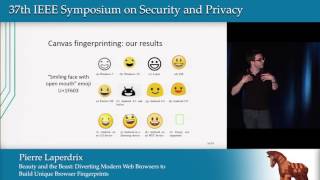
Beauty and the Beast - Diverting Modern Web Browsers to Build Unique Browser Fingerprints
Explore how modern web technologies enable unique browser fingerprinting, its effectiveness on various devices, and potential privacy implications in the evolving digital landscape.
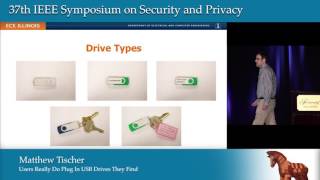
Users Really Do Plug in USB Drives They Find
Investigates end-user behavior with found USB drives through a controlled experiment, revealing high success rates and quick responses, driven by altruistic intentions rather than technical incompetence.
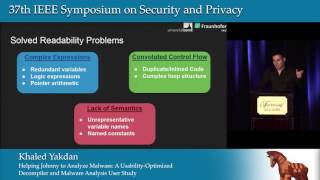
Helping Johnny to Analyze Malware - A Usability-Optimized Decompiler and Malware Analysis User Study
Explore a usability-optimized decompiler for malware analysis, featuring readability improvements that significantly enhance analysts' ability to understand and combat complex malicious software.
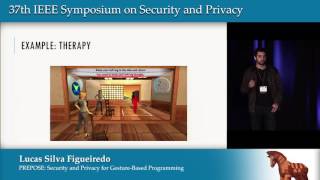
Prepose - Privacy, Security, and Reliability for Gesture-Based Programming
Explore a novel language and system for secure, private gesture recognition in sensor-based interfaces, addressing privacy concerns and security threats while ensuring fast performance.
TaoStore - Overcoming Asynchronicity in Oblivious Data Storage
Explores secure oblivious storage systems for untrusted cloud providers, introducing TaoStore to address asynchronicity issues in multi-user scenarios with overlapping data sets.
A Practical Oblivious Map Data Structure with Secure Deletion and History Independence
Introduces a novel oblivious RAM supporting variable-sized blocks and a history-independent data structure, offering enhanced privacy and efficiency for key/value map operations.
Sysadmins' Introduction to Vulnerability Scanning
Explore vulnerability scanning essentials for sysadmins, covering software vulnerabilities, networking, scanning tools, and server inspection. Learn how ops involvement can enhance overall security processes.
More than Smart Speakers - Security and Privacy Perceptions of Smart Home Personal Assistants
Explores users' perceptions of security and privacy in smart home assistants, revealing incomplete mental models and limited understanding of data handling, leading to inadequate threat models and coping strategies.
Exploiting Unprotected I/O Operations in AMD's Secure Encrypted Virtualization
Explores vulnerabilities in AMD's Secure Encrypted Virtualization, demonstrating attacks on I/O operations and constructing primitives to breach VM memory encryption, highlighting security risks in emerging technology.
Point Break - A Study of Bandwidth Denial-of-Service Attacks against Tor
Explores bandwidth denial-of-service attacks against Tor, demonstrating feasibility and impact on network performance through experimentation and simulation. Analyzes costs and effects of various attack strategies.
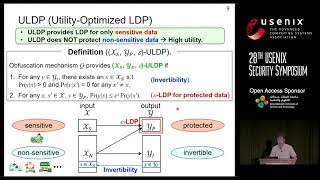
Utility-Optimized Local Differential Privacy Mechanisms for Distribution Estimation
Explores utility-optimized local differential privacy mechanisms for distribution estimation, enhancing data utility while maintaining privacy for sensitive information.
The Spies Hacking Our Phones Are Going Dark, and We're All in Trouble
Explore the alarming rise of commercial spyware tools used by nation-states for covert surveillance and sabotage. Learn about Citizen Lab's methodology for uncovering abuses and the challenges posed by zero-click attacks.

CSI NN - Reverse Engineering of Neural Network Architectures Through Electromagnetic Side Channel
Reverse engineering neural networks through electromagnetic side channels, revealing architecture details like activation functions, layers, neurons, and weights using non-invasive techniques on ARM Cortex-M3 microcontrollers.

Embracing the Hack - A Better Strategy for Team-Defense
Explore how embracing "hacky" solutions in cybersecurity can enhance enterprise defense. Learn innovative strategies and custom detection techniques to gain an advantage over attackers.
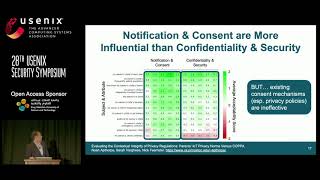
Evaluating the Contextual Integrity of Privacy Regulation - Parents' IoT Toy Privacy Norms Versus COPPA
Explores alignment between COPPA regulations and parents' privacy expectations for smart toys, using contextual integrity surveys to quantify regulatory effectiveness and identify nuanced privacy concerns.
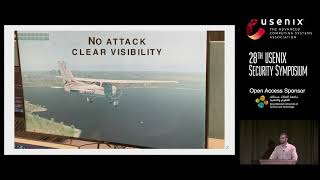
Wireless Attacks on Aircraft Instrument Landing Systems
Investigates vulnerabilities in aircraft instrument landing systems to wireless attacks using software-defined radio, demonstrating potential for spoofing signals and causing off-runway landings in low-visibility conditions.
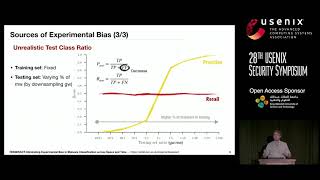
TESSERACT - Eliminating Experimental Bias in Malware Classification Across Space and Time
Unveils TESSERACT framework to eliminate spatial and temporal biases in Android malware classification, improving real-world robustness and revealing counterintuitive performance insights.