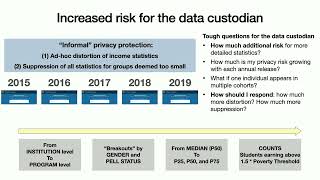
Negotiating Privacy - Utility Trade-Offs under Differential Privacy
Explore privacy/utility trade-offs in differential privacy through a real IRS-DOE case study, examining challenges faced by data custodians when establishing data release standards.
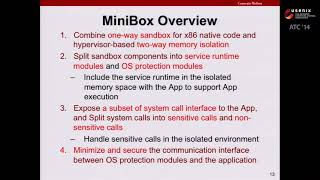
MiniBox - A Two-Way Sandbox for x86 Native Code
Explore MiniBox, a groundbreaking two-way sandbox for x86 native code, offering mutual protection between applications and operating systems in cloud computing environments.
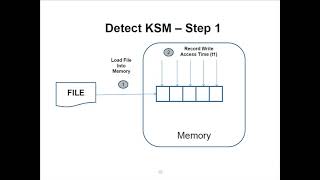
Hyperprobe - Towards Virtual Machine Extrospection
Explores a novel framework for detecting host OS kernel versions from within guest operating systems, leveraging hypervisor features and bugs to enable virtual machine extrospection.
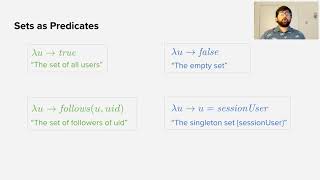
STORM - Refinement Types for Secure Web Applications
STORM: A web framework for building MVC applications with compile-time enforcement of security policies, reducing trusted code to under 1% and providing static security enforcement with minimal overhead.
The Rise of the Citizen Developer - Assessing the Security Impact of Online App Generators
Assessing security risks of online app generators for citizen developers, revealing vulnerabilities in generated apps and their impact on the mobile ecosystem's overall health.
T-Fuzz - Fuzzing by Program Transformation
Innovative fuzzing technique that removes input checks to explore deeper code paths, improving bug discovery in software. Combines program transformation with symbolic execution for effective results.
Blue Note - How Intentional Acoustic Interference Damages Availability and Integrity in Hard Disk Drives and Operating Systems
Explores how acoustic interference can damage hard drives, causing data corruption and system failures. Presents findings on vulnerabilities and proposes mitigation strategies for legacy systems.
A Formal Treatment of Accountable Proxying over TLS
Formal analysis of accountable proxying over TLS, revealing vulnerabilities in mcTLS and proposing a secure alternative with provable security and practical implementation.
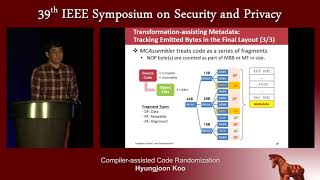
Compiler-assisted Code Randomization
Explore compiler-assisted code randomization as a defense against return-oriented programming exploits, balancing security with software distribution norms and maintaining compatibility.
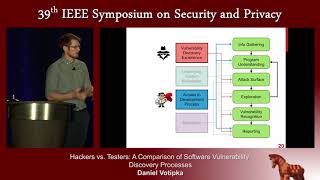
Hackers vs. Testers - A Comparison of Software Vulnerability Discovery Processes
Explore the processes, skills, and challenges of software testers and white-hat hackers in identifying security vulnerabilities, based on a comparative study of 25 professionals.
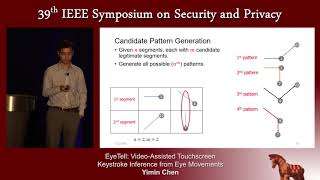
EyeTell - Video-Assisted Touchscreen Keystroke Inference from Eye Movements
Explore a novel video-assisted attack that infers touchscreen keystrokes by analyzing eye movements, posing potential security risks for mobile device users.
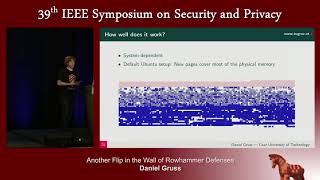
Another Flip in the Wall of Rowhammer Defenses
Unveiling novel Rowhammer attack techniques that bypass existing defenses, including one-location hammering, opcode flipping, and memory waylaying, demonstrating vulnerabilities in DRAM security.
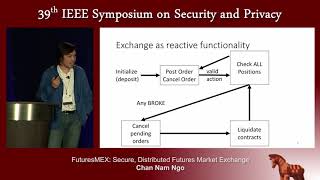
FuturesMEX - Secure, Distributed Futures Market Exchange
Explore a secure, distributed futures market exchange protocol with key operations, security properties, and economic viability considerations for low-frequency trading environments.
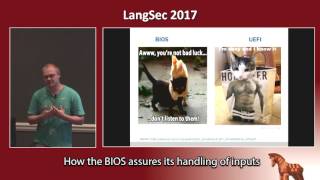
How the BIOS Assures Its Handling of Inputs
Explore BIOS input handling, firmware interfaces, and analysis techniques for formal validation and vulnerability detection, including static, dynamic, and symbolic execution approaches.
The Year of LangSec Bugs
Explores major software vulnerabilities of 2016 through the lens of Language-theoretic Security, highlighting preventable bugs and advocating for improved input handling approaches.
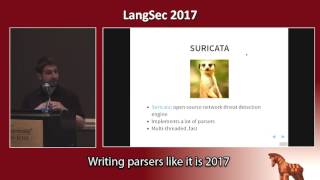
Writing Parsers Like It Is 2017
Explore safe parsing techniques using Rust and parser combinators to address memory violations in low-level programming, with practical examples and implementation strategies.
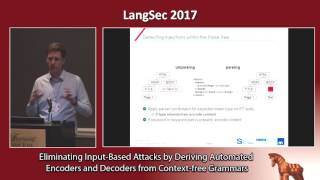
Eliminating Input-Based Attacks by Deriving Automated Encoders and Decoders from Context-Free Grammars
Learn to derive automated encoders and decoders from context-free grammars to eliminate input-based attacks, enhancing security in complex language communication systems.
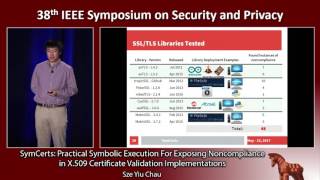
SymCerts - Practical Symbolic Execution for Exposing Noncompliance in X.509 Certificate Validation
Explore practical symbolic execution techniques to uncover noncompliance in X.509 certificate validation implementations, enhancing security in SSL/TLS protocols and IoT systems.
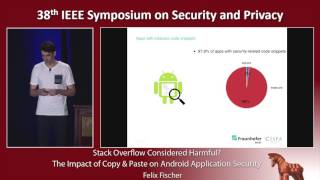
Stack Overflow Considered Harmful - The Impact of Copy & Paste on Android Application Security
Explores the security implications of developers copying code from Stack Overflow into Android apps, revealing alarming rates of insecure snippet usage in popular applications.
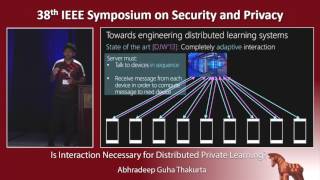
Is Interaction Necessary for Distributed Private Learning?
Explores the necessity of interaction in locally differentially-private algorithms for convex optimization, presenting new algorithms and lower bounds on noninteractive approaches.
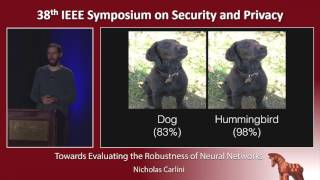
Towards Evaluating the Robustness of Neural Networks
Explores new attack algorithms to assess and challenge the robustness of neural networks against adversarial examples, highlighting vulnerabilities in defensive distillation techniques.