
Lost in Translation - Communicating Outside of Security
Bridging the communication gap between security professionals and developers for successful DevSecOps adoption, with insights on common language and mutual understanding.
Offensive Threat Models Against the Supply Chain
Applying adversarial threat models to supply chain systems, focusing on geo-political risks and industry-specific threats to build effective threat libraries and attack sequences for improved security.
Security Testing - Is Automation Failing Us?
Explore the challenges of security testing automation and its impact on identity, privacy, and overall system protection in modern software development.

Threat Modeling for IoT Systems
Explore IoT security challenges and learn how to apply threat modeling to design and test more secure IoT systems, addressing risks in devices, web services, and client applications.

Connections - Eisenhower and the Internet
Explore the parallels between the Eisenhower Interstate System and the Internet, uncovering valuable lessons for cybersecurity and predicting the future of our digital infrastructure.
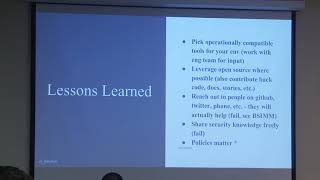
Building an AppSec Program from the Ground Up - An Honest Retrospective
Learn from a 2-year journey building an AppSec program, covering successes, failures, goal-setting, and execution. Gain insights on static analysis, threat modeling, metrics, and more for effective security implementation.
Adapting Your AppSec
Explore strategies for integrating application security into modern development processes without hindering progress. Learn about tooling, assessments, and agile methodologies for effective security implementation.
DevSecOps Without DevOps Is Just Security
Explore effective DevSecOps practices, emphasizing collaboration between security and DevOps teams. Learn prerequisites, case studies, and strategies for leveraging existing resources to enhance security integration.
Rethinking Role-Based Security Education
Strategies for developing role-based security education, focusing on high-risk teams, collaborative threat modeling, and contextualizing security hygiene to improve effectiveness and scalability.

Abusing Normality - Data Exfiltration in Plain Site
Explore stealthy data exfiltration techniques using everyday system objects and processes. Learn to identify and defend against sophisticated attacks that leverage normal-looking channels for malicious purposes.

How to Create and Cultivate Community within the Cybersecurity Industry
Explore strategies for fostering community in cybersecurity, focusing on gender diversity, professional development, and leadership. Learn to create inclusive environments and drive positive change in the industry.
Won't Somebody Please Think of the Data!
Strategies for protecting corporate data from internal threats, focusing on database security, GDPR compliance, and collaboration between engineering and operations teams.
It Was Broken When It Got Here - Security in Your Software Procurement Process
Explore strategies for ensuring security in third-party software procurement, including case studies of vulnerabilities and guidance for integrating security considerations into the purchasing process.

AppSec Pipelines and Event-based Security - Moving Beyond a Traditional Security Test
Strategies for scaling AppSec programs using automation, continuous health checks, and event-based security to keep pace with rapid software development and delivery in large organizations.

IoT and the Security of That Mobile App - Mark Loveless
Explore IoT security vulnerabilities in mobile apps, focusing on common mistakes, attack vectors, and research techniques. Learn to identify and exploit weaknesses in device-to-cloud communication.

Demystifying the Ransomware and IoT Threat
Explore ransomware attacks, IoT-based DDoS threats, and their potential combination. Learn analysis techniques, attack stages, and future cybersecurity challenges in this comprehensive overview.

Your Security Tools Are Just a Stop-Gap to Secure DevOps
Secure DevOps: Beyond tools, focus on risk assessment, threat modeling, and custom security controls. Learn to integrate security effectively in CI/CD pipelines for robust application protection.
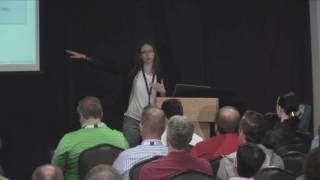
Fixing XSS with Content Security Policy
Explore Content Security Policy (CSP) as a defense against XSS attacks, comparing CSP 1.0 and 2.0, and learn implementation strategies for enhanced web application security.

OWASP Top 10 Proactive Controls
Comprehensive guide to OWASP Top 10 Proactive Controls for secure software development, covering essential techniques from query parameterization to threat modeling, presented by expert Jim Manico.
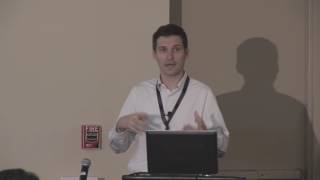
Derived Credentials - A Better User Experience for Secure Applications in the Mobile World
Explore derived credentials for secure mobile applications, covering PIV standards, deployment architecture, use cases, and best practices for enhanced user experience in enterprise and government settings.

Multi Factor Authentication - Weeding Out the Snake Oil
Explore multi-factor authentication solutions, evaluation criteria, and implementation considerations for stronger security. Gain insights into market offerings and their credibility.