
Cryptography - Hill Cipher Python
Learn to implement the Hill cipher encryption algorithm in Python, with step-by-step explanations and code examples for this challenging cryptographic technique.

Shafi Goldwasser: Journey from Israel to Turing Award - A Life in Computer Science
Explore Shafi Goldwasser's journey from childhood in Israel to becoming a pioneering computer scientist, covering her education, influences, and experiences that shaped her career.

Cryptography and Public Key Encryption - Martin Hellman Interview
Explore Martin Hellman's life, from ancestry to groundbreaking cryptography research, early retirement, and personal growth, in this in-depth interview with the Turing Award recipient.
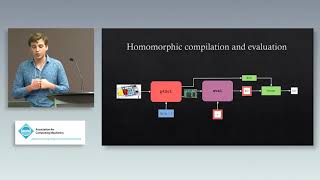
ALCHEMY - A Language and Compiler for Homomorphic Encryption Made Easy
Simplifying Fully Homomorphic Encryption with ALCHEMY: a modular system that compiles plaintext computations into homomorphic operations on ciphertexts, making FHE accessible without specialized knowledge.

Practical State Recovery Attacks Against Legacy RNG Implementations
Systematic study of FIPS 140-2 certifications reveals vulnerabilities in ANSI X9.31 RNG implementations, highlighting risks of static keys and emphasizing the importance of secure random number generation.
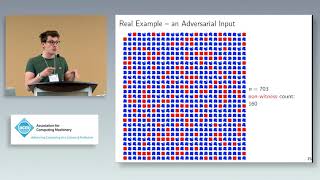
Prime and Prejudice- Primality Testing Under Adversarial Conditions
Systematic analysis of primality testing in adversarial scenarios, exploring vulnerabilities and providing recommendations for secure implementations.
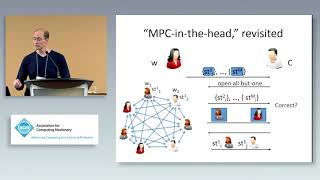
Improved Non-Interactive Zero Knowledge with Applications to Post-Quantum Signatures
Explores advanced non-interactive zero-knowledge proofs, enhancing efficiency and security for post-quantum signatures using MPC protocols in the preprocessing model.
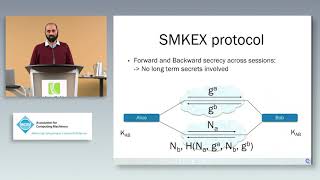
Secure Opportunistic Multipath Key Exchange
Explore a novel key exchange protocol offering opportunistic encryption benefits and protection against active attackers, without relying on trusted third parties or pre-established secrets.
Advanced Cryptography: Promise and Challenges
Explore advanced cryptography beyond communication security, including zero knowledge and secure multi-party computation. Learn about its potential, performance, and current usability challenges.
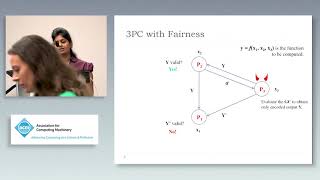
Fast Secure Computation for Small Population over the Internet
Explore efficient protocols for secure multiparty computation, focusing on fairness and guaranteed output delivery in 3-party and 4-party settings over the internet.
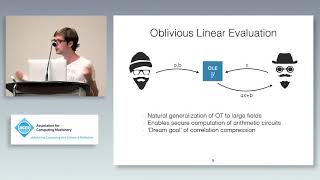
Compressing Vector OLE
Explore secure two-party protocols for vector oblivious linear evaluation, its applications, and improvements in pseudorandom correlations and sparse vector-OLE generation.
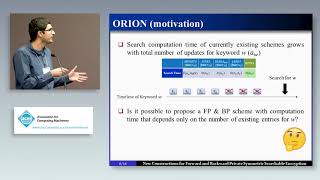
New Constructions for Forward and Backward Private Symmetric Searchable Encryption
Explore advanced techniques for dynamic symmetric searchable encryption, focusing on forward and backward privacy to enhance data security in cloud environments.
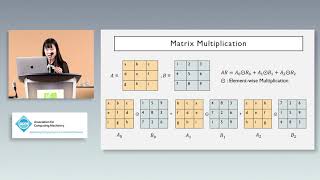
Secure Outsourced Matrix Computation and Application to Neural Networks
Explore practical solutions for encrypted matrix operations in homomorphic encryption, including novel encoding methods and efficient evaluation strategies for basic matrix arithmetic and neural networks.

Fast Multiparty Threshold ECDSA with Fast Trustless Setup
Explore efficient multiparty ECDSA signatures with fast, trustless setup. Learn about threshold schemes, communication optimization, and implementation details for secure digital signatures.
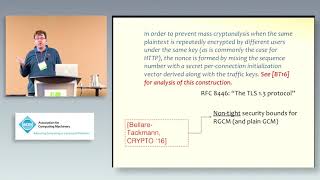
The Multi-User Security of GCM, Revisited - Tight Bounds for Nonce Randomization
Revisiting GCM's multi-user security with new concrete bounds, focusing on nonce re-use across users and re-keying impacts. Provides refined parameterization of adversarial resources for improved security analysis.
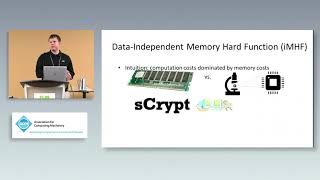
Bandwidth-Hard Functions - Reductions and Lower Bounds
Explore memory hard functions, their applications in cybersecurity, and the metrics used to evaluate their effectiveness. Learn about ASIC advantages and strategies to mitigate them.

Fast Secure Multiparty ECDSA
Explore secure distributed ECDSA signing, its challenges, and innovative solutions for threshold signing in cryptography and blockchain applications.
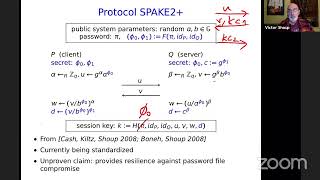
Oblivious Structures, Key-Exchange and Group Messaging
Explore oblivious structures, key-exchange protocols, and secure group messaging techniques. Gain insights into cryptographic concepts and their practical applications in communication systems.

Cryptanalysis of Hash Functions, PRFs and PRGs
Explore cryptanalysis techniques for hash functions, PRFs, and PRGs, covering attacks, round functions, and search methods for enhanced security understanding.

NIST Lightweight Standardisation II
Explore NIST's lightweight cryptography standardization, focusing on WAGE, Estate, Spook, and Jambu algorithms, with insights on quantum attacks and mixed-fit permutations.

Authenticated Encryption
Explore authenticated encryption, including combiners, fast decryption, and sponge-type security. Learn about plaintext release and engage in Q&A sessions.