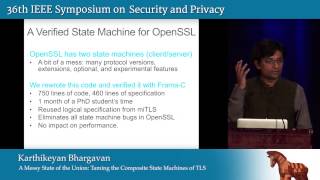
A Messy State of the Union - Taming the Composite State Machines of TLS
Explore critical security vulnerabilities in TLS implementations, including the FREAK flaw, and learn about a verified composite state machine for OpenSSL that addresses these issues.

Lessons from Trusting JavaScript Cryptography - Biting into the Forbidden Fruit
Exploring real-world JavaScript cryptography implementations, debunking myths, and providing an updated perspective on JS crypto security through vulnerability analysis and practical examples.
OpenSSL After Heartbleed - Lessons Learned and Project Improvements
Explore OpenSSL's transformation post-Heartbleed: enhanced team, transparency, development processes, and project vitality. Learn about security improvements and future plans.

The Hunt for CVE-2023-0286 - Replicating OpenSSL's Latest Vulnerability
Replicate CVE-2023-0286 in OpenSSL, learn to write a libfuzzer harness, and explore vulnerability research techniques for enhanced security awareness and threat prevention.

Using Vulhub for Dockerized Vulnerability Replication
Explore Vulhub for hands-on vulnerability replication. Learn to set up Docker environments, simulate Heartbleed and Log4j vulnerabilities, and gain practical cybersecurity experience.
Optimizing HDFS Performance: Balanced Utilization of Hardware Accelerators and ARM64 Multi-Implementation - Transparent Encryption
Optimize HDFS Transparent Encryption performance by balancing CPU cores and hardware accelerators. Learn to leverage OpenSSL 3.0 for dynamic resource allocation and improved efficiency in cloud services.
PHP Security Redefined - AppSecUSA 2015
Explore PHP's security evolution, best practices, and tools for safer application development, with insights on PHP 7's improvements and community-driven security initiatives.
Enhancing Envoy: Certificate Handling at the Edge
Explore OpenSSL support in Envoy, enabling FIPS 140-2 compliance and improved cryptographic conformance. Learn about SSL/TLS engines and their impact on proxy server security.

Replicating OpenSSL Vulnerabilities CVE-2022-3602 and CVE-2022-3786 - How-to Guide
Replicate OpenSSL vulnerabilities CVE-2022-3602 and CVE-2022-3786 using provided test cases. Learn to exploit, test, and confirm these vulnerabilities in specific OpenSSL versions.
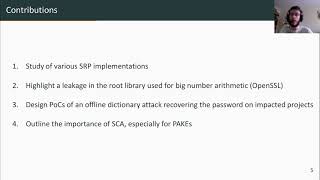
PARASITE - Password Recovery Attack Against SRP Implementations in the Wild
Explore password recovery attacks on SRP implementations, focusing on FLUSH+RELOAD techniques, modular exponentiation vulnerabilities, and mitigation strategies for cryptographic systems.

Big Crypto Fails - Dr. Zachary Peterson
Explore major cryptographic failures, including RC4 vulnerabilities, cross-protocol attacks, and the Heartbleed bug, with insights on encryption methods and security protocols.
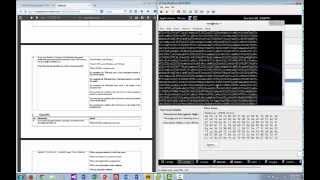
Advanced Cryptography - Tunnels and Network Security Lab
Explore advanced cryptography concepts through hands-on lab exercises focusing on tunnels, network captures, and OpenSSL implementation.
Advanced Cryptography - Tunnelling SSL/TLS/VPN
Explore tunnelling modes, secure sockets, OpenSSL, Heartbleed vulnerability, VPNs, and key exchange methods in network security protocols like SSL/TLS.

Proxmox Install SSL-TLS Certificates
Learn to install SSL/TLS certificates in Proxmox, covering key creation, certificate signing requests, and installation methods for standalone servers and clusters. Enhance your Proxmox security skills.

CA Server - OpenSSL
Learn to create a Certificate Authority Server using OpenSSL. Covers key generation, configuration, signing requests, and browser setup. Enhance network security with trusted certificates for secure web connections.
Tracing SSL/TLS Encrypted Microservices with eBPF
Explore eBPF techniques for tracing SSL/TLS encrypted microservices, enhancing observability without compromising security. Learn to collect clear text data from TLS libraries for improved troubleshooting.
Using OP-TEE as a Cryptography Engine
Explore OP-TEE's role as a cryptography engine for secure IoT data storage, covering platform setup, driver implementation, and integration with Linux and OpenSSL.
Linux Cryptographic Acceleration on an i.MX6
Explore cryptographic acceleration on i.MX6, covering CAAM enablement, userspace connectivity, and performance comparisons of different approaches for securing IoT devices.
TPM Software Stack - Enabling the TPM2.0 Ecosystem in Linux
Explore TPM2.0 ecosystem in Linux: architecture, APIs, implementation, and use cases. Learn about recent developments, tools, and integrations with OpenSSL and PKCS11.
OpenSSL Hardware Offload Enhancement for TLS Acceleration
Exploring OpenSSL's asynchronous acceleration framework for enhanced TLS performance, including implementation in Nginx and VPP, and recent improvements for efficient kernel bypass communication.
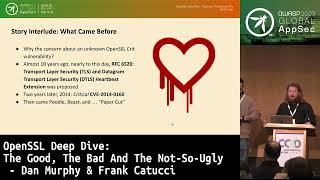
OpenSSL Deep Dive: The Good, Bad and Not-So-Ugly
Explore OpenSSL's strengths, weaknesses, and nuances in this comprehensive deep dive, gaining insights into its security implications and best practices.