Secure React Native Apps Against API Abuse
Aprenda a proteger aplicativos React Native contra abusos de API, explorando vulnerabilidades comuns e implementando estratégias de defesa eficazes para garantir a segurança de seus aplicativos móveis.
Asm2Vec - Boosting Static Representation Robustness for Binary Clone Search
Innovative assembly code representation learning model for robust binary clone search, addressing challenges in reverse engineering against code obfuscation and compiler optimization.

The Impact of Third-party Code on Android App Security
Exploring third-party library risks in Android apps, including outdated versions, vulnerabilities, and potential solutions for improved security and automatic patching.

Insecurity Through Obscurity - Exploiting Obfuscated Android APKs
Explore techniques to identify open source libraries in obfuscated Android APKs and learn how common obfuscation methods can lead to vulnerable Java object deserialization, enhancing your bug bounty hunting skills.
JavaScript Obfuscation: It's All About the Packers
Explore JavaScript obfuscation techniques, focusing on packers and their impact on code security and readability in this informative OWASP presentation.
Detecting Malicious Dependencies at Scale with Static Analysis
Explore static analysis techniques for identifying malicious dependencies in open-source packages, including Semgrep rules and metadata analysis to enhance software supply chain security.

Obfuscation Classification via Machine Learning for JavaScript, Python, and PHP
Explore machine learning techniques for classifying obfuscated code across JavaScript, Python, and PHP, enhancing cybersecurity analysis and threat detection capabilities.
The Next Generation of Virtualization Based Obfuscators
Explore next-gen virtualization obfuscators: design principles, weaknesses, and future challenges. Learn about advanced code protection techniques and their impact on modern software security.
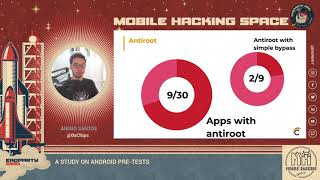
A Study on Android Pre-Tests - Mobile Hacking
Explore Android app security techniques like root detection, SSL pinning, and code obfuscation. Learn to bypass these measures using Frida and static analysis in this beginner-friendly talk on mobile app hacking.
All Our APIs Are Belong to Us
Explores Snapchat's strategies to protect users from third-party API abuse, detailing server-side and client-side defenses, their effectiveness, and lessons learned in the ongoing security challenge.
Pentesting Swift Application with OWASP iGoat
Learn iOS Swift app pentesting using OWASP iGoat, covering security loopholes, defense strategies, and real-world case studies. Gain skills for product security engineers and bug bounty hunters.

Harnessing Intelligence From Malware Repositories
Explore techniques for extracting intelligence from malware repositories using program analysis and data mining, with insights on connecting seemingly disparate cyber attacks and tracking malware trends.
Next Generation Virtualization-Based Obfuscators
Explores next-gen virtualization-based code obfuscation techniques, focusing on target-specific instruction sets and intertwined VM components to enhance resilience against deobfuscation attacks.
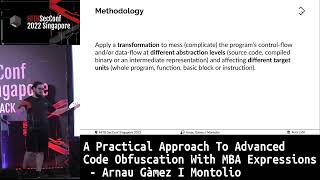
Advanced Code Obfuscation With MBA Expressions
Explore advanced code obfuscation techniques using Mixed Boolean-Arithmetic expressions to increase data-flow complexity and conceal sensitive data, with practical applications in building robust obfuscation primitives.
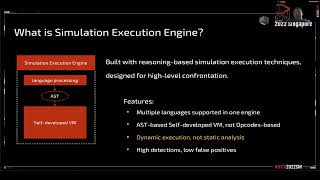
Simulating Execution in Malicious Text Detection
Innovative approach to malicious text detection using simulated execution, combining static and dynamic analysis techniques for improved accuracy and efficiency in identifying obfuscated threats.

The Entropy of Obfuscated Code
Explore code obfuscation techniques, entropy analysis, and malware detection methods. Learn about information theory and its applications in cybersecurity and malware analysis.
The Problems with JNI Obfuscation in the Android Operating System
Explore JNI obfuscation issues in Android OS, covering build process, software stack, and practical reverse engineering techniques for both static and dynamic analysis.
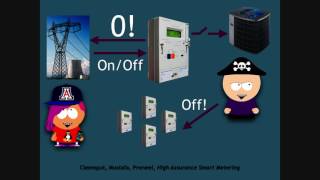
Engineering Code Obfuscation
Explore techniques for engineering code obfuscation to protect software from reverse engineering and tampering. Learn strategies to enhance program security and intellectual property protection.
Analysis of an Exploited NPM Package
Dive into the anatomy of a real-world npm package exploit, exploring its payloads, obfuscation techniques, and ultimate goals to enhance your understanding of JavaScript security.

Multiplatform Binary Packaging and Distribution of Your Client Apps
Learn to package and distribute Python apps as standalone, obfuscated binaries for multiple platforms, addressing common challenges and misconceptions.

Monotonicity and the Precision of Program Analysis
Explore the connection between program monotonicity and analysis precision. Learn how monotone behavior enables complete abstract interpretation for numeric invariant inference.