Shhh - Stop Sharing Secrets: A Secure Mindset for Embedded Development
Explore secure embedded development practices, focusing on encryption, authentication, and trusted execution environments to protect IoT devices and data.
OmniBOR: Bringing the Receipts for Supply Chain Security
Explore OmniBOR, a new approach to capture full artifact dependency graphs in software development, enhancing supply chain security and addressing SBOM scanner limitations.

The First 200 Milliseconds of HTTPS
Explore the intricate process of HTTPS connections, from certificates to cipher suites. Gain insights into the hidden mechanisms that ensure secure web browsing and understand potential vulnerabilities.
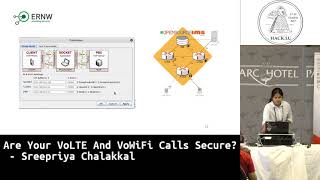
Are Your VoLTE and VoWiFi Calls Secure - Security Analysis of Voice Protocols
Explore security vulnerabilities in VoLTE and VoWiFi, including sniffing attacks, key extraction, and SIP header injections. Learn about potential risks and mitigation strategies for modern voice communication technologies.
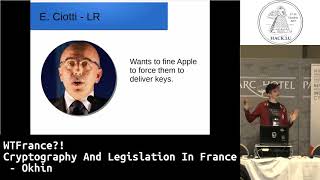
Cryptography and Legislation in France - Privacy Challenges and European Impact
Exploration of France's stance on privacy and cryptography, examining restrictive laws, government positions, and their impact on the European Union's policies.
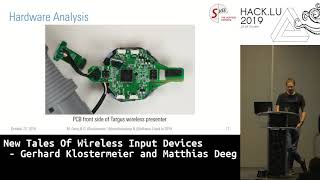
New Tales of Wireless Input Devices
Explore security vulnerabilities in wireless input devices and learn about potential attack vectors and countermeasures for enhanced cybersecurity awareness.

Practical and Affordable Side-Channel Attacks
Explore affordable side-channel attacks with practical demonstrations, learning techniques to exploit vulnerabilities in cryptographic implementations and secure systems.
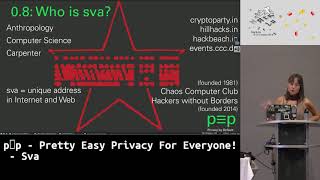
Pretty Easy Privacy for Everyone - Hack.lu 2018
Explore p≡p (Pretty Easy Privacy), a user-friendly encryption solution for secure communication. Learn its features, implementation, and potential impact on digital privacy.
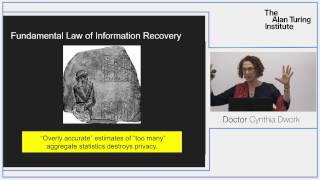
Turing Lecture - Dr Cynthia Dwork, Privacy-Preserving Data Analysis
Explore differential privacy and its role in protecting data during complex analysis. Learn about the risks of data accumulation and solutions for privacy-preserving statistical analysis of large datasets.
What Can Go Wrong When You Trust Nobody? Threat Modeling Zero Trust
Explore Zero Trust principles and threat modeling for cloud-native systems. Learn to implement secure architectures using Istio, Kubernetes, SPIRE, and OPA for robust, distributed workload protection.

TUF-En Up Your Signatures - Enhancing Software Distribution Security
Explore The Update Framework (TUF) for enhanced software signing and verification. Learn about its security features, integrations, and new developments for secure software distribution at scale.
Fileless Attack - Detecting the Undetectable
Explore fileless attacks in Linux containers, their detection using eBPF tools like Falco, Tracee, and Tetragon, and learn to identify unexpected activities in cloud-native environments.
No Keys? No Problem - Why You Can Trust Sigstore Signatures
Explore Sigstore's keyless code signing, its security measures, and trust mechanisms. Learn how it protects software supply chains using open principles and robust infrastructure.
Life of a Sigstore Signature - Understanding Code Signing for Container Images
Explore Sigstore's code signing process for Kubernetes images, including keyless signing, certificate authorities, and transparency logs. Learn to configure admission controllers for cluster security.
Sigstore for Python Packaging - Next Steps for Adoption
Explore Sigstore integration in Python packaging, its benefits for users, and strategies for adoption. Learn about enhancing security in package publishing and consumption workflows.
Securing Content Repositories with The Update Framework (TUF)
Explore secure content delivery using The Update Framework (TUF). Learn about protecting repositories, managing keys, and recovering from compromises. Discover recent developments and implementation updates.
Data Security and Storage Hardening in Rook and Ceph
Explore security options for Rook with Ceph, including threat modeling, encryption, access controls, and infrastructure hardening for robust data protection in container-based storage systems.

Zero Trust Supply Chains with Project Sigstore and SPIFFE
Explore zero trust supply chains using Sigstore and SPIFFE. Learn how to enhance software security through cryptographic verification, transparency logs, and verifiable identities in build systems.
So You Want to Run Your Own Sigstore - Recommendations for a Secure Setup
Explore secure setups for private Sigstore instances, covering motivations, threat modeling, and operational requirements for enterprise artifact signing and verification.
Handling JWTs: Understanding Common Pitfalls
Explore JWT authentication, common pitfalls, and security best practices. Learn about JWT structure, verification, and protection against attacks like algorithm confusion and secret brute-forcing.
Keyless Code Signing Without Fulcio
Explore keyless code signing without Fulcio, understanding its benefits and implementing it with existing PKI solutions like Vault and stepca for hassle-free, secure software signing.