Raccoon Attack - Finding and Exploiting Most-Significant-Bit-Oracles in TLS-DH(E)
Explore the Raccoon Attack on TLS-DH(E), its impact on cryptographic protocols, and potential countermeasures. Learn about side-channel vulnerabilities in key derivation processes.
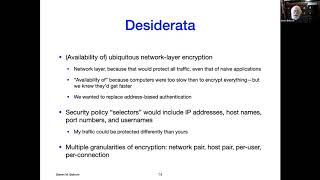
The Evolution of IPsec - Invited Talk by Steven Bellovin
Explore the history, evolution, and challenges of IPsec with Steven Bellovin, covering its structure, protocols, and impact on network security.
Firmware Insider- Bluetooth Randomness is Mostly Random
Explore Bluetooth randomness, RNG variants, and security implications in firmware. Insights on PRNG, cloud data, MITM attacks, and recent patches for cryptographic enthusiasts.
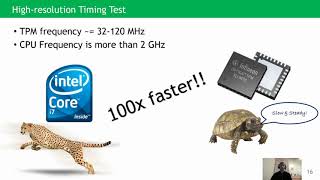
TPM-FAIL - TPM Meetings Timing and Lattice Attacks
Explore TPM vulnerabilities, timing attacks, and lattice-based cryptanalysis. Learn about ECDSA nonce issues and their impact on digital signatures in trusted computing.
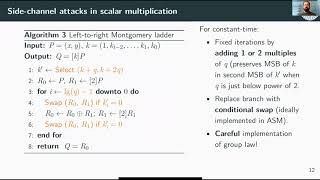
LadderLeak
Explore ECDSA and Schnorr signatures, focusing on randomness vulnerabilities and side-channel attacks. Learn about new attack records and countermeasures in cryptographic implementations.
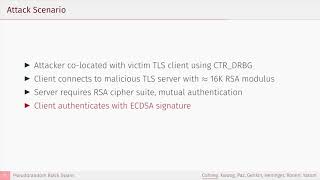
Pseudorandom Black Swans: Cache Attacks on CTR_DRBG
Explore vulnerabilities in CTR_DRBG cryptographic algorithm, focusing on cache attacks and key rotation flaws. Learn about potential risks in TLS handshakes and SGX execution.
Side-Channel Attacks
Explore side-channel attacks, including Spectre, timing attacks, and countermeasures. Learn about developer knowledge, resistance techniques, and future directions in cybersecurity.
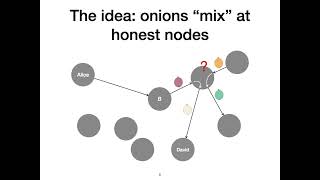
On the Complexity of Anonymous Communication Through Public Networks
Explores onion routing for anonymous online communication, presenting a novel protocol that achieves fault-tolerance, efficiency, and anonymity against active adversaries observing network traffic.

Blackhat EU 2013- Power Analysis for Cheapskates
Explore power analysis attacks on embedded systems, from basic concepts to advanced techniques. Learn practical methods for implementing these attacks using affordable tools and hardware setups.

Security Fundamentals - White Hat Officers
Learn ethical hacking essentials: security concepts, historical ciphers, social engineering, steganography, and crypto vulnerabilities from White Hat experts.
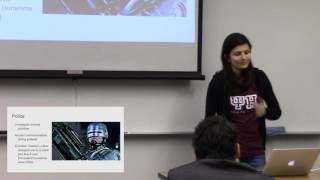
IMSI Catchers - Maria Pikusova
Explore IMSI Catchers: cell phone communication interceptors. Learn about their history, uses, detection methods, and legal implications. Discover an open-source app for identifying these devices.
FPGA Glitching & Side Channel Attacks
Explore side channel analysis and fault injection attacks on modern systems using low-cost hardware like FPGAs. Learn about powerful techniques once reserved for governments and researchers.
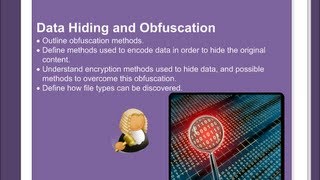
Data Hiding and Obfuscation in Security and Network Forensics - Lecture 10
Learn data hiding techniques including encryption, hashing, encoding, and steganography. Explore file allocation tables, naming conventions, and signatures for forensic analysis.
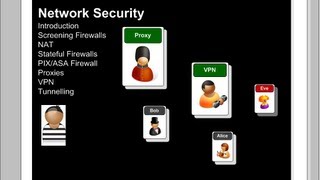
Introduction to Security and Network Forensics - Network Security Elements
Comprehensive overview of network security elements, covering firewalls, NAT, VPNs, and IPSec. Ideal for those seeking to understand fundamental security concepts and technologies.
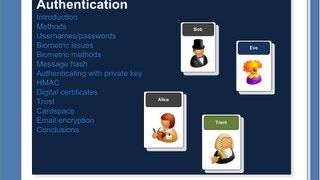
Introduction to Security and Network Forensics: Authentication - Lecture 4
Explore authentication methods, biometrics, digital certificates, and encryption in network security. Learn key principles and practical applications for secure communication and identity verification.
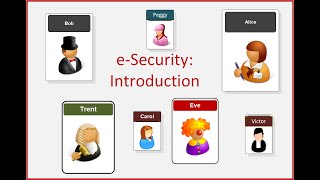
Introduction to e-Security
Comprehensive overview of e-security fundamentals, covering operating systems, key exchange, trust infrastructure, and tunneling. Ideal for those seeking a solid foundation in cybersecurity concepts.
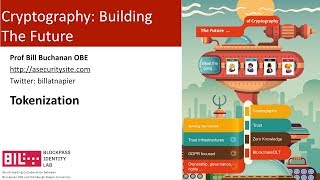
Tokenization
Learn about tokenization techniques for data protection, including surrogate identifiers, currency tokenization, and pseudonymization. Explore best practices and advanced concepts like Feistel structures and honey encryption.
Hash Cracking
Learn essential hash cracking techniques, from basic methods to advanced tools like Hashcat. Explore salting, Windows hashes, benchmarks, and analysis for improved cybersecurity skills.
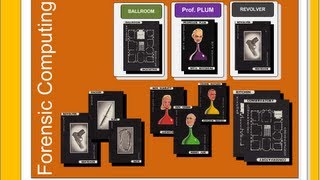
Forensic Computing - Part 1
Comprehensive introduction to forensic computing, covering basic procedures, data collection, preservation, hiding techniques, and network traffic analysis.
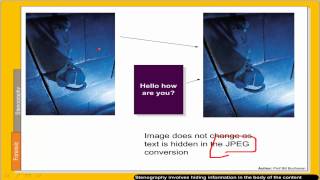
Forensic Computing - Procedures, Data Preservation, and Covert Channels - Part 1
Explore digital forensics fundamentals, including evidence collection, data preservation, and covert channel detection techniques for network traffic analysis and hidden information discovery.

Privacy, Trust and the Future of Cybersecurity
Explore privacy, trust, and future tech challenges with cryptography expert Bruce Schneier. Delve into encryption, IoT risks, data breaches, and policy implications in our increasingly connected world.