
Explainability
Explore cutting-edge research on explainable AI, including actionable recourse, model reconstruction, diverse explanations, and human-AI comparisons in deception detection.

Law and Policy
Explore ethical and legal challenges in AI, including anthropomorphism, explainability, racial categorization, and algorithmic fairness. Gain insights from experts on crucial issues shaping the future of technology and society.

Content Distribution
Exploring algorithmic biases in content distribution, including microtargeting, truth perception, polarization control, and recommender systems' effects on online news environments.

Corporate Social Responsibility via Multi-Armed Bandits
Explore how multi-armed bandit algorithms can be applied to corporate social responsibility, balancing profit maximization with societal impact in decision-making processes.

Fairness Violations and Mitigation under Distribution Shift
Explore fairness violations in machine learning under covariate shift and learn effective mitigation strategies for more equitable AI systems.

Price Discrimination with Fairness Constraints
Explore ethical price discrimination strategies that balance profit maximization with fairness considerations, addressing societal concerns in algorithmic pricing.

Balanced Neighborhoods for Multi-sided Fairness in Recommendation
Explore multi-sided fairness in recommendation systems, addressing filter bubbles and data bias through balanced neighborhoods and sensitivity analysis.

Popularity and Demographic Biases in Recommender Systems
Exploring popularity and demographic biases in recommender systems, their impact on evaluation and effectiveness, and strategies for ensuring equitable recommendations across diverse user groups.

Recommendation Independence
Explore recommendation independence in AI systems, focusing on fair treatment of content providers and regularization approaches to mitigate bias in algorithmic recommendations.

Runaway Feedback Loops in Predictive Policing
Explore runaway feedback loops in predictive policing, examining assumptions, theory, and potential solutions to address reinforcement issues in law enforcement algorithms.

Decoupled Classifiers for Group-Fair and Efficient Machine Learning
Explore group-fair machine learning with decoupled classifiers, balancing efficiency and fairness in algorithmic decision-making. Gain insights into innovative approaches for ethical AI development.

KinectFusion - Real-Time 3D Reconstruction and Interaction Using a Moving Depth Camera
Explore real-time 3D reconstruction using depth cameras in this award-winning talk on KinectFusion, showcasing innovative techniques for interactive spatial mapping and modeling.

Human Enhancement and the Future of BCI
Explore the impact of AI on neurotechnologies for human augmentation, including brain-computer interfaces, neurofeedback, and neuromodulation, and their potential to revolutionize human-computer interaction.

MTBalance - Assisting Novice Mountain Bikers with Real-Time Proprioceptive Feedback
Real-time feedback system for novice mountain bikers to improve posture and balance awareness, enhancing performance and making the sport more accessible.

HybridPointing for Touch - Switching Between Absolute and Relative Pointing on Large Touch Screens
Innovative touch input technique for large displays, combining absolute and relative pointing for efficient target selection across distances, validated through experiments and a two-person game study.

No Door Handle, No Entry! - Expressing Cues through a Shape-Changing Door
Explores shape-changing interfaces in architectural elements, focusing on an interactive door panel that communicates social cues through dynamic affordances and affordance elimination.

Frost Mortem - Bending Space without Bumping into Each Other
Innovative VR game design: co-op puzzle, hand-tracking, and redirected walking for immersive, controller-free gameplay in shared space. Insights on development and unique interaction techniques.

The Democratization of UX Research
Explore a democratic approach to UX research, empowering all product development actors to actively participate in customer insights gathering and improve product outcomes.

Should Attention Be All We Need? The Ethical and Epistemic Implications of Unification in Machine Learning
Explore the ethical and epistemic implications of unification in machine learning, focusing on attention mechanisms and their impact on AI development and society.
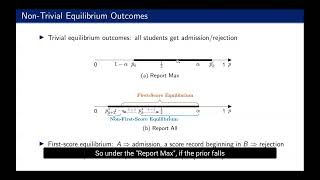
Best vs. All - Equity and Accuracy of Standardized Test Score Reporting
Explore the equity and accuracy implications of different standardized test score reporting methods, examining their impact on fairness and precision in educational assessment.
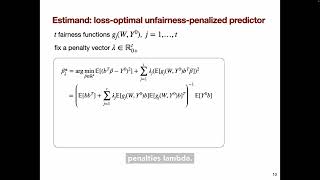
FADE - FAir Double Ensemble Learning for Observable and Counterfactual Outcomes
Learn a novel machine learning approach for fair prediction of both observable and counterfactual outcomes, enhancing decision-making in various domains.