Algorithmic Fairness in Predicting Opioid Use Disorder using Machine Learning
Explore machine learning's role in predicting opioid use disorder, focusing on algorithmic fairness and ethical considerations in healthcare applications.

Evaluating Fairness of Machine Learning Models Under Uncertain and Incomplete Information
Explore methods for assessing ML model fairness with limited data, addressing challenges in uncertain and incomplete information scenarios.

Biases in Generative Art - A Causal Look from the Lens of Art History
Explore biases in generative art through an art history lens, examining causal relationships and their impact on AI-generated artwork. Gain insights into the intersection of technology and artistic expression.

Allocating Opportunities in a Dynamic Model of Intergenerational Mobility
Explore intergenerational mobility dynamics and opportunity allocation in this research presentation, examining societal impacts and potential policy implications for fairness and equity.
Reasons, Values, Stakeholders - A Philosophical Framework for Explainable AI
Explore a philosophical framework for explainable AI, examining the interplay between reasons, values, and stakeholders to enhance transparency and ethical considerations in artificial intelligence systems.
AI Explainability 360
Comprehensive tutorial on AI explainability, covering techniques, tools, and applications. Learn to implement transparent and interpretable machine learning models for ethical AI development.
Making Accountability Real - Strategic Litigation
Explore strategic litigation's role in advancing digital rights and holding tech companies accountable, with insights on effective legal strategies and global case studies.
Hacking the Human Bias in AI
Explore human bias in AI systems, its impact on decision-making, and strategies to mitigate these biases for more equitable and ethical artificial intelligence.
Productivity and Power - The Role of Technology in Political Economy
Explore the intersection of technology, productivity, and political power with Harvard Law professor Yochai Benkler in this thought-provoking keynote address from FAT*2020.
Policy 101 - An Introduction to Participating in the Policymaking Process
Learn to engage effectively in policymaking processes, focusing on technology policy. Gain insights into advocacy strategies and understanding legislative procedures for impactful participation.
Probing ML Models for Fairness with the What-if Tool and SHAP
Explore ML model fairness using What-if Tool and SHAP. Learn to analyze and visualize model behavior, detect biases, and understand feature importance for responsible AI development.
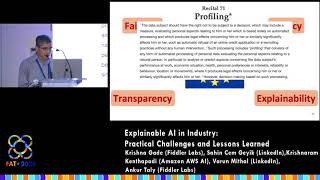
Explainable AI in Industry - Practical Challenges and Lessons Learned
Explore practical challenges and industry insights on implementing explainable AI, featuring expert perspectives from leading tech companies and researchers.
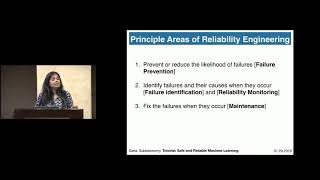
Implications Tutorial - Reasoning About Subtle Biases in Data
Explore subtle biases in data-driven decision support tools, their impact on reliability, and strategies to address dataset shifts for improved generalization and robustness in real-world applications.

Challenges of Incorporating Algorithmic Fairness into Industry Practice
Explore challenges in implementing algorithmic fairness in industry, covering stakeholder involvement, data gathering, resourcing, and prioritizing tradeoffs. Gain insights into practical approaches and potential pitfalls.

Toward a Theory of Race for Fairness in Machine Learning
Exploring critical race theory concepts for machine learning practitioners to develop a nuanced understanding of race in algorithmic fairness, through discussions and interactive activities.

Parole Denied - One Man's Fight Against a COMPAS Risk Assessment
Exploring the impact of COMPAS risk assessment in prisons, focusing on Question 19's influence on parole decisions and the challenges faced by inmates in addressing algorithmic bias.

A New Era of Hate
Exploring the evolution of hate movements online, their impact, and the need for improved tech company enforcement measures to combat digital propaganda and its real-world consequences.
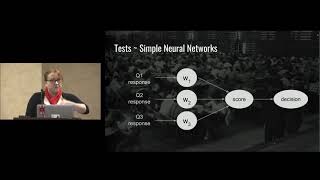
Translation Tutorial - A History of Quantitative Fairness in Testing
Explores historical quantitative fairness definitions in education and hiring, translating 1960s-70s concepts to modern machine learning notation and highlighting challenges for current fairness research.
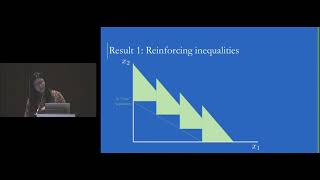
Economic Models II
Explores strategic manipulation, fair decision-making, and affirmative action in economic models. Discusses disparate effects, social costs, and downstream impacts on equality and fairness in algorithmic systems.
Empirical Studies
Exploration of fairness in risk assessments, racial bias in health algorithms, ethical issues in social media mental health inference, and China's social credit system behavior definitions.

Economic Models I
Exploration of fair machine learning through economic models, addressing equality of opportunity, population-level signaling, competitive equilibrium, and fair allocation algorithms.