
Effects of Depth Layer Switching between an Optical See-Through Head-Mounted Display and a Body-Proximate Display
Explore the challenges of integrating visual information across optical see-through head-mounted displays and body-proximate displays, with insights on performance impacts and design trade-offs.

Effects of Dark Mode on Visual Fatigue and Acuity in Optical See-Through Head-Mounted Displays
Investigates dark mode's impact on visual fatigue and acuity in optical see-through head-mounted displays, revealing benefits for acuity, fatigue, and usability in various lighting conditions.

How to Work in the Car of the Future - A Neuroergonomical Study Assessing Concentration, Performance and Workload Based on Subjective, Behavioral and Neurophysiological Insights
Neuroergonomical study explores optimal car interior configurations for productive work during autonomous driving, assessing concentration, performance, and workload using subjective, behavioral, and EEG measures.
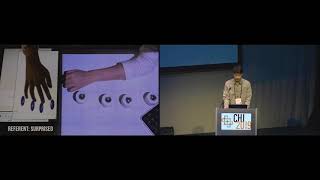
SwarmHaptics - Haptic Display with Swarm Robots
Exploring haptic feedback using small, wheeled robots for abstract interfaces. Investigates design space, demonstrates scenarios, and studies human perception of robotic haptic patterns.

The Future of Tangible User Interfaces
Explore the evolution, practical implications, and future potential of tangible user interfaces with leading experts in human-computer interaction, discussing innovative applications and emerging opportunities in the field.

Who Would You Like to Work With?
Explores how users search for and choose teammates on online platforms, revealing discrepancies between initial preferences and final choices, and the impact on team diversity and expertise distribution.

Countermeasures - Learning to Lie to Objects
Explore techniques to deceive smart objects and regain control over digital sensing in ubiquitous computing environments. Learn practical interventions to increase awareness and agency in the face of pervasive sensors.

Careers in HCI and UX - The Digital Transformation from Craft to Strategy
Explore the evolving roles of HCI and UX professionals in digital transformation, discussing challenges, new skills, and potential impact on business and society.

Making Interactive Virtual Reality & Augmented Reality Prototypes from Paper
Learn to create interactive AR/VR prototypes using paper templates and 360proto tools. Explore rapid prototyping techniques for immersive environments, AR overlays, VR controllers, and more.
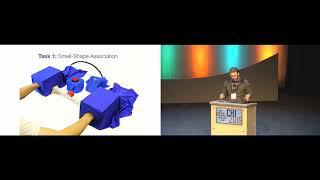
Like Popcorn - Crossmodal Correspondences Between Scents, 3D Shapes and Emotions in Children
Exploring how children associate emotions with scents and 3D shapes, revealing crossmodal connections that can enhance multisensory interactive technologies for more inclusive design experiences.
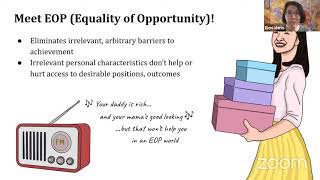
Translation Tutorial - Fairness and Friends
Explore fairness in AI and its societal implications through expert insights on ethical considerations, surveillance technology, and responsible data practices.

Translation Tutorial - A Crash Course in Motivating, Supporting, and Expanding Ethical Thinking
Crash course on integrating ethical thinking in tech education, covering motivation, support, and expansion strategies for educators to foster responsible innovation.

In Praise of Flawed Mathematical Models
Exploring the value of imperfect mathematical models in computing and their impact on decision-making, ethics, and societal implications in technology and data science.

Health, Technology, and Race
Explore the intersections of health, technology, and race with Yeshimabeit Milner's insightful keynote, addressing crucial societal issues and their impact on modern healthcare and technological advancements.
Detecting Discriminatory Risk through Data Annotation Based on Bayesian Inferences
Explore Bayesian inference techniques for detecting discriminatory risk in data annotation, enhancing fairness and accountability in machine learning systems.
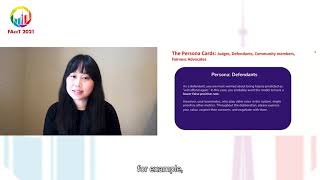
Value Cards - An Educational Toolkit for Teaching Social Impacts of Machine Learning through Deliberation
Explore an innovative educational toolkit using value cards to teach the social impacts of machine learning through deliberation and critical thinking.

TILT - A GDPR-Aligned Transparency Information Language and Toolkit for Practical Privacy Engineering
Explore GDPR-aligned transparency tools for privacy engineering with TILT, a language and toolkit designed to enhance practical implementation of data protection regulations.
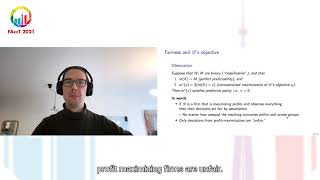
Fairness, Equality, and Power in Algorithmic Decision-Making
Explore the ethical implications of algorithmic decision-making, focusing on fairness, equality, and power dynamics in AI systems and their societal impact.
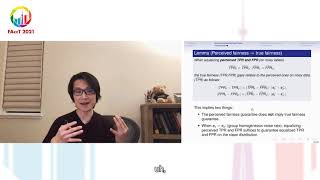
Fair Classification with Group-Dependent Label Noise
Explore group-dependent label noise in fair classification, addressing challenges and proposing solutions for improved algorithmic fairness in machine learning models.

Socially Fair k-Means Clustering
Explore socially fair k-means clustering algorithms, addressing fairness in machine learning and data analysis. Learn about innovative approaches to balance accuracy and social equity in clustering techniques.
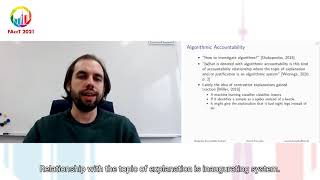
Designing Accountable Systems
Explore strategies for creating transparent and responsible technological systems, focusing on accountability in design and implementation.