
Techniques in Flexible Header-Only C++ Network Library Implementations
Explores techniques for creating flexible header-only C++ network libraries, focusing on cpp-netlib's modular design, generic programming principles, and implementation of key components like message types and URI parsers.
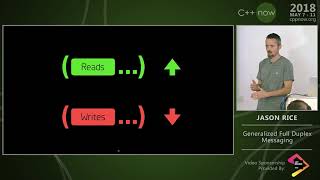
Generalized Full Duplex Messaging
Explore creating generic interfaces for full duplex messaging systems using Boost libraries and Nbdl. Learn to implement concrete solutions for various network protocols and manage object lifetimes in asynchronous operations.
Introduction to Writing Network Tests with pyATS
Learn to create robust, repeatable network tests using pyATS, an open-source framework. Explore test case development, job execution, and integration into network automation pipelines for improved reliability.
More Fun With Hardware and CircuitPython - IoT, Wearables, and More
Explore advanced CircuitPython projects for IoT and wearables. Learn to choose devices, understand electronics basics, and add interactivity to hardware projects through exciting demos and real-world applications.

Snakes and Onions - Python Developers and Tor
Explore Python's role in Tor network development, focusing on anonymity, privacy, and security challenges in online communications.

The Return of Peer to Peer Computing
Explore the resurgence of peer-to-peer computing, its implications for privacy, and potential to disrupt centralized communication models in the digital age.
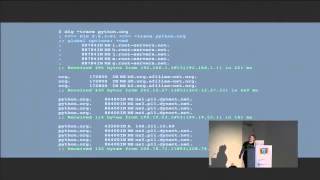
For Lack of a Better Name - DNS Explained
Explore DNS fundamentals, communication protocols, and Python integration. Learn how DNS works, its components, and how to interact with it using Python, including creating a simple DNS server.
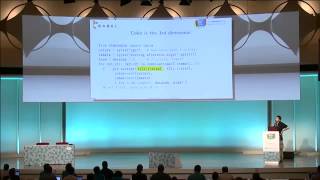
Statistics 101 for System Administrators
Python for sysadmins: Analyze system data using statistics, scipy, and matplotlib. Learn to parse logs, calculate distributions, find correlations, and create informative plots to quickly identify performance issues.
Twisted Names - DNS Building Blocks for Python Programmers
Explore DNS components in Python with Twisted Names. Learn about EDNS0, DNSSEC, and DANE client support, and discover how to build innovative DNS servers and clients using event-driven networking.

Teach Your -Microservices- Speak Protocol Buffers with gRPC
Explore Protocol Buffers and gRPC for efficient microservice communication, covering schema enforcement, serialization, and API evolution with practical examples and best practices.

Network Visualization and Automation
Explore network visualization and automation using Python's tkinter library, covering graph drawing algorithms, GIS implementation, and automated script generation for network devices.
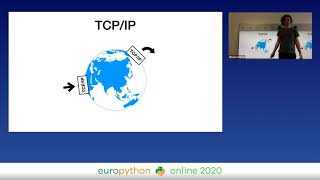
HTTP - 3 – Why Should I Care?
Explore HTTP/3 and QUIC protocol: advantages, disadvantages, and current implementations. Learn how this new technology improves performance, increases privacy, and may revolutionize web communication.
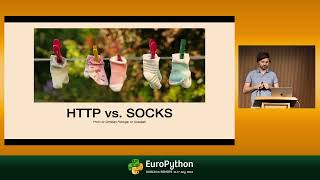
How I Wrote a Python Client for HTTP - 3 Proxies
Explore the development of a Python client for HTTP/3 proxies using MASQUE protocol, covering proxy design, HTTP versions, and asyncio implementation challenges.
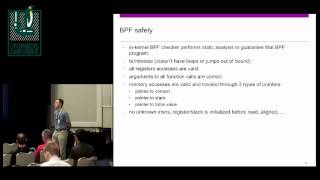
OVS - From Open vSwitch to Open Network Virtualization System
Discover innovative approaches to virtual network infrastructure, exploring extensions and mergers of existing networking mechanisms for enhanced functionality and efficiency.
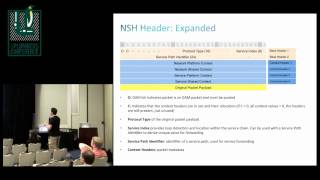
LISP and NSH in Linux and Open vSwitch
Explore Network Service Headers and LISP implementation in Linux and Open vSwitch, focusing on service chaining, architecture, and data plane components.
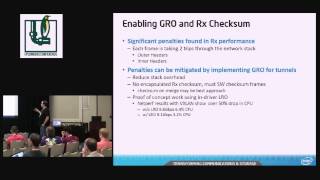
Improving Overlay Network Performance on Existing Hardware
Explore performance improvements for VXLAN and NVGRE tunnel protocols, including checksum offload and GRO optimizations, to enhance overlay network efficiency on existing hardware.
ERSPAN Support for Linux
Explore ERSPAN support in Linux for network troubleshooting, including implementation, use cases, and practical examples for enhanced port mirroring capabilities across Layer 3 networks.
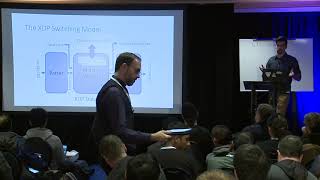
P4C-XDP - Programming the Linux Kernel Forwarding Plane Using P4
Explore P4C-XDP, a new backend for the P4 compiler leveraging XDP for high-performance software data plane in Linux kernel. Learn about its architecture, implementation, and potential applications.
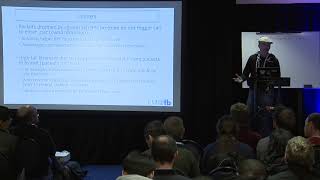
BPF Host Network Resource Management
Exploring BPF-based framework for efficient network resource management, addressing limitations of traffic control subsystem and supporting both local and global allocations.
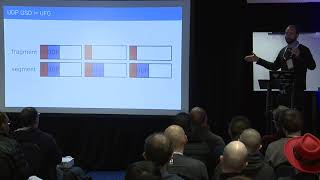
Optimizing UDP for Content Delivery with GSO, Pacing and Zerocopy
Optimizing UDP for content delivery: segmentation offload, zerocopy, and pacing techniques to improve performance, reduce overhead, and enhance protocol innovation in userspace.
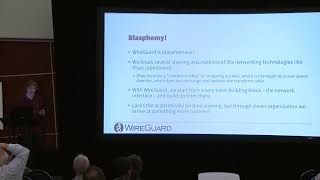
WireGuard - Next-Generation Secure Kernel Network Tunnel
Explore WireGuard, a new Linux network tunneling mechanism with formal cryptographic protocol, small codebase, and widespread deployment. Learn about its kernel integration, performance, and ecosystem impact.