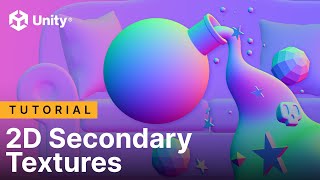
Secondary Textures - Lit Sprites and 2D VFX Tutorial
Enhance 2D sprites with secondary textures for dynamic lighting and atmosphere. Learn to create and implement texture maps to elevate your game's visual appeal using Unity's URP.

Poetry of Programming - Clojure for Beginners
Explore functional programming with Clojure through mini-lectures, covering basics to advanced concepts like recursion and creative coding, suitable for beginners and self-learners.

Make it Rain - Building Particle Systems in SwiftUI
Explore SwiftUI particle systems with Paul and Sophie Hudson. Learn techniques to create dynamic visual effects, enhancing your iOS app's user experience and interactivity.

Three.js Tutorials
Comprehensive tutorials on Three.js, covering 3D graphics, animations, physics, AI behaviors, and advanced rendering techniques for interactive web applications.
A Visual Guide to Quaternions and Dual Quaternions - Math in Game Development
Explore a concrete, 3D visualization of quaternions in game development. Learn creation, interpolation, and composition techniques for enhanced understanding and practical application.

Designing the Super Bowl in Unreal Engine - Behind the Scenes with Marcos Vaz
Explore the creation of Super Bowl LVIII graphics using Unreal Engine with designer Marcos Vaz. Learn about the process, challenges, and future of real-time graphics in broadcast television.

Implementing Elastic Collisions in JavaScript - Coding Challenge 184
Learn to implement elastic collisions in p5.js without a physics library. Explore the math behind circle collisions and create a JavaScript simulation, supplementing the Nature of Code book series.
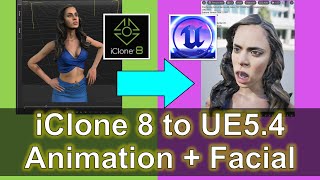
iClone 8 to Unreal Engine 5.4 - Facial Animation, Lip Sync, and Morph Targets Tutorial
Comprehensive guide on importing iClone 8 animations into Unreal Engine 5.4, including 3D models, body motion, lip sync, and morph target animations for game development projects.

Stable Diffusion 3.5 and ComfyUI Comparison Review
Discover the key differences between Stable Diffusion 3.5 and ComfyUI.exe through hands-on testing and comparative analysis of their image generation capabilities and workflows.
Unleash the Graphics Magic - OpenGL and OpenGL ES Development for Apple M1 and M2
Discover the journey of OpenGL driver development for Apple M1/M2, exploring hardware magic, conformance achievements, and the intricate code behind graphics acceleration.

Improving the World's Slowest Raytracer - RADV Implementation Progress
Dive into the evolution of RADV's raytracing implementation, exploring performance improvements, compatibility expansions, and current capabilities in Mesa 23.2's graphics rendering system.

Reducing Stutters with Uber Shaders in Zink - OpenGL Driver Optimization
Discover how uber shaders optimize Zink's OpenGL driver performance by eliminating shader compilation delays and improving pipeline state handling for smoother graphics rendering.
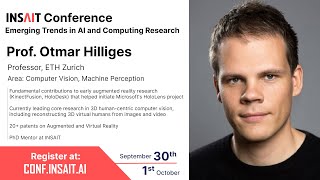
Human-Centric 3D Computer Vision for Future AI Systems
Explore cutting-edge developments in 3D computer vision for AI systems, focusing on human pose detection, avatar creation, and natural interactions for applications in autonomous vehicles and AR/VR technology.

Research and Innovation in AI-Driven Interactive Entertainment
Explore how AI revolutionizes gaming development through enhanced design processes, autonomous testing, and the emergence of intelligent virtual characters, while addressing ethical considerations and practical applications.

Flux ControlNet Guide for ComfyUI
Master ControlNet implementation in ComfyUI to enhance AI image generation with precise control over poses, depth, and composition while creating stunning visual transformations.
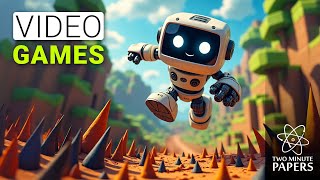
Video Games and the Future of Artificial Intelligence
Explore how modern video games and their advanced physics simulations are revolutionizing AI development and machine learning capabilities through realistic virtual environments.

Etnaviv GPU Driver Stack Status Update and Roadmap
Explore the latest developments in etnaviv driver stack, including CI board farm expansion, OpenGL ES 3.0 implementation progress, and innovative solutions for legacy GPU support.

Ongoing Challenges in the Raspberry Pi Graphics Driver Stack
Explore ongoing developments in Raspberry Pi 4 driver stack, including OpenGL 3.x implementation, Vulkan driver CPU job handling improvements, and global GPU usage statistics tracking.
Wayfire - Converting OpenGL Wayland Compositor to Pixman Rendering
Discover how to optimize Wayfire OpenGL Wayland compositor for Raspberry Pi 3 using Pixman rendering, including performance improvements and technical challenges in implementation.

Stable Diffusion XL Theory and Code with Shape-Shifting ControlNet
Dive into the advanced mechanics of SDXL and ControlNet, exploring text-to-image diffusion models and shape-shifting techniques for synthetic image manipulation.
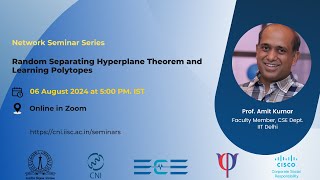
Random Separating Hyperplane Theorem and Learning Polytopes
Delve into advanced mathematical concepts of hyperplane theorem, polytope learning, and optimization oracles with applications in machine learning's hidden variable problems.