
Phase Transitions in Dot-Product Attention Layer Learning - New AI Discovery
Explore groundbreaking research on phase transitions in LLM attention mechanisms, revealing key insights into semantic learning and potential breakthroughs in AI model efficiency.
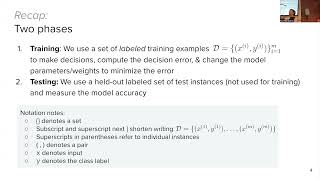
Tokenization and Morphology in Natural Language Processing
Master essential text processing concepts through tokenization and morphology analysis, exploring fundamental techniques for breaking down and understanding linguistic structures.
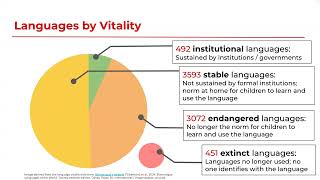
Multilingual Large Language Models - Advances in Generative AI
Explore the latest developments in multilingual large language models, their capabilities, challenges, and future potential in the evolving landscape of generative AI.
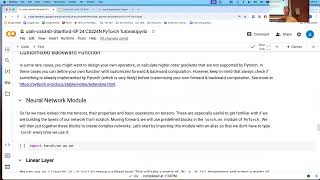
Language Modeling - Fundamentals and Applications
Master the fundamentals of language modeling, exploring statistical and neural approaches, probability distributions, and practical applications in natural language processing.
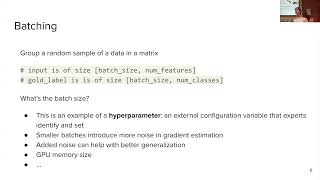
Vector Semantics and Word Embeddings in Data Science
Dive into the mathematical foundations of vector semantics and word embeddings, exploring how words are represented as numerical vectors for natural language processing applications.
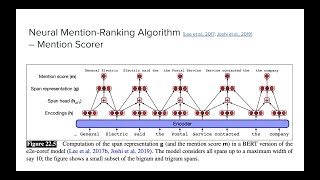
Coreference Resolution in Natural Language Processing
Master the fundamentals of coreference resolution in natural language processing, exploring key concepts, algorithms, and practical applications for improving text understanding and analysis.
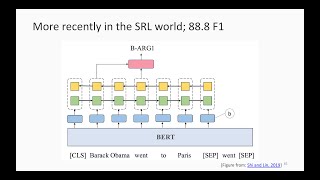
Semantic Parsing and Semantic Role Labeling
Master semantic parsing and Semantic Role Labeling (SRL) techniques to understand natural language structure, relationships between predicates and arguments, and core principles of computational linguistics.
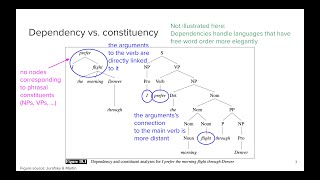
Introduction to Dependency Parsing in Natural Language Processing
Master natural language processing techniques through dependency parsing, exploring syntactic relationships and grammatical structures in computational linguistics.
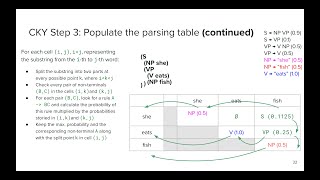
Constituency Parsing in Natural Language Processing
Master constituency parsing techniques and tree structures for analyzing syntactic relationships in natural language processing, focusing on hierarchical sentence decomposition.
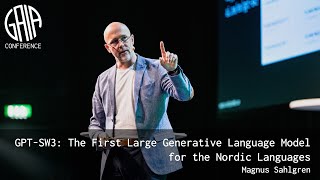
GPT-SW3: The First Large Generative Language Model for Nordic Languages
Explore the development and applications of GPT-SW3, the pioneering large generative language model for Swedish, with insights on data challenges and future directions.

Complete Natural Language Processing Tutorial in Python
Comprehensive Python tutorial covering NLP fundamentals, techniques, and state-of-the-art models. Includes practical examples using popular libraries and hands-on implementation of advanced concepts.

Multilingual NLP 2022 - Language Contact and Change
Explore language change, contact, and crosslingual similarities. Learn about loanwords, cognates, and computational models for transliteration and lexicon induction.
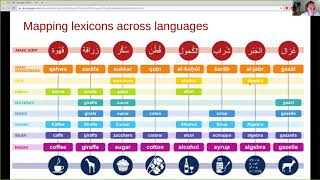
CMU Multilingual NLP: Language Contact and Similarity Across Languages
Explore computational models of language contact, lexical borrowing, and cross-lingual similarities in this multilingual NLP lecture on language evolution and interaction.
CMU Multilingual NLP - Syntax and Parsing
Explore syntax, dependency parsing, and linguistic discovery with AutoLex. Learn about major word orders, parsing models, and tools for multilingual NLP research and applications.
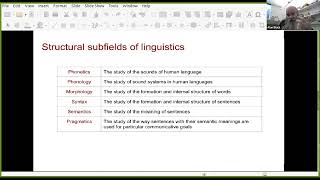
CMU Multilingual NLP 2022 - Words, Parts of Speech, Morphology
Explore words, parts of speech, and morphology in multilingual NLP, covering linguistic concepts, UD Treebank annotations, and morphological analysis techniques.
Arriving at an Understanding of Computational Linguistics' Virtues - Lecture 1
Explore computational linguistics' virtues in humanities research. Learn text analysis methods, content extraction, and meaning derivation from digital sources to enhance humanities scholarship.
Language Learning in Humans and Machines - Making Connections to Make Progress
Exploring connections between human and machine language learning to develop better computational methods for understanding and processing diverse languages.

Computational Semantics Evaluation - The Origins of Senseval and Evolution of SemEval
Explore the evolution of computational semantics evaluation, from Senseval's origins in word sense disambiguation to SemEval's diverse tasks. Learn about key challenges, benefits, and future considerations in semantic analysis.
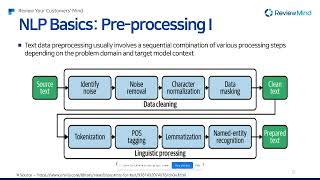
Introduction to NLP and Topic Modeling
Explore NLP basics, advanced techniques like word vectors, and topic modeling. Learn pre-processing, tools, and methodologies to start NLP modeling and understand topic analysis.
Boundary Conditions for Language in Biological and Artificial Neural Systems
Explore computational requirements for language processing in neural systems, focusing on hierarchical structures, neural oscillations, and integrating linguistic insights with neural computation principles.
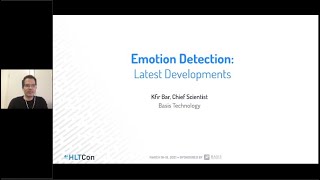
Emotion Detection in Text: Latest Developments and Challenges
Explore latest developments in emotion detection from text, covering techniques, datasets, and challenges in building production-level systems for enhanced NLP applications.