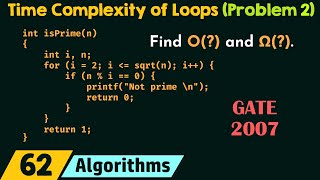
Time Complexity of Loops - Solved Problem 2
Solves a GATE 2007 problem on time complexity of loops, analyzing algorithmic efficiency and providing step-by-step explanations for better understanding.
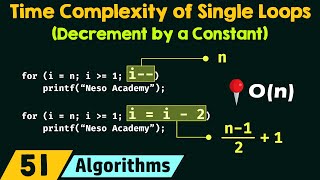
Time Complexity of Single Loops - Decrement by a Constant
Explore time complexity analysis for single loops with constant decrements, enhancing algorithm efficiency understanding and problem-solving skills.
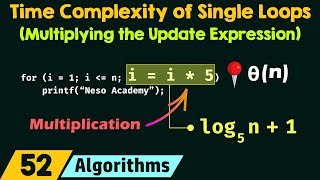
Time Complexity of Single Loops - Multiplying the Update Expression
Explore time complexity analysis for single loops with multiplicative update expressions, enhancing algorithm efficiency understanding and problem-solving skills.
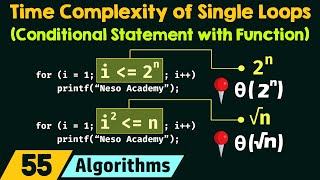
Time Complexity of Single Loops - Conditional Statement with a Function
Explore time complexity analysis for single loops with conditional statements and functions, enhancing your understanding of algorithm efficiency and performance evaluation.
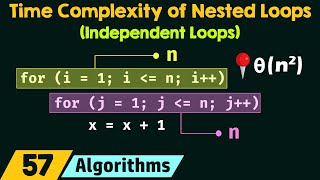
Time Complexity of Nested Loops - Independent Loops
Explore time complexity of nested independent loops in algorithms, enhancing understanding of computational efficiency for improved problem-solving skills.
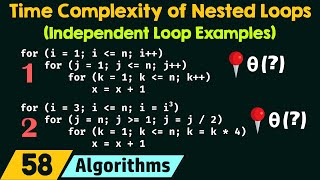
Time Complexity of Nested Loops - Independent Loop Examples
Explore time complexity of nested loops with independent examples, enhancing algorithm analysis skills for efficient programming and problem-solving.
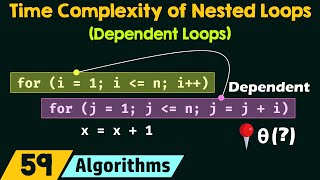
Time Complexity of Nested Loops - Dependent Loops
Explore time complexity analysis for nested loops with dependencies, enhancing your algorithm optimization skills and deepening understanding of computational efficiency.

Time Complexity of Nested Loops - Dependent Loop Examples
Explore time complexity analysis for nested loops with dependent variables, enhancing your understanding of algorithm efficiency and performance optimization techniques.
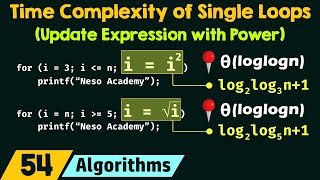
Time Complexity of Single Loops - Update Expression with Power
Explore time complexity analysis for single loops with power-based update expressions, enhancing your algorithm optimization skills and computational efficiency understanding.
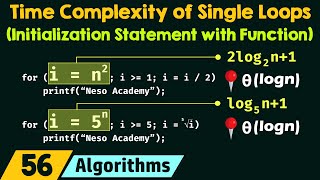
Time Complexity of Single Loops - Initialization Statement with a Function
Explore time complexity analysis for single loops with function-based initialization, enhancing your understanding of algorithm efficiency and performance optimization.
Rotation Estimation to n Digits Accuracy - Quantum Computer Programming Lesson 65
Explore rotation angle estimation to n-digit accuracy in quantum computing, covering techniques for precise measurements within +/-10^{-n} range.
Finding "L" from the Clues - Quantum Computer Programming - Lesson 87
Efficient classical algorithm for determining cycle length "L" using random clues from Rotation Estimation, illustrated in quantum computing lesson.

Finding the Length of a Cycle in Quantum Factoring Algorithm - Lesson 85
Explore how the quantum Factoring algorithm's main task can be rephrased as finding the length of an exponentially long directed cycle in quantum computing.
Tractable Representations for Boolean Functional Synthesis
Explore efficient techniques for synthesizing Boolean functions from relational specifications, focusing on structural properties and normal forms that enable tractable synthesis.
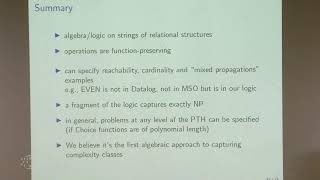
Promise Algebra: A Functional Approach to Non-Deterministic Computations
Algebraic approach to modeling non-determinism in computational processes, using promise algebra and history-dependent choice functions to analyze complexity and generate strategies.
Set-limited Functions and Polynomial-time Interior-point Methods
Explore polynomial-time interior-point methods and set-limited functions with Yurri Nesterov, delving into advanced optimization techniques and mathematical theory.
Primal-Dual Optimization Methods for Robust Machine Learning
Explore primal-dual optimization techniques for enhancing machine learning robustness, focusing on advanced mathematical approaches to improve model performance and reliability.
Nullstellensatz-Inspired Algorithms for Certifying Entanglement of Subspaces
Explore Nullstellensatz-inspired algorithms for certifying entanglement in quantum subspaces. Delve into computational techniques, applications, and extensions to general varieties.
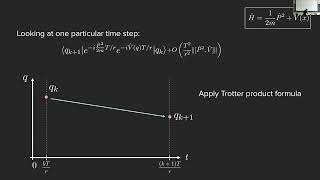
Efficient Quantum Algorithms in the Path Integral Formulation
Explore quantum algorithms through path integral formulation, examining computational efficiency and theoretical frameworks for advanced quantum information processing.
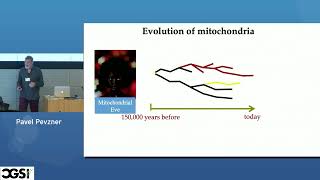
Uni-alignment: A Parameter-free Framework for Fast and Accurate Sequence Alignment
Discover a parameter-free framework for fast sequence alignment through UniAligner, exploring innovative approaches to computational genomics and bioinformatics analysis.
Random Local Hamiltonians - Glassiness and Optimization
Explore the mathematical complexities of random local Hamiltonians, focusing on glassiness phenomena and optimization techniques in quantum systems and algorithms.