Data-Driven and Data-Assisted Modeling for Applications in Fluid Dynamics and Geophysics
Explores data-driven and data-assisted modeling techniques for fluid dynamics and geophysics, focusing on machine learning applications in climate science and high-resolution forecasting.
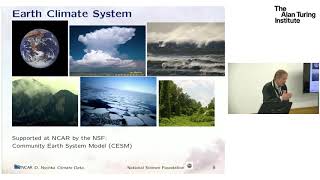
Climate Data Science: A Tour - Professor Doug Nychka, National Center for Atmospheric Research
Explore climate data science through statistical analysis, modeling, and Earth observation techniques. Learn about climate systems, data representation, and challenges in Earth system science.
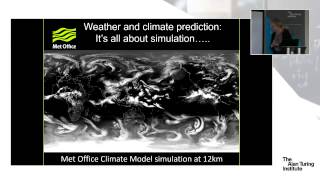
Big Data, Met Office and 21st Century Problems
Explore weather forecasting, climate prediction, and big data analysis at the Met Office. Learn about simulation techniques, ensemble forecasting, and addressing 21st-century environmental challenges.
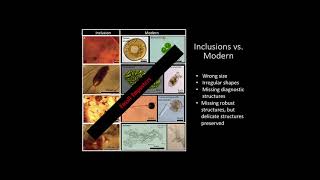
The Amber Trap: Unlocking Stories of Ancient Polar Climates from Fossilized Tree Resin
Explore ancient polar climates through fossilized tree resin, uncovering evidence of past environments and ecosystems in Antarctica and the Arctic.
Climate Science on Tap - Climate Hope
Explore climate science, impacts, and solutions for Florida, emphasizing hope and regional action. Learn about sea level rise, storms, and initiatives for a sustainable future.
The Evolution of the Patagonian Ice Sheet from 35 ka to the Present Day
Explore the evolution of the Patagonian Ice Sheet over 35,000 years, examining its diverse environments, sediment-landform assemblages, and the climatic factors influencing its recession.

Global Climate Change
Explore climate change's impacts, from shifting shorelines to Arctic ice melt. Learn about natural causes, greenhouse effects, and environmental consequences through proxy data and climate system analysis.
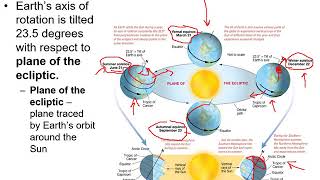
Air Sea Interaction
Explore atmosphere-ocean interactions, global circulation patterns, and weather phenomena. Learn about heat transfer, wind systems, and tropical cyclones in this comprehensive overview of air-sea dynamics.
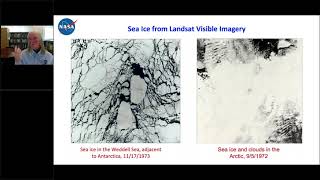
Climate Findings from a 40-Year Satellite Record of Arctic and Antarctic Sea Ice
Explore 40 years of satellite data on Arctic and Antarctic sea ice, its distribution, significance, and relationship to the climate system. Gain insights into long-term trends and recent changes in polar ice coverage.
How Can Climate Models Help Us Respond to Climate Change? - With Vicky Pope
Explore climate models' role in understanding and responding to climate change, including their development, applications, and implications for policy and technology.
Machine Learning for Ocean Closures - Advances and Lessons - Laure Zanna - Climate-C21
Machine learning techniques for ocean modeling, exploring advances in subgrid closures, turbulent closures, and stochastic parameters to improve climate predictions and understand ocean dynamics.
The Story of Climate Change
Explore the history of climate science, from early discoveries to modern models, and understand the current global climate crisis and its ethical implications.
A Scientific Summary of the 2021 Nobel Prize in Physics
Explore complex systems, climate modeling, and statistical mechanics with insights from a Nobel Prize committee member. Gain a graduate-level understanding of interconnected physical phenomena.
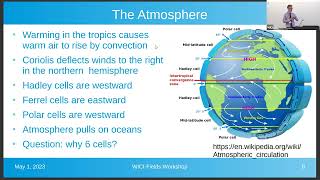
Understanding Cross-Scale Systems and Feedbacks
Explore cross-scale systems and feedbacks in climate science, examining interconnected processes across different spatial and temporal scales to enhance climate modeling and predictions.
Atmospheric Radiation - Using Machine Learning for the Unknowable and Uncomputable - Robert Pincus
Exploring machine learning applications in atmospheric radiation to tackle unknowable and uncomputable aspects, enhancing climate modeling and understanding of Earth's energy balance.
Skillful El Nino Prediction Beyond Predictability Barriers - Henk Dijkstra
Explores advanced techniques for predicting El Niño events beyond traditional limitations, discussing innovative approaches to enhance climate forecasting accuracy and extend prediction timeframes.
Objective Discovery of Dominant Dynamical Regimes - Bryan Kaiser - Climate-C21
Discover dominant dynamical regimes in climate systems using machine learning and big data. Explore objective methods to advance theoretical understanding and inform future climate predictions at regional scales.
Revealing the Impact of Global Heating on the Meridional Overturning Circulation
Explore the effects of global heating on ocean circulation using transparent machine learning techniques. Gain insights into climate system dynamics and future regional impacts.
Deep Unsupervised Learning for Climate Informatics - Claire Monteleoni
Exploring deep unsupervised learning techniques for climate data analysis, focusing on innovative approaches to extract insights from complex Earth system observations and modeling data.
Data-Driven Subgrid-Scale Modeling - Stability, Extrapolation, & Interpretation
Explores data-driven subgrid-scale modeling in climate science, focusing on stability, extrapolation, and interpretation. Discusses advancements in theoretical understanding and the potential of machine learning to address complex climate processes.

Large-Scale Ocean Circulation and Climate - Interannual Climate Variability by Anand Gnanadesikan
Explore interannual climate variability and its connection to large-scale ocean circulation. Gain insights into the complex interactions between oceans and climate systems, enhancing understanding of global climate patterns.