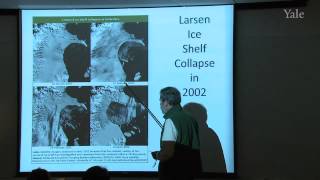
Ice in the Climate System - Types and Formation
Explore five types of ice in the climate system: sea ice, ice sheets, ice shelves, icebergs, and mountain glaciers. Learn about their formation, characteristics, and roles in Earth's environment.

Global Climate Change
Explore climate change's impacts, from shifting shorelines to Arctic ice melt. Learn about natural causes, greenhouse effects, and environmental consequences through proxy data and climate system analysis.
Machine Learning for Ocean Closures - Advances and Lessons - Laure Zanna - Climate-C21
Machine learning techniques for ocean modeling, exploring advances in subgrid closures, turbulent closures, and stochastic parameters to improve climate predictions and understand ocean dynamics.
Atmospheric Radiation - Using Machine Learning for the Unknowable and Uncomputable - Robert Pincus
Exploring machine learning applications in atmospheric radiation to tackle unknowable and uncomputable aspects, enhancing climate modeling and understanding of Earth's energy balance.
Deep Unsupervised Learning for Climate Informatics - Claire Monteleoni
Exploring deep unsupervised learning techniques for climate data analysis, focusing on innovative approaches to extract insights from complex Earth system observations and modeling data.
Data-Driven Subgrid-Scale Modeling - Stability, Extrapolation, & Interpretation
Explores data-driven subgrid-scale modeling in climate science, focusing on stability, extrapolation, and interpretation. Discusses advancements in theoretical understanding and the potential of machine learning to address complex climate processes.
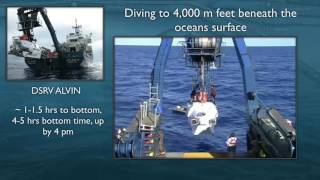
Bringing Underwater Volcanoes into Your Living Room - 2017 Chapman Conference
Explore the fascinating world of submarine volcanism with expert Deborah Kelly as she delivers a captivating keynote address on underwater volcanic activity and its implications.
Unintentional Geoengineering: Whitening Skies and Changing Solar Radiation - Fall 2015
Explore unintentional geoengineering's impact on global cloud-free skies, solar radiation patterns, and Earth's surface through new data analysis and expert insights on atmospheric changes.
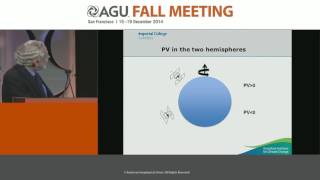
Cross-equatorial Flow and the Hadley Cell
Explores the complexities of cross-equatorial air movement in the Hadley Cell, challenging traditional views and discussing implications for weather and climate patterns.
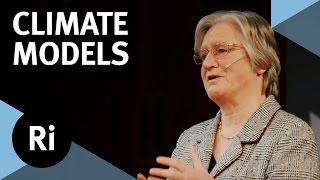
How to Build a Climate Laboratory
Explore climate modeling with Met Office Chief Scientist Julia Slingo. Learn about processes controlling the climate system and their incorporation into models to understand and navigate future challenges.
Schneider Lecture: Climate Change Impacts and Adaptation Strategies
Explore climate change impacts and adaptation strategies with Linda Mearns from the National Center for Atmospheric Research in this insightful lecture on atmospheric research advancements.

Hybrid Filtering for Lagrangian Data Assimilation and Tipping Points in Earth Systems
Explore hybrid filtering for Lagrangian data assimilation and tipping points in Earth systems. Gain insights into advanced geophysical fluid dynamics techniques and their applications in climate science.
Oceanic Energy Flux Across Scales - Observational Evidence and Mechanisms
Explores oceanic energy transfers across scales using observational evidence and mechanisms. Discusses multi-scale interactions, turbulent mixing, and energy cycle in Earth's climate system.
A Quasi-Biweekly Oscillation in the Equatorial Indian Ocean and Bay of Bengal
Explores a quasi-biweekly oscillation in the equatorial Indian Ocean and Bay of Bengal, examining its characteristics, mechanisms, and impacts on regional climate dynamics.
Stochastic Multi-Scale Reconstruction of Turbulent Rotating Flows
Explores stochastic methods for reconstructing turbulent rotating flows across multiple scales, advancing understanding of complex fluid dynamics in geophysical systems.
Lagrangian Means and Their Computation
Explore Lagrangian means in geophysical fluid dynamics, focusing on computational methods and applications in atmospheric and oceanic dynamics.
Diapycnal Mixing in the Coastal Ocean
Explore diapycnal mixing in coastal oceans: mechanisms, impacts, and latest research findings on this crucial process affecting ocean dynamics and climate.
Detection of Mesoscale Oceanic Eddies Over Bay of Bengal Using Explainable Deep Learning
Explore deep learning techniques for detecting mesoscale oceanic eddies in the Bay of Bengal, with a focus on explainable AI methods to enhance understanding of eddy dynamics and their impact on regional climate.
Meso- to Submesoscale Turbulence in the Ocean - Lecture 1
Explore ocean turbulence from meso to submesoscale, examining energy transfers, instabilities, and mixing processes. Gain insights into the complex dynamics shaping Earth's climate and marine ecosystems.
The Geostrophic Eady Problem Revisited - Lecture 2
Revisiting the geostrophic Eady problem, exploring atmospheric and oceanic dynamics, instabilities, and energy transfers in geophysical fluid systems. Advanced analysis of multi-scale interactions in Earth's climate.
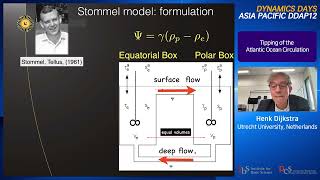
Tipping of the Atlantic Ocean Circulation
Explore the Atlantic Meridional Overturning Circulation's sensitivity to freshwater, its potential collapse, and climate impacts through ocean-climate model analyses.