NOAA Scientific Integrity Policy - Press Availability at AGU Fall Meeting 2011
NOAA's Scientific Integrity Policy explained: impacts on operations, extreme weather analysis, and scientific practices. Insights into policy implementation and its significance for climate research.
NOAA's Scientific Integrity Policy - Unveiling and Discussion
Unveiling of NOAA's scientific integrity policy, emphasizing protection of scientific findings, transparency, and strengthening science. Follows a lecture on predicting and managing extreme events.
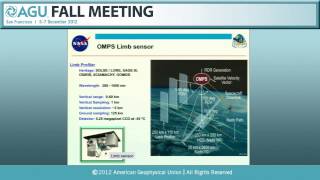
Space-Based Operational Global Earth Observations From NPP and JPSS - 2012
Explore operational applications and initial results from Suomi NPP and JPSS satellites, including sensor performance, data products, and their impact on global Earth observations and weather forecasting.
Modelling Coupled Social-Climate Systems and Using Data-Driven Dynamical Systems
Explore innovative approaches to modeling complex social-climate interactions using data-driven dynamical systems, offering insights into sustainable solutions and policy implications.
Data Assimilation - Kalman Filter - Lecture 7
Explore Kalman Filter in data assimilation for weather and climate models. Learn theoretical foundations and practical applications of this crucial mathematical approach.
Carbon Dioxide Removal Law and Policy: From Planning to Project Deployment
Explore carbon dioxide removal deployment strategies with Dr. Joe Romm's keynote on law and policy implications from planning to project implementation.
Maritime Transport Sector Guidance for Science-Based Emissions Reduction Targets
Explore new guidance for maritime companies to set science-based emissions reduction targets aligned with 1.5°C, accelerating industry decarbonization efforts.
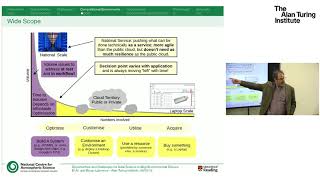
Opportunities and Challenges for Data Science in Big Environmental Science - Bryan Lawrence
Exploring data science applications in environmental research, addressing challenges of big data in climate modeling and Earth observation, and discussing future opportunities in the field.
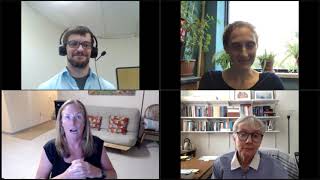
Career Paths in Academia for Atmospheric Scientists - A Panel Discussion
Explore diverse academic career paths for atmospheric scientists, from university administration to research and teaching roles, with insights on job search, required skills, and daily responsibilities.
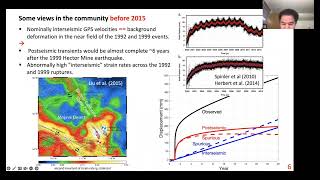
Hunting for Tectonic and Climatic Signals in GPS Position Time Series
Explore techniques for detecting tectonic and climatic signals in GPS position data, enhancing understanding of Earth's dynamic processes and environmental changes.

The Data of Climate Crisis - Environment Forum with Sara Grossman
Explore the historical ties between meteorological science and state power, and their impact on climate crisis data today with environmental historian Sara J. Grossman.
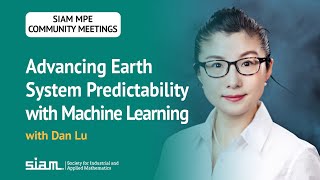
Advancing Earth System Predictability with Machine Learning Methods
Explore machine learning methods for improving Earth system predictions, featuring insights from Dan Lu of Oak Ridge National Laboratory on enhancing climate modeling and forecasting.
Paleoclimatology: Deep Insights From Broad Data
Explore Earth's past climates to validate climate models and predict future behavior. Learn about challenges in paleoclimate data analysis and efforts to standardize and analyze these unique archives.
Visualization with Python Tutorial
Learn Python visualization techniques for geophysical fluid dynamics, covering data representation and analysis tools essential for atmospheric and oceanic research.
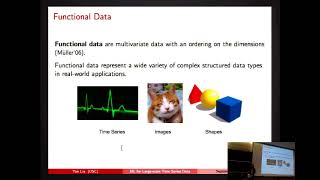
Learning and Mining in Large-Scale Time Series Data - 2015
Explore machine learning approaches for analyzing large-scale time series and spatio-temporal data, with applications in healthcare and climate modeling.
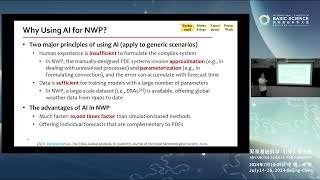
Accurate Medium-Range Global Weather Forecasting with 3D Deep Neural Networks
Explore AI-powered global weather forecasting using 3D deep networks and Earth-specific priors. Learn about Pangu-Weather's accuracy in medium-range predictions and extreme weather tracking.

Theoretical and Practical Perspectives in Geophysical Fluid Dynamics - Afternoon Session
Explore geophysical fluid dynamics through lectures, talks, and tutorials on eddies, waves, turbulence, and climate modeling. Gain insights from theory, models, and observations in this interdisciplinary meeting.
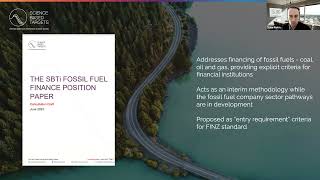
SBTi Fossil Fuel Finance Position Paper - Public Consultation Deep Dive
Explore SBTi's draft fossil fuel finance criteria and provide feedback on updated guidance for financial institutions setting science-based climate targets.
Leveraging Deep Learning and Rare Event Sampling to Study Climate Extremes Impacting the Power System
Explore deep learning and rare event sampling techniques for analyzing climate extremes' impact on power systems.

Is the World Smooth or Non-smooth? Mathematical Models in Dynamic Systems
Explore mathematical modeling approaches examining smooth vs non-smooth dynamics across climate, energy transfer, and neural systems, revealing insights into complex real-world phenomena.

Sequential Design Based on Mutual Information for Computer Experiments - Joakim Beck, KAUST
Explore uncertainty quantification using Gaussian Process emulators for complex systems. Learn about sequential design methods, mutual information criteria, and applications in climate, tsunami, and earthquake modeling.