
Earth and Planetary Sciences - Lightning Talks
Explore diverse Earth & Planetary Sciences topics through rapid-fire faculty presentations, covering geology, climate change, oceanography, and more in concise 3-minute talks.

Ice Science Advances: From Antarctic Cores to Future Mars Sampling
Explore advances in ice science through Antarctic cores and potential Mars sampling, uncovering insights about Earth and Mars' ancient climates and environments.
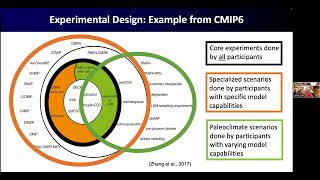
Looking Ahead to the Future of Exoplanet Climate Modeling
Explore the evolution of exoplanet climate modeling, from 1D models to sophisticated 3D simulations, and learn how JWST observations will shape future research and model refinement.
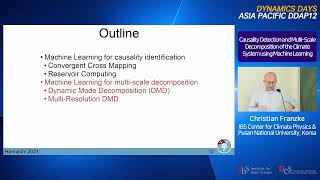
Causality Detection and Multi-Scale Decomposition of the Climate System Using Machine Learning
Explore machine learning approaches for detecting causal relationships and meaningful patterns in climate systems, focusing on Reservoir Computing and Multi-Resolution Dynamic Mode Decomposition techniques.
Productive Performance Engineering for Weather and Climate Modeling with Python
Optimize weather and climate models using Python-embedded DSL and data-centric techniques. Improve productivity and performance through abstraction, semi-automated workflows, and transfer tuning for efficient scaling on supercomputers.
Building Digital Tools for Polar Research
Explore innovative digital tools for polar research, including automated ship route planning and Antarctica's digital twin, with experts from the British Antarctic Survey and Alan Turing Institute.
State of the Climate: New Jersey 2023 - Lecture 7/10/2024
Explore New Jersey's climate trends, projections, and extreme events in 2023, including impacts of Canadian wildfires and future climate change implications.
Deciphering the Habitability of the Earth: Insights from the Coupled Evolution of the Crust-Mantle-Atmosphere-Ocean System
Explore Earth's habitability through the interconnected evolution of crust, mantle, atmosphere, and oceans, gaining insights into our planet's unique conditions for life.

Data Learning: Machine Learning in Climate Action
Explore machine learning applications in climate action, focusing on data-driven solutions for environmental challenges and sustainable development.

Programming for the Planet - Functional Programming for Climate Analysis
Explore functional programming's role in building resilient systems for climate analysis, emphasizing data handling, access control, and interdisciplinary collaboration for conservation impact.

Cryosphere Science and Global Climate Negotiations - COP28 Joint Event
Explore the intersection of cryosphere science and global climate negotiations, focusing on the latest research and its implications for policy discussions at COP28.

The Everyday Science of Gas
Explore the fascinating world of gases through historical discoveries, modern applications, and scientific experiments, from their role in fizzy drinks to their impact on climate and neural function.
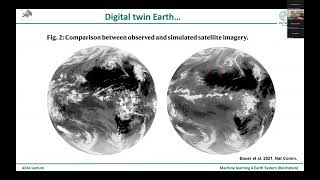
Deep Learning and Process Understanding for Data-Driven Earth System Science - Lecture 37
Explore deep learning applications in Earth System Science, focusing on process understanding and data-driven approaches to environmental research and analysis.
Hybrid and Causal Machine Learning in the Earth Sciences - Lecture 36
Explore hybrid and causal machine learning applications in Earth sciences, focusing on advanced AI techniques for environmental data analysis and modeling.
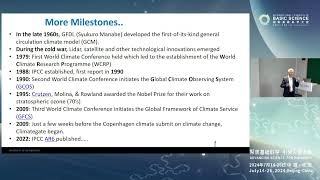
The Important Roles of Modeling in the Development of Climate Science
Explore the evolution of climate science through modeling, from simple energy balance models to sophisticated Earth System Models, and their role in understanding and predicting climate change.
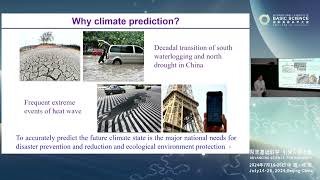
Predicting the Climate Over the Tibetan Plateau in Decadal Scales
Explore advanced techniques for predicting Tibetan Plateau climate on decadal scales, focusing on global coupled data assimilation and the impact of regional observations on global climate predictions.
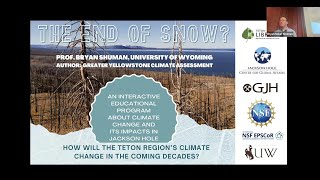
The End of Snow and Increased Fire Risk - An Interactive Educational Program About Climate Change
Explore climate change impacts on Jackson Hole's future, including snow loss and fire risks, through an interactive workshop led by experts from the University of Wyoming.
Unveiling the Steel Science-Based Target-Setting Guidance
Discover how steel manufacturers can set science-based emissions reduction targets aligned with 1.5°C warming limits, accelerating decarbonization efforts in this carbon-intensive industry.
Ancient Bubbles Tell Future Climate Stories
Explore how ancient air bubbles trapped in ice reveal Earth's climate history and inform future climate predictions.
A Geochemical Adventure on Earth
Embark on a captivating journey exploring Earth's geochemical processes, unraveling the planet's mysteries through cutting-edge research and scientific insights.
AI and the Second Revolution in Weather and Climate Prediction
Explore AI's transformative impact on weather and climate prediction, revolutionizing forecasting techniques and enhancing our understanding of atmospheric dynamics.