Ocean Data Assimilation - Applications in Weather and Climate Models
Explore ocean data assimilation techniques, their applications in monitoring and understanding climate variability, and integration with atmospheric and land surface studies.
Exploring Equitable and Climate Compatible Futures
Unpack regional assumptions in IPCC climate models and explore alternative frameworks prioritizing equity and justice for achieving climate compatibility globally.
The Balance Conundrum in Geophysical Fluid Dynamics
Explore geophysical fluid dynamics, covering eddies, waves, turbulence, and energy transfers in Earth's climate. Gain insights from theory, models, and observations, with tutorials on visualization and machine learning.
Energetically Consistent Climate Modelling - Part 1
Explore energetically consistent climate modeling techniques, focusing on atmospheric and oceanic dynamics, energy transfers, and multi-scale interactions in Earth's climate system.
The Geostrophic Eady Problem Revisited - Lecture 1
Revisiting the geostrophic Eady problem: Exploring atmospheric and oceanic dynamics, instabilities, and energy transfers in geophysical fluid systems through theoretical and practical perspectives.
Impact of a Mesoscale Eddy on the M2 Internal Tide in 5km ICON-O
Explore the influence of mesoscale eddies on M2 internal tides using high-resolution ICON-O simulations. Gain insights into complex ocean dynamics and energy transfers in geophysical fluid systems.
Linking Submesoscale Frontal Dynamics to the Large Scale Background Environment
Explore the connection between submesoscale frontal dynamics and large-scale ocean environments. Gain insights into multi-scale interactions in geophysical fluid dynamics and their impact on Earth's climate.
Instabilities in Neural Autoregressive Models of Geophysical Flows
Explores instabilities in neural autoregressive models for geophysical flows, discussing challenges and advancements in predicting complex atmospheric and oceanic dynamics using machine learning techniques.
Classical 1/3 Nusselt Scaling in Compressible Convection at Extreme Rayleigh Numbers
Explores Nusselt scaling in compressible convection at extreme Rayleigh numbers, examining heat transfer mechanisms and fluid dynamics in extreme conditions relevant to geophysical and astrophysical systems.
Energetically Consistent Ocean Model Parameterisations - Lecture 2
Explores energetically consistent parameterizations for ocean models, focusing on advanced techniques to accurately represent complex oceanic processes and energy transfers across scales.
Weather and Climate Modelling - Advances and Challenges
Explore cutting-edge weather and climate modelling techniques with expert talks and Q&A from leading researchers in the field of Climate Informatics.
Role of AI in Tackling Climate Change - How Uncertain is Future Sea Level Rise
Explore AI's potential in addressing climate change, focusing on predicting sea level rise uncertainties, with insights from a leading expert in the field.
Climate Informatics 2024 Lightning Talks
Impactful short presentations on climate informatics, featuring diverse speakers from leading institutions sharing cutting-edge research and insights in the field.
How Uncertain is Future Sea Level Rise
Explore the uncertainties surrounding future sea level rise with expert Tamsin Edwards in this insightful keynote talk from Climate Informatics 2024.
Ethics and Explainability in Climate AI - From Theory to Practice
Explore ethical considerations and explainability challenges in applying AI to climate science, featuring insights from leading experts in a thought-provoking panel discussion.
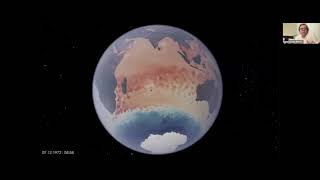
Earth Virtualization Engines (EVE) for Climate Change Modeling
Explore Earth Virtualization Engines (EVE) and their potential impact on climate change research with Bjorn Stevens from MPI Hamburg.
Computational Frontiers in Weather and Climate Modeling
Explore cutting-edge computational approaches in weather and climate modeling, including high-resolution trends, digital twins, and emerging paradigms for advanced simulations.
The Climate Trio: Stochastic Climate Variability, Seasonal Cycle, and El Niño
Explore the complex interplay between El Niño, seasonal cycles, and climate variability. Gain insights into ENSO's global impacts and advancements in seasonal predictions using conceptual models.
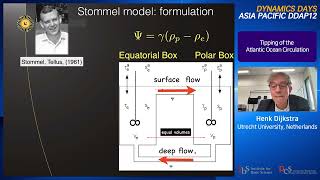
Tipping of the Atlantic Ocean Circulation
Explore the Atlantic Meridional Overturning Circulation's sensitivity to freshwater, its potential collapse, and climate impacts through ocean-climate model analyses.
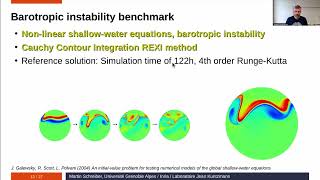
Breaking Through the Barrier of Time Integration for Climate and Weather Simulations
Explore innovative time integration methods for climate and weather simulations, addressing computational challenges and improving efficiency in dynamic cores.
Modeling Planetary-Scale Fluid Flows in the Laboratory
Explore planetary-scale fluid dynamics through laboratory experiments, from Rossby waves to exoplanet atmospheres. Gain insights into climate transitions and extreme weather patterns.