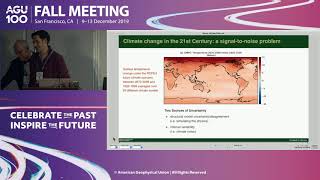
Data Analytics and Machine Learning Innovation for Climate and Earth Surface Processes
Explore innovative data analytics and machine learning techniques for climate and Earth surface processes, focusing on big data challenges and opportunities in Earth system modeling and predictability.

Subzero.jl: Fast and Flexible Sea Ice Physics
Explore efficient sea ice modeling with Subzero.jl, leveraging Julia's speed for advanced climate simulations. Learn about discrete-element modeling and performance improvements in sea ice dynamics research.
Berkeley Lab's Breakthroughs in Exascale Supercomputing and AI Energy Efficiency
Explore Berkeley Lab's journey from atomic age to supercomputing forefront. Discover exascale computing challenges, energy efficiency innovations, and future HPC directions with specialized hardware and chiplets.
GENIE: Generative Foundation Models for Automated Climate Science
Explore generative foundation models for automated climate science with Rose Yu's GENIE project, advancing AI applications in environmental research.

Portable Communications Interface for Earth System Model - JuliaCon 2024
Explore ClimaComms.jl's high-level interface for Earth System Model components, enabling efficient communication patterns and distributed simulations across various architectures.
SpeedyWeather.jl - Reinventing Atmospheric Models
Innovative Julia-based atmospheric modeling tool offering interactive, user-friendly simulations for climate research, overcoming traditional Fortran constraints with flexible, extensible components.
Applied Data Science & Engineering for Local Weather Forecasts
Explore data science applications in local weather forecasting, covering numerical prediction models, scaling with Apache Airflow, and forecast verification techniques for improved accuracy.

ML for Solving PDEs: Neural Operators on Function Spaces
Explore AI advancements in scientific applications, including neural operators for weather and climate modeling, offering significant speedups and zero-shot generalization across function spaces.
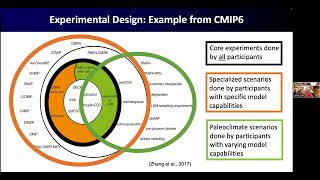
Looking Ahead to the Future of Exoplanet Climate Modeling
Explore the evolution of exoplanet climate modeling, from 1D models to sophisticated 3D simulations, and learn how JWST observations will shape future research and model refinement.
Productive Performance Engineering for Weather and Climate Modeling with Python
Optimize weather and climate models using Python-embedded DSL and data-centric techniques. Improve productivity and performance through abstraction, semi-automated workflows, and transfer tuning for efficient scaling on supercomputers.

Data Learning: Machine Learning in Climate Action
Explore machine learning applications in climate action, focusing on data-driven solutions for environmental challenges and sustainable development.
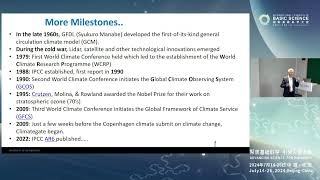
The Important Roles of Modeling in the Development of Climate Science
Explore the evolution of climate science through modeling, from simple energy balance models to sophisticated Earth System Models, and their role in understanding and predicting climate change.
Ancient Bubbles Tell Future Climate Stories
Explore how ancient air bubbles trapped in ice reveal Earth's climate history and inform future climate predictions.
AI and the Second Revolution in Weather and Climate Prediction
Explore AI's transformative impact on weather and climate prediction, revolutionizing forecasting techniques and enhancing our understanding of atmospheric dynamics.
ML for High-Performance Climate: Data Post Processing, Compression, and Earth Virtualization Engines
Explore advanced ML techniques for climate data processing, compression, and Earth virtualization, enhancing high-performance computing in climate science.
Aurora: A Foundation Model of the Atmosphere - Tutorial 1
Explore Aurora, a groundbreaking foundation model for atmospheric science, and learn its applications in climate modeling and weather prediction.
Dynamical Systems and Reservoir Computing - Lecture 2
Delve into dynamical systems and reservoir computing applications in climate networks, focusing on analysis methods, bifurcation behavior, and network characterizers for climate data organization.