
Beyond Simple A/B Testing - Advanced Experimentation Tactics
Explore advanced A/B testing strategies like Multi-Armed Bandits and Switchback Experiments to enhance data-driven decision-making and product development.
Addressing Cultural and Technical Challenges in Product Experimentation - Beyond the Tool
Explore cultural and technical challenges in product experimentation, focusing on hypothesis testing, causal inference, and data science techniques beyond traditional methods.
Objective Discovery of Dominant Dynamical Regimes - Bryan Kaiser - Climate-C21
Discover dominant dynamical regimes in climate systems using machine learning and big data. Explore objective methods to advance theoretical understanding and inform future climate predictions at regional scales.
Deep Unsupervised Learning for Climate Informatics - Claire Monteleoni
Exploring deep unsupervised learning techniques for climate data analysis, focusing on innovative approaches to extract insights from complex Earth system observations and modeling data.
Treatment Effect Estimation for User Interest Exploration on Recommender Systems
Explore advanced techniques for estimating treatment effects in recommender systems, focusing on user interest exploration and long-term session recommendations.

Counterfactual Fairness
Explore causal inference tools for modeling fairness in machine learning, addressing bias and ensuring equitable decisions across demographic groups.
Better Learning from the Past - Counterfactual - Batch RL
Explore counterfactual and batch reinforcement learning for improved decision-making under uncertainty, with focus on generalization bounds and policy optimization techniques.
Benefits of Saying I Don't Know When Analyzing and Modeling the Climate System With ML - Elizabeth Barnes
Explore the benefits of acknowledging uncertainty in climate system analysis using machine learning. Learn about state-dependent predictability and controlled abstention networks for improved modeling accuracy.
Interpretable and Generalizable Machine Learning for Fluid Dynamics - Steven Brunton
Explore interpretable and generalizable machine learning techniques for fluid dynamics, focusing on sparse identification of nonlinear dynamics and incorporating physical constraints for improved accuracy.

Linear Structure of High-Level Concepts in Text-Controlled Generative Models
Explore the linear structure of high-level concepts in text-controlled generative models, focusing on embedding, representation, and semantic encoding for precise model control.
The Statistical Structure of Identifiable Generative Models
Explore the statistical structure of identifiable generative models, focusing on causal representation learning, model identifiability, and unique inferences from observations under suitable assumptions.
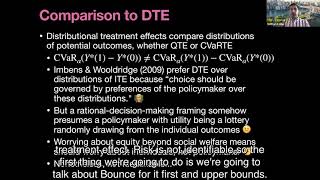
Treatment Effect Risk - Bounds and Inference
Explore bounds and inference in treatment effect risk analysis, focusing on statistical methods for causal inference and risk assessment in experimental studies.
Interventions over Predictions - Reframing the Ethical Debate for Actuarial Risk Assessment
Reframing ethical debates on actuarial risk assessment, focusing on interventions over predictions. Explores historical context, machine learning implications, and causal inference in risk evaluation.
A Gentle Introduction to Causal Inference
Explore causal inference techniques to uncover relationships in observational data, avoid misinterpretation pitfalls, and extract deeper insights beyond simple correlation calculations.
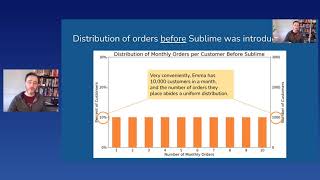
Sliding into Causal Inference, with Python
Explore causal inference tools in Python to simulate parallel realities and answer 'what if' questions. Learn about randomized experiments, differences-in-differences, propensity scores, and synthetic controls.
Instrumental Variable Estimation: STATA Application of IV Using 2SLS - Part 9
Apply instrumental variable estimation using two-stage least squares in STATA, enhancing your econometric analysis skills with practical implementation.
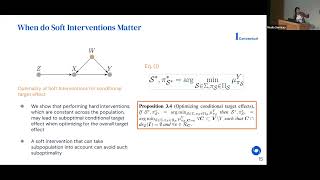
Functional Causal Bayesian Optimization - Lecture 3
Explore functional causal Bayesian optimization for optimizing interventions in causal graphs. Learn about extending CBO methods, modeling with Gaussian processes, and maximizing expected improvement.

Config-Snob: Tuning for the Best Configurations of Networking Protocol Stack
Optimizing web server performance through dynamic tuning of networking protocol stack configurations, addressing challenges in configuration space and network dynamics.
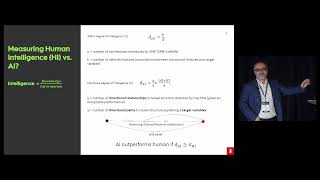
Explainable Machine Learning in Finance - When Machines Surpass Human Intelligence
Explore causal and counterfactual explainability in AI/ML models for finance, addressing challenges when machines surpass human intelligence in complex, high-risk applications.
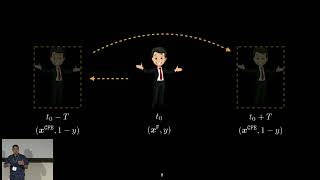
Advances in Algorithmic Recourse - Ensuring Causal Consistency, Fairness, and Robustness
Explore cutting-edge approaches to algorithmic fairness and transparency through causal inference methods, focusing on bias correction and ethical AI applications in healthcare and finance.
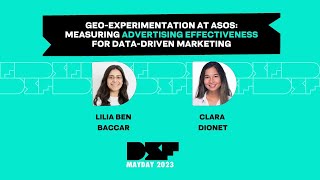
Geo Experimentation at ASOS - Measuring Advertising Effectiveness for Data-Driven Marketing
Explore geo-experimentation for measuring digital marketing impact. Learn ASOS's framework for evaluating campaign effectiveness across markets and channels using geographical regions as test units.