Building a Cloud Data Lake with Databricks and AWS - Best Practices and Implementation
Explore building a cloud data lake using Databricks and AWS. Learn about data lake architecture, AWS services, Delta Lake for reliability and performance, and best practices for implementation.

DBT Using Databricks and Delta
Learn to leverage Data Build Tool (DBT) with Databricks and Delta for efficient data lake management, including SQL-first approach, upsert capabilities, and Azure integration for enhanced observability.

Demystifying Delta Lake - Data Reliability for Data Lakes
Explore Delta Lake's reliability features for data lakes with Apache Spark creator Michael Armbrust. Learn about ACID transactions, metadata handling, and unified data processing.
SQL Analytics and the Lakehouse Architecture - Data + AI Summit EU 2020 Keynote
Explore lakehouse architecture, Delta Lake, and SQL Analytics for unified data management. Learn how this approach combines data warehouse capabilities with data lake flexibility, enabling faster analytics and decision-making.
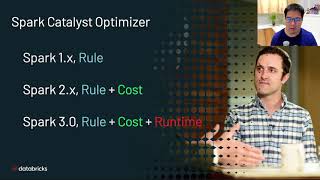
How Apache Spark 3.0 and Delta Lake Enhance Data Lake Reliability
Explore Apache Spark 3.0 and Delta Lake's enhancements for data lake reliability, including ACID transactions, schema enforcement, and time travel. Learn about performance improvements and new features in Databricks Runtime 7.0 Beta.
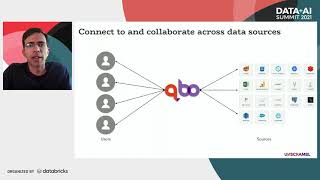
Natural Language Query and Conversational Interface to Apache Spark
Explore conversational analytics with Apache Spark, enabling natural language queries for data insights. Learn about NLP-to-SQL translation and its integration with dialog management and visualization.
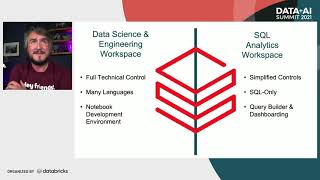
Getting Started with Databricks SQL Analytics
Explore Databricks SQL Analytics: set up SQL endpoints, query workspaces, create dashboards, and connect BI tools. Learn how this tool enhances the Lakehouse architecture for SQL-savvy data analysts.
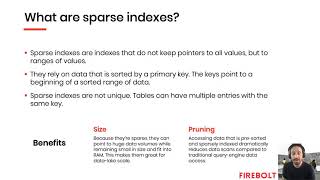
Low-Latency & High-Concurrency Analytics Over Data Lakes
Explore advanced techniques for achieving low-latency, high-concurrency analytics on large-scale data lakes. Learn about optimized storage, indexing, and practical approaches to handle massive data volumes efficiently.
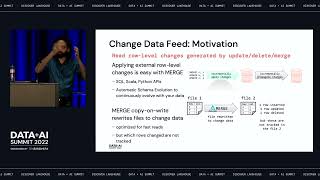
Delta Lake 2.0 Overview - New Features and Community Collaborations
Overview of Delta Lake 2.0 features, integrations, and community collaboration. Highlights include data skipping, Change Data Feed, column mapping, multi-cluster S3 writes, and support for various languages and platforms.
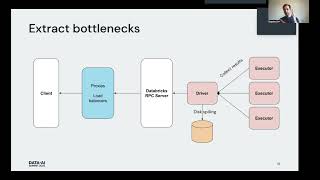
Cloud Fetch: High-Bandwidth Connectivity for BI Tools - Databricks
Explore high-bandwidth connectivity for BI tools using Cloud Fetch, a parallel data extraction mechanism that significantly speeds up query result retrieval from Databricks SQL endpoints.

Data Culture Outside Silicon Valley - Building Teams and Blocking Spam Calls
Exploring data culture beyond Silicon Valley, featuring First Orion's innovative approach to spam call blocking and insights on building effective data teams in Arkansas.
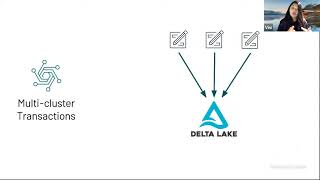
Delta Lake Roadmap 2021 H2 - Features Overview and Community Feedback
Overview of Delta Lake's 2021 roadmap, highlighting new features, integrations, and community-driven developments for enhanced data management and analytics capabilities.
Multi-Table Transactions with LakeFS and Delta Lake - Tech Talk
Explore multi-table transactions using LakeFS and Delta Lake for collaborative data lake management, enabling CI/CD deployment and simplified multi-table pipelines in cloud storage systems.
Understand Slowly Changing Dimensions
Learn to handle Slowly Changing Dimensions in data warehousing, including SCD types, their implementation, and impact on star schema design. Gain expertise for interviews and practical applications.

Redash - Open Source SQL Analytics on Data Lakes
Explore open-source SQL analytics on data lakes using Redash. Learn to create dashboards, develop workflows, and connect to Databricks for comprehensive analytics with Managed Delta Lake.

Data Science Across Data Sources with Apache Arrow - Accelerating Analytics and Interoperability
Explore Apache Arrow's columnar in-memory data representation for real-time analytics across distributed systems. Learn how it accelerates data processing and enables interoperability between various analytical tools and data sources.

Building a Data Platform for Mission-Critical Analytics on AWS with Databricks
Explore building enterprise data lakes on AWS with Databricks, complementing AWS strategy. Learn from HP's success in transforming business through unified data analytics and overcoming data lake challenges.
Slowly Changing Dimensions Type 2 in Data Lakes - Tech Chat
Explore Slowly Changing Dimensions Type 2 in data lakes using Delta Lake, focusing on market segmentation for a climbing eCommerce site. Learn to track historical and current data effectively.
How to Build a Cloud Data Platform - Machine Learning and Business Intelligence - Part 4
Learn to leverage Delta Lake for dashboards and advanced analytics, enabling downstream teams with machine learning and business intelligence capabilities on a unified data platform.
How to Build a Cloud Data Platform - Part 1: Architecture
Learn to build a unified cloud data platform using Delta Lake, combining data warehouses and lakes for improved reliability, performance, and operations.
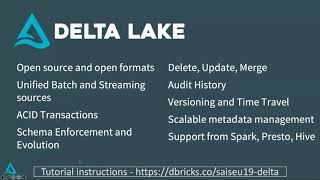
Building Data Intensive Analytic Applications on Top of Delta Lakes
Explore Delta Lake's ACID transactions for Apache Spark, enhancing data reliability and query performance. Learn to address challenges in modern data engineering through hands-on examples and practical applications.