Machine Learning Gradients in Molecular Simulations
Explore ML gradients in molecular simulations, including surrogate functions, active learning, and differentiable programming for enhanced scientific modeling and optimization.
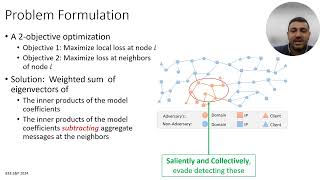
Multi-Instance Adversarial Attack on GNN-Based Malicious Domain Detection
Explore multi-instance adversarial attacks on Graph Neural Networks for detecting malicious domains, enhancing cybersecurity defenses against sophisticated threats.
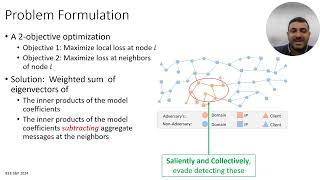
Multi-Instance Adversarial Attack on GNN-Based Malicious Domain Detection
Explore multi-instance adversarial attacks on Graph Neural Networks for detecting malicious domains, enhancing cybersecurity defenses against sophisticated threats.

AI CTF Solutions - DEFCon31 Hackathon and Kaggle Competition
Comprehensive walkthrough of AI hacking techniques used in DEFCon31 CTF competition, covering various attacks on machine learning models, including adversarial examples, prompt injection, and model inversion.

One Pixel Adversarial Attacks via Sketched Programs
Explore a novel approach for one-pixel adversarial attacks using program synthesis, achieving state-of-the-art success rates with fewer queries and transferable programs for neural network classifiers.
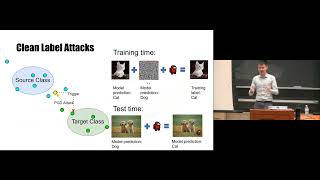
Clean Label Poisoning Attacks: From Classification to Speech Recognition
Explore poisoning attacks in speech recognition, from adversarial manipulations to innovative defenses. Uncover strategies, mechanisms, and future research in AI security.
From Text to Flaws: Vulnerabilities in Applications with Generative AI and LLMs
Explore vulnerabilities in generative AI applications, understand LLM functionality, and learn practical countermeasures to protect your AI-powered software from potential attacks.
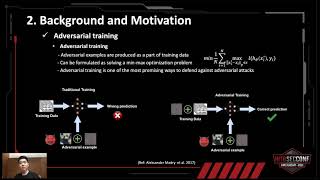
Model Robustness Will Hurt Data Privacy?
Exploring the trade-off between AI model robustness and data privacy, revealing how adversarial training may increase vulnerability to privacy attacks and data reconstruction from gradient information.
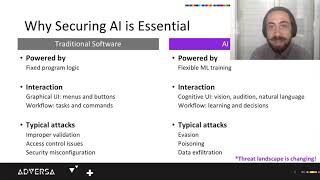
Practical AI Red Teaming - A Facial Recognition Case Study
Practical insights into AI red teaming for facial recognition systems, exploring vulnerabilities, attack methods, and defense strategies in real-world environments.
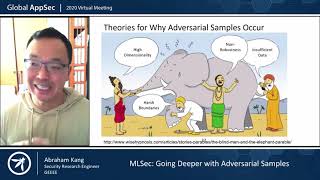
MLSec Going Deeper
Explore advanced machine learning security concepts, including adversarial samples, attack strategies, and defensive techniques for various ML models.

Accessorize to a Crime - Real and Stealthy Attacks on State-Of-The-Art Face Recognition
Explores stealthy attacks on face recognition systems using adversarial machine learning techniques, demonstrating vulnerabilities in state-of-the-art facial recognition technology through impersonation experiments.
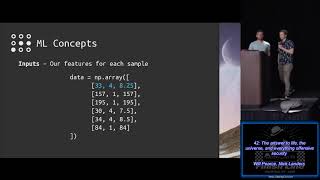
The Answer to Life the Universe and Everything Offensive Security
Explore offensive security through machine learning, sandbox detection, and attack graph theory. Learn about simulation, Q-learning, and adversarial attacks in this comprehensive overview.
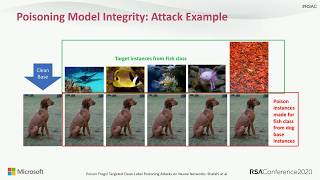
AI Security Engineering - Modeling - Detecting - Mitigating New Vulnerabilities
Explore AI security threats, including adversarial attacks and data poisoning. Learn detection, protection, and mitigation strategies for AI/ML systems from Microsoft experts.
Malicious Documents Emerging Trends - A Gmail Perspective
Comprehensive analysis of malicious document trends targeting Gmail users, exploring attacker tactics and Google's defensive strategies using AI detection and traditional antivirus methods.

Machine Learning Failures - For Art
Explore hilarious machine learning failures in art, from cookie recipes to pony classification, and learn how to deliberately create amusing AI mistakes.
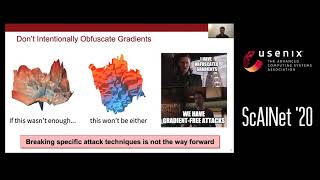
On Adaptive Attacks to Adversarial Example Defenses
Explore adaptive attacks on adversarial example defenses, examining challenges, whitebox attacks, and key observations to understand vulnerabilities in machine learning security.

The Devil is in the GAN - Defending Deep Generative Models Against Adversarial Attacks
Exploring vulnerabilities in Deep Generative Models, this talk introduces a threat model for training-time attacks and demonstrates backdooring techniques, while proposing effective detection methods through static and dynamic inspections.
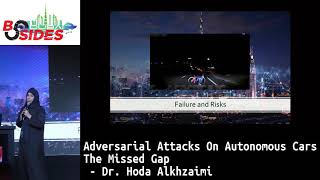
Adversarial Attacks on Autonomous Cars - The Missed Gap
Explore adversarial attacks on autonomous vehicles, examining the gap between academia and industry, and discussing potential vulnerabilities in AI-driven transportation systems.
Superman Powered by Kryptonite - Turn the Adversarial Attack into Your Defense Weapon
Explore how AI-powered attacks on security mechanisms can be turned into defensive strategies, focusing on adversarial examples and innovative countermeasures in cybersecurity.
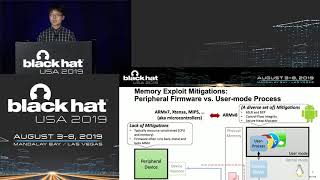
PeriScope - An Effective Probing and Fuzzing Framework for the Hardware-OS Boundary
Explore PeriScope, a Linux-based framework for analyzing device-driver interactions, enabling passive monitoring and active fuzzing to enhance hardware-OS boundary security.

Protecting the Protector - Hardening Machine Learning Defenses Against Adversarial Attacks
Strategies for enhancing machine learning model resilience against tampering, comparing cloud and client-based models, and exploring defense techniques for endpoint protection systems.