
Generating Synthetic Tabular Data that is Differentially Private
Explore approaches to applying differential privacy in generating synthetic tabular data, including measuring low-dimensional distributions and learning graphical model representations for enhanced data privacy.
Untargeted Adversarial Attack on Knowledge Graph Embeddings
Explore advanced techniques for executing untargeted adversarial attacks on knowledge graph embeddings, focusing on privacy and security implications in federated learning environments.

Adversarial Attacks in Deep Neural Networks - Understanding Vulnerabilities and Countermeasures
Explore the world of adversarial attacks in Machine Learning, understanding how malicious inputs can deceive Deep Neural Networks and the ongoing challenges in developing effective defenses.
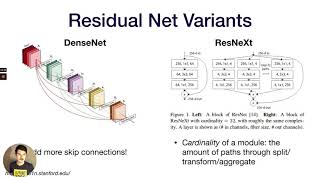
Computer Vision Applications - Full Stack Deep Learning - Spring 2021
Comprehensive overview of deep learning applications in computer vision, covering ConvNet architectures, detection methods, and advanced tasks like 3D shape inference and style transfer.

Socially Responsible Machine Learning: Security, Robustness, and Beyond
Explore socially responsible machine learning, focusing on security and robustness. Discover methods to enhance adversarial robustness and address challenges in the era of foundational models.

Deep Learning Robustness Verification for Few-Pixel Attacks
Explore a novel L0 robustness verifier for neural networks, addressing few-pixel attacks through dynamic programming, sampling, and covering designs to enhance verification efficiency.
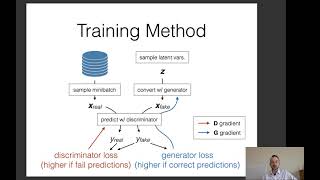
Neural Nets for NLP 2021 - Adversarial Methods
Explore generative adversarial networks, adversarial feature learning, and adversarial attacks in NLP. Learn cutting-edge techniques for robust and domain-invariant neural network models in natural language processing.
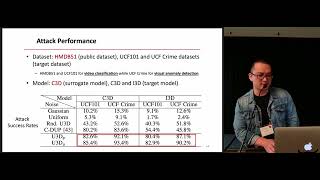
Universal 3-Dimensional Perturbations for Black-Box Attacks on Video Recognition Systems
Explore innovative techniques for creating universal 3D perturbations to challenge and test the robustness of video recognition systems in black-box attack scenarios.
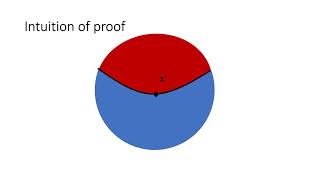
HopSkipJumpAttack - A Query-Efficient Decision-Based Attack
Explore a query-efficient decision-based adversarial attack algorithm for generating adversarial examples, analyzing its theoretical foundations and performance against defense mechanisms.

Building Realistic Machine Learning Systems for Security
Explore building robust machine learning systems for malware detection, addressing challenges like low false positive rates, polluted data, and realistic adversarial attacks in security applications.

Classifiers Under Attack: Evasion Techniques and Defensive Strategies
Exploring vulnerabilities in machine learning classifiers for security applications, demonstrating evasion techniques, and discussing methods to enhance robustness against adversarial attacks.
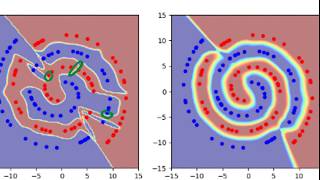
Manifold Mixup: Better Representations by Interpolating Hidden States
Explore Manifold Mixup, a regularization technique that improves neural network performance by interpolating hidden representations, leading to smoother decision boundaries and more robust predictions.

Towards Deep Learning Models Resistant to Adversarial Attacks
Explore deep learning model vulnerabilities and defense strategies against adversarial attacks, examining research findings and experimental results.

Lessons Learned from Evaluating the Robustness of Defenses to Adversarial Examples
Explore robustness of AI defenses against adversarial examples, evaluating threat models and defense strategies to improve security in deep learning systems.

Provable Robustness Beyond Bound Propagation
Explore adversarial robustness in deep learning, focusing on randomized smoothing as a defense strategy and its theoretical guarantees for certified robustness.
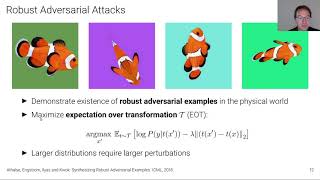
Attacking Optical Flow
Explores adversarial patch attacks on optical flow networks, revealing vulnerabilities in deep learning-based motion estimation crucial for autonomous driving safety.
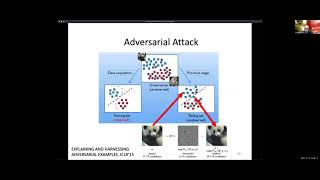
Practical Adversarial Attack Against Speech Recognition Platforms
Explore techniques for adversarial attacks on speech recognition systems, focusing on Amazon Echo and Kodi. Learn about blackbox approaches and philosophical implications.

Security Vulnerabilities in AI Assistant Based Applications
Explores security vulnerabilities in AI assistants, covering physical attacks, adversarial techniques, and defense strategies. Provides insights for developers and security professionals.
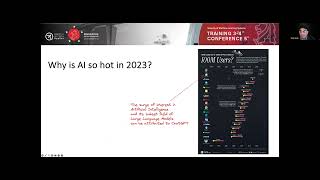
Security of Machine Learning Systems
Explore security challenges in AI and ML systems, including adversarial attacks and MLOps. Learn to apply pen testing skills to ML, with demonstrations on manipulating image recognition and NLP models.
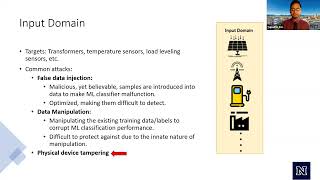
Vulnerability of Machine Learning Algorithms to Adversarial Attacks for Cyber-Physical Power Systems
Explore vulnerabilities in machine learning algorithms for cyber-physical power systems and learn about potential adversarial attacks and their implications.

Machine Learning Papers in Virtual Reality - IEEE VR 2022
Cutting-edge machine learning research in VR, covering topics like stereoscopic photography, adversarial attacks, 360° depth estimation, scanpath generation, autism screening, and projector deblurring.