Open Source Graphics 101 - Getting Started
Explore GPU concepts, graphics APIs, and open-source stack Mesa. Learn about pipeline stages, shaders, and parallel computing for a comprehensive introduction to graphics programming.

GPU Virtual Memory Address Management for Nouveau and Linux Kernel
Exploring GPU driver advancements: Nouveau's Vulkan support, NVIDIA firmware integration, and the new GPU virtual address space manager for improved performance and compatibility.

But Mummy I Don't Want to Use CUDA - Open Source GPU Compute
Explore alternatives to CUDA for GPU computing, focusing on open-source options like OpenCL, SPIR-V, and SYCL. Discuss challenges and potential solutions for a vendor-neutral Linux compute stack.
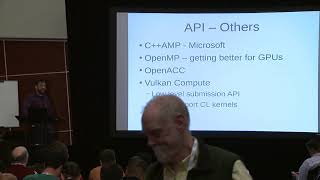
Open Source GPU Compute Stack - Not Dancing the CUDA Dance
Exploring open-source alternatives to CUDA for GPU compute acceleration, discussing potential for a vendor-neutral reference stack using SYCL/OpenCL/Vulkan and Mesa.
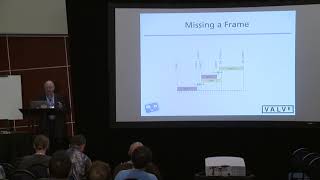
Improving Graphics Interactivity - It's All in the Timing
Explore techniques for improving graphics interactivity in Linux systems, focusing on timing issues, kernel modifications, and API enhancements to achieve smoother animations and better user experiences.
Beyond CUDA - GPU Accelerated Computing on Cross-Vendor Graphics Cards with Vulkan Kompute - AMD, Qualcomm, NVIDIA & Friends
Explore cross-vendor GPU computing with Vulkan and Kompute. Learn to write GPU-accelerated machine learning algorithms using Python and C++, applicable to various GPUs including AMD, Qualcomm, and NVIDIA.
Mesh Shaders on NVIDIA Hardware - Implementation and Future Development in NVK
Dive into the technical implementation of mesh shaders on NVIDIA hardware and explore upcoming NVK developments for enhanced shader support.
Towards a Universal Buffer Allocator for Linux
Explore the challenges and potential solutions for universal buffer allocation in Linux, focusing on media content frameworks, kernel-side improvements, and cross-device sharing capabilities.

Nouveau and NVK Graphics Stack Update 2024 - Status and Future Plans
Explore the latest advancements in NVK, including performance enhancements, OpenGL support via Zink, and future development plans for the open-source NVIDIA graphics stack.
Enhancements to the Raspberry Pi GPU Driver Stack - Performance and Vulkan 1.3 Updates
Discover the latest GPU driver improvements for Raspberry Pi 5, including Vulkan 1.3 conformance, enhanced subgroups support, and optimizations for better memory usage and shader performance.
Defense in Depth: Isolating Mesa From the Kernel
Explore advanced security techniques for isolating graphics drivers from kernel access, using virtualization and helper processes to protect against potential exploits in browser environments.

Ray Tracing: Delivering Immersive Gaming Experiences on Arm GPUs
Explore ray tracing on Arm GPUs: learn techniques for realistic shadows, reflections, and refractions in mobile gaming. Discover Vulkan APIs, optimization tips, and best practices for immersive experiences.
SmartGI Evolution - Adaptive NanoMesh on Mobile
Explore advanced Vulkan rendering techniques for mobile, including real-time global illumination and cluster-based LOD, with Tencent's SmartGI Evolution and Adaptive NanoMesh.
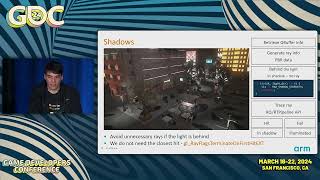
Realistic Mobile Graphics with Optimized Ray Tracing
Explore Vulkan Ray Tracing for mobile 3D graphics, focusing on hybrid rendering techniques and optimizations for enhanced realism in shadows and reflections without sacrificing performance.
Linux and Gaming: The Road to Performance - Kernel Recipes 2023
Explore Linux gaming evolution, kernel optimizations, and future challenges for enhanced performance and user experience.
gVulkan - Scalable GPU Pooling for Pixel-Grained Rendering in Ray Tracing
Innovative multi-GPU acceleration for Vulkan-based ray tracing, enabling cloud offloading and dynamic workload balancing for enhanced rendering performance and scalability.
News from the Embedded Graphics Space
Explore the evolving embedded GPU landscape, including new standards, hardware changes, and software ecosystem demands, with insights on Linux support and driver comparisons.
Code Reflection in Action - Translating Java to SPIR-V
Explore Java-to-SPIR-V translation using Babylon's code reflection API for GPU execution. Learn about parallel compute workloads and graphics libraries implementation.
Ray Tracing for Adreno GPUs on Turnip - Building Bounded Volume Hierarchy Trees
Dive into GPU ray tracing acceleration with Turnip, exploring BVH tree construction and implementation challenges for Qualcomm's Snapdragon 8 Gen 2 Adreno GPUs.

Graphics and Display Technologies Lightning Talks 2024
Discover cutting-edge graphics technology developments through 10 lightning talks covering Vulkan, Wayland, GPU virtualization, AMD drivers, and XR protocols from industry experts at XDC 2024.
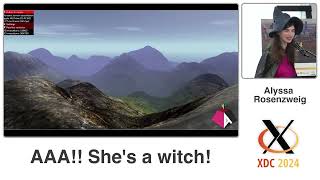
Vulkan 1.3 Support for Apple M1 with Advanced Graphics Features
Dive into advanced Vulkan 1.3 implementation on M1, exploring geometry shaders, tessellation, and transform feedback with practical demonstrations and technical insights.