The Rise of Allocentric Interfaces and the Collapse of the Virtuality Continuum
Exploring the convergence of VR, AR, AI, robotics, and IoT, and how it transforms our interaction with technology, blurring lines between real and virtual experiences.

Improving Spatial Orientation in Immersive Environments
Explore techniques to enhance spatial awareness in VR, comparing landmarks, 3D minimaps, and waypoint navigation. Learn how these methods impact user experience and productivity in immersive scientific visualization tasks.
Over My Hand - Using a Personalized Hand in VR to Improve Object Size Estimation, Body Ownership, and Presence
Explore how personalized virtual hands enhance VR experiences, improving object size estimation, body ownership, and spatial presence through innovative body-based scaling techniques.

Getting There and Beyond - Incidental Learning of Spatial Knowledge with Turn-by-Turn Directions and Location Updates in Navigation Interfaces
Explore how navigation interfaces with turn-by-turn directions and location updates impact incidental learning of spatial knowledge, comparing map-based and video-based interfaces.
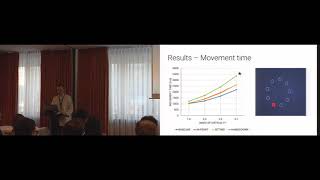
Pocket6 - A 6DoF Controller Based on a Simple Smartphone Application
Innovative smartphone app for 6DoF input, rivaling expensive controllers. Offers high accuracy, accessibility, and versatility for 2D/3D object manipulation without external trackers or spatial limitations.
MobiLimb - Augmenting Mobile Devices with a Robotic Limb
Explore MobiLimb, a 5-DOF robotic manipulator for mobile devices. Discover its potential as a tool, partner, and medium for enhanced interaction, tangible control, and expressive communication.
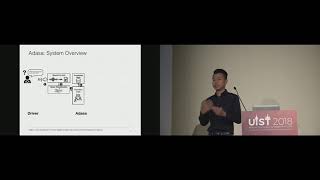
Adasa - A Conversational In-Vehicle Digital Assistant for Advanced Driver Assistance Features
Conversational digital assistant for vehicles that enhances driver understanding and usability of advanced assistance features through natural language interaction and real-time responses.
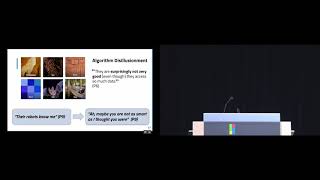
Communicating Algorithmic Process in Online Behavioral Advertising
Explores user perceptions of online behavioral advertising algorithms, revealing preferences for interpretable explanations and the impact of exposing algorithmic attributes on user trust and platform perception.

Drunk User Interfaces - Determining Blood Alcohol Level through Everyday Smartphone Tasks
Innovative smartphone interfaces measure blood alcohol levels through user performance, offering a potential alternative to breathalyzers for assessing inebriation in everyday scenarios.
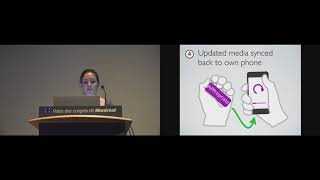
Make Yourself at Phone - Reimagining Mobile Interaction Architectures With Emergent Users
Innovative mobile design allowing users to temporarily use any Android device as their own, enhancing security, resource sharing, and privacy. Co-designed with emergent users for wide-ranging benefits.
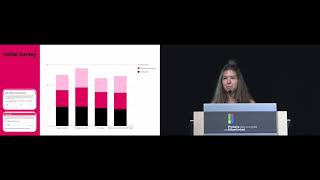
Exploring Co-design with Breastfeeding Mothers
Insights on co-designing mobile apps for breastfeeding mothers, focusing on challenges, methodologies, and key factors to consider for effective user engagement and empowerment.
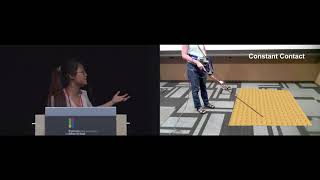
Enabling People with Visual Impairments to Navigate Virtual Reality with a Haptic and Auditory Cane Simulation
Innovative haptic controller simulates white cane interactions, allowing visually impaired users to navigate virtual environments using familiar skills, with physical, vibrotactile, and auditory feedback.
Selection-based Text Entry in Virtual Reality
Explores six methods for text input in VR using virtual keyboards, comparing performance and user preferences to guide optimal selection for different scenarios and available resources.

COMPASS - Rotational Keyboard on Non-Touch Smartwatches
Innovative text entry technique for non-touch smartwatches using rotational bezel and multiple cursors. Achieves 12.5 WPM after practice, offering alternative input method for various scenarios.

Desktop Orbital Camera Motions Using Rotational Head Movements
Explore head movements for 3D viewpoint control, comparing yaw and roll techniques. Studies reveal roll's efficiency for orbital camera control, outperforming traditional mouse/keyboard methods by 14.5%.

SketchingWithHands - 3D Sketching Handheld Products with First-Person Hand Posture
Innovative 3D sketching system integrating hand-tracking for efficient handheld product design. Enables capturing hand postures, exploring concepts, and maintaining proper scale and usage through novel features and intuitive interfaces.

NormalTouch and TextureTouch - High-fidelity 3D Haptic Shape Rendering on Handheld Virtual Reality Controllers
Innovative haptic controllers for VR that render 3D shapes and textures through physical displacement, enhancing user interaction and accuracy in virtual environments.

ERICA - Interaction Mining Mobile Apps
Innovative system for capturing app design components, enabling data-driven design through interaction mining. Detects UI changes, records data streams, and creates user interaction traces for improved UX analysis and development.

A Feminist HCI Approach to Designing Postpartum Technologies - When I First Saw a Breast Pump I Was Wondering If It Was a Joke
Exploring feminist HCI design for postpartum technologies, focusing on improving breast pumps through crowdsourced ideas and addressing environmental, legal, social, and emotional aspects of new motherhood.
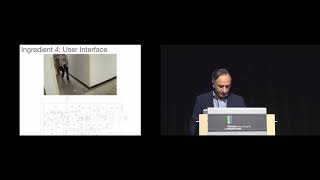
Easy Return - An App for Indoor Backtracking Assistance
Innovative iPhone app assists blind users in backtracking indoor routes without maps or environment modifications, using turn sequences and step counts. Tested with blind participants in controlled indoor experiments.
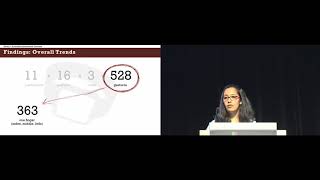
Exploring Accessible Smartwatch Interactions for People with Upper Body Motor Impairments
Investigates accessible smartwatch interactions for users with upper body motor impairments through two studies, offering insights and design recommendations for improved wearable technology accessibility.