
Conventionality in Language Use - Understanding Speaker Intentions in Spoken Comprehension
Explores how listeners interpret spoken language, focusing on reference comprehension. Examines the integration of linguistic conventions and contextual information, suggesting comprehension optimizes for generic rather than specific speakers.

Robot Learning with Minimal Human Feedback
Explore techniques for training robots with minimal human feedback, including reinforcement learning, language corrections, and leveraging pretrained vision-language models for direct supervision.
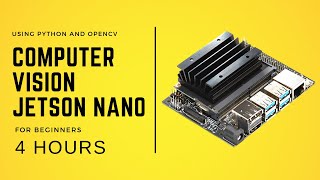
Learn Computer Vision with Jetson Nano Using Python
Learn computer vision fundamentals and apply them to real-world projects using Jetson Nano. Develop skills in eye tracking, self-driving car simulation, and face recognition with hands-on experience.

Counterfactual Simulation in Causal Cognition
Explore counterfactual simulation's role in causal cognition, examining its impact on judgments, explanations, and responsibility attribution in physical and psychological domains.
Gaze and Attention in Human-Computer Interaction - Session 3
Explore the fascinating interplay between gaze and attention, delving into cutting-edge research and insights on visual perception and cognitive processes.
Eye-tracking and AI: Unveiling the Limitations and Synergies
Explore the fascinating convergence of eye-tracking technology and AI, examining their limitations and potential for collaboration in advancing technological innovation.
The Eyes Are the Windows to the Mind: AI-Driven Personalized Interaction - Keynote
Explore eye-tracking's potential in AI-driven personalization for user-adaptive systems. Learn about predicting cognitive skills, affective states, and applications in visualizations and tutoring.
Locomotion in Virtual Reality - IEEE VR 2022 European Papers
Explore cutting-edge research on VR locomotion techniques, including foldable spaces, desk VR travel, eye tracking prediction, redirected walking, and seated leaning interfaces.
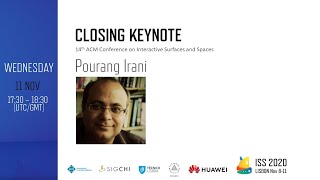
Closing Keynote - Interactive Surfaces and Spaces 2020
Explore cutting-edge insights on interactive surfaces and spaces in this captivating keynote by Pourang Irani, delving into the future of human-computer interaction and spatial computing.
Eye Tracking for Mathematics Research
Explore eye tracking technology's applications in mathematics education, research, and accessibility, uncovering insights into cognitive processes and learning strategies.

Snap Back to Reality - Here Comes Gravity
Explore virtual reality's impact on self-driving cars and user experience with Volvo Cars' innovation leader. Discover how dreams fuel discipline and drive technological advancements.
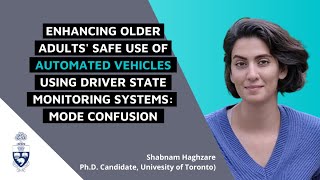
Enhancing Older Adults' Safe Use of Automated Vehicles Using Eye-Tracking Data
Explore a framework for detecting mode confusion in older drivers using automated vehicles, utilizing eye-tracking data and machine learning to enhance safety and usability.

How Human Abilities Define Digital Experiences
Explore how human abilities shape digital experiences, focusing on motor systems, vision, and cognitive abilities for improved accessibility and user-centered design.

Desktop Linux, Without a Keyboard, Mouse or Desk
Explore alternative input methods for Linux desktops, including speech recognition, eye tracking, and foot pedals. Learn about ergonomic solutions for programmers seeking functionality and customization.

How Eye Movements Can Revolutionize Human-Machine Interaction
Exploring eye-tracking technology's potential to revolutionize human-machine interaction, enhancing usability and user experience across digital interfaces for a more intuitive and personalized future.
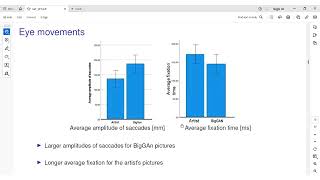
Art and Topology - Applications of Topological Data Analysis in Art Perception
Explore topological data analysis applications in art perception, comparing responses to abstract paintings and AI-generated images through eye movement analysis and geometric feature recognition.
Perception of Visual Art and Topological Data Analysis
Explore topological data analysis applications in visual art perception, comparing eye movements for abstract paintings vs. AI-generated images using algebraic topology methods.
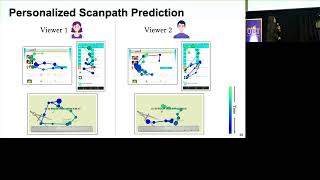
EyeFormer - Predicting Personalized Scanpaths with Transformer-Guided Reinforcement Learning
Dive into advanced eye-tracking prediction using transformer-guided reinforcement learning to understand and model personalized visual attention patterns and scanpaths.
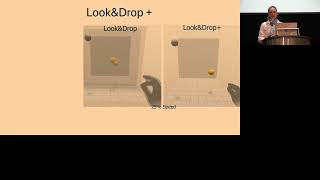
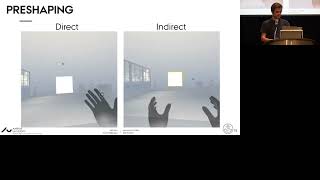
Eye-Hand Movement of Objects in Near Space Extended Reality
Explore cutting-edge research on eye-hand coordination and object manipulation in XR environments, focusing on innovative user interface developments for near-space interactions.
Gaze-Assisted Bimanual 3D Interaction - Hands-on and Hands-off Techniques
Explore innovative gaze-assisted techniques for bimanual 3D interaction, combining eye tracking with hand movements for enhanced user interface control and manipulation.