Gradual Typing and Verification - Session Preview
Explore gradual typing and verification techniques in programming languages with Ronald Garcia's preview of the POPL'24 session.

Unboxed Data Constructors: Efficient and Safe Big Number Handling in ML Languages
Explore unboxed data constructors in ML languages, enhancing efficiency without compromising safety. Learn static analysis techniques and their implementation in OCaml, including termination detection algorithms.

Indexed Types for a Statically Safe WebAssembly - POPL 2024
Explore Wasm-prechk, a WebAssembly extension using indexed types for enhanced static safety. Learn about performance gains, type safety proofs, and implementation trade-offs in this innovative approach.
Flux: Liquid Types for Rust
Explore Flux, a refined type system for Rust that enhances verification of low-level pointer programs. Learn how it combines logical refinements with Rust's ownership mechanisms for efficient and ergonomic type-based verification.
Covering All the Bases: Type-Based Verification of Test Input Generators
Explore a novel type-based verification method for validating coverage in test input generators, enhancing property-based testing with underapproximate reasoning and refinement types.
Compiler Support for Structured Data
Explore compiler techniques for efficiently handling structured data, enhancing performance and optimization in programming languages.
RefinedRust: A Type System for High-Assurance Verification of Rust Programs
Explore RefinedRust, a novel type system for verifying both safe and unsafe Rust code. Learn about its implementation, evaluation, and potential impact on high-assurance software development.
Decidable Subtyping of Existential Types for Julia
Explore Julia's subtyping challenges and a proposed solution for decidability in scientific computing, focusing on method dispatch and type annotations for generic libraries.
Descend: A Safe GPU Systems Programming Language
Explore Descend, a safe GPU programming language enforcing memory management through type systems. Learn about its holistic model, extended Borrow checking, and competitive performance against CUDA.
A Type System for Feature Engineering in Machine Learning
Explore a dependent type system for feature engineering, enhancing machine learning model inputs through advanced data operations and compiler techniques.
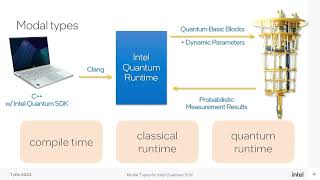
Exploring Modal Types for the Intel Quantum SDK
Explore modal types for Intel Quantum SDK, focusing on a proposed type system with three modes to ensure proper data handling in quantum kernels.

Modal FRP for All: Functional Reactive Programming Without Space Leaks in Haskell
Explore Modal FRP in Haskell: Learn to prevent space leaks in functional reactive programming and implement a Pong game using this technique.

Relational Solver for Java Generics Type System
Explore a relational solver for Java Generics Type System, enhancing understanding of advanced programming concepts and type theory.

Borrow Checking in Hylo - A High-Level Systems Programming Language
Explore Hylo's innovative approach to safe, efficient systems programming using mutable value semantics and abstract interpretation for lifetime verification.

Degrees of Separation: A Flexible Type System for Data Race Prevention
Explore a flexible type system for data race prevention in parallel programming, allowing aliasing while controlling it to prevent data races. Implemented as a Scala 3 compiler extension.

Typed Equivalence of Labeled Effect Handlers and Labeled Delimited Control Operators
Explore the equivalence between labeled effect handlers and labeled delimited control operators in computational effects, with insights on their expressive power and practical applications.

Polymorphic Type Inference for Dynamic Languages
Explore a novel type system combining polymorphism, intersection types, and subtyping for dynamic languages. Learn about type reconstruction algorithms and their applications in advanced programming.

When Subtyping Constraints Liberate: A Novel Type Inference Approach for First-Class Polymorphism
Explore a novel type inference approach for first-class polymorphism using multi-bounded polymorphism, advancing the state of the art in type inference for programming languages.

Capturing Types: A Calculus for Tracking Free Variables in Type Systems
Explore a calculus representing captured variables in types for enhanced safety, enabling effect implementation via scoped capabilities and guiding practical capture checking in programming languages.
Leveraging Rust Types for Program Synthesis
Explore how Rust's type system enhances program synthesis, simplifying specifications and improving performance. Learn about Synthetic Ownership Logic and the RusSOL tool for automatic synthesis of correct Rust programs.

Stream Types - A Foundational Theory of Typed Data Streams and Stream Transformers
Explore a foundational theory of typed data streams and transformers, covering complex sequential patterns, parallel structure, and programming idioms like punctuation and windowing.